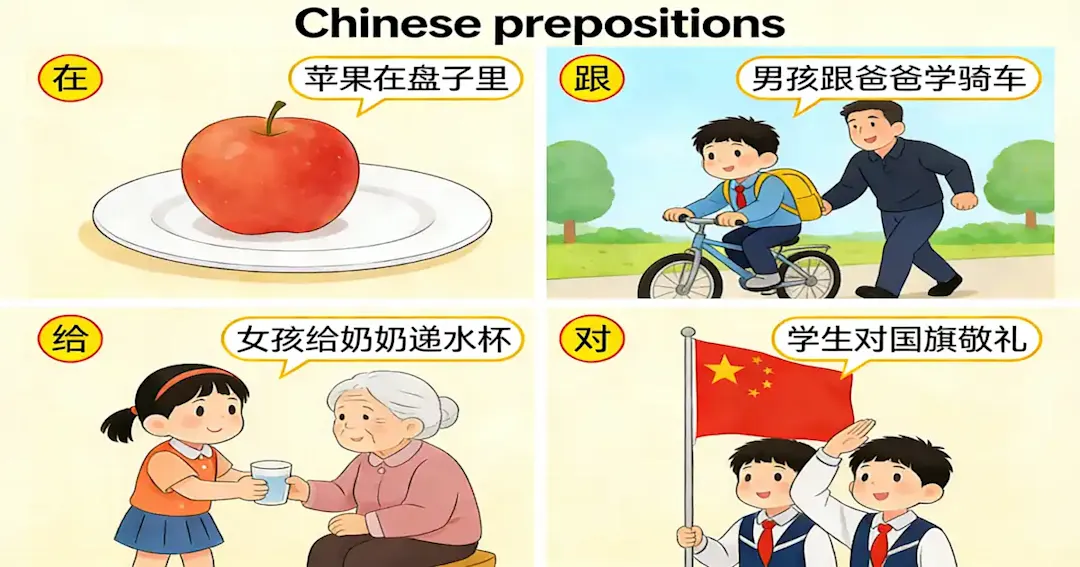
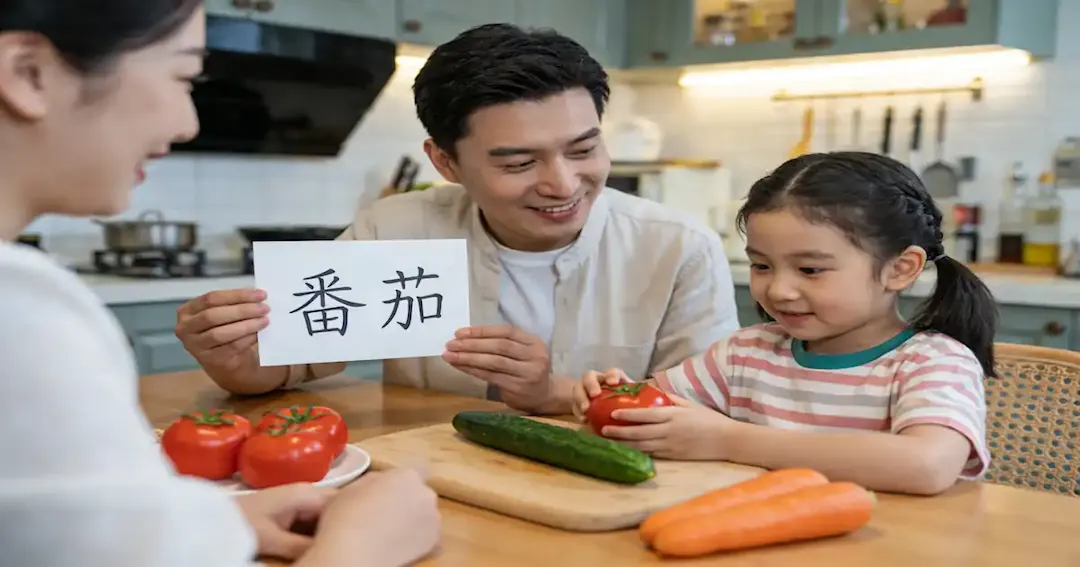
If your child hears “Chinese vocabulary” and immediately thinks “more flashcards”… that’s a sign something’s not working.The good news? Kids don’t naturally learn language from lists.They learn from stories they care about and games they want to win.
Think of Chinese words as little characters in your child’s world:
they show up in bedtime stories,
jump out during Lego battles,
sneak into car rides and grocery trips,
and—if you want—appear in fun, short online classes with a real teacher.
In this guide, you’ll find 75 kid-friendly ways to help your child learn Chinese vocabulary through stories, play, and daily life. You can dip in and out, pick 3–5 ideas to try this week, and keep rotating.
At the very end, if you want someone else to do the heavy lifting with structure and speaking practice, you can book a free LingoAce trial lesson and let a professional teacher turn those “home words” into real conversation.

1. Story Hacks: Build Vocabulary Inside Tiny Narratives (1–12)
Stories are the shortcut. A word with a story sticks longer than a word on a list.
1. One-word bedtime story Choose one new word (like 龙 lóng – dragon) and challenge yourself to tell a 30-second bedtime story that uses it 3–5 times.
2. “Fill in the word” story Tell a simple story and pause: “The boy is very… (tired). What’s ‘tired’ in Chinese again?” Let your child shout the word.
3. Recycled hero Create one main character—maybe 小明 Xiǎomíng or a stuffed toy’s name—and let them appear in all your Chinese mini stories.
4. Everyday-story remix Take what actually happened today (“We went to the park”) and retell it in a mix of English + your target Chinese words.
5. Word-of-the-night spotlight Each night, pick just one word from the story to highlight, say it slowly in Chinese, and ask your child to repeat once. That’s it.
6. Wrong-story game Tell a silly wrong story using the right Chinese word: “The dragon drinks juice for breakfast every day…” Your child corrects details, but the target word keeps popping up.
7. Three-panel comic Fold a paper into three boxes. Draw beginning–middle–end and write one key Chinese word in each panel.
8. Story chain with siblings If you have more than one kid, let each child add one sentence to the story using at least one Chinese word from your list.
9. Picture-only story retell Look at a wordless picture book and agree on 3–4 Chinese words to “plant” in the telling (like 狗 gǒu – dog, 跑 pǎo – run, 累 lèi – tired).
10. Sound effect stories Add sound effects to target words: 睡觉 shuìjiào (sleep) comes with a loud “snore,” 下雨 xiàyǔ (rain) gets a “pitter-patter” hand tap.
11. Opposite-story twist Tell a story where everything is opposite: big becomes small, hot becomes cold. Use pairs like 大/小, 热/冷, 多/少 and let your child “fix” them.
12. Catchphrase ending Finish every story the same way: 我们又学会了一个新词!wǒmen yòu xuéhuì le yí gè xīn cí! (“We just learned another new word!”) That little ritual helps mark the new vocabulary in your child’s mind.
2. Picture Books and Comics as Vocabulary Goldmines (13–20)
You don’t need special “Chinese-only” textbooks to build vocabulary. Simple picture books and even comics can do a lot of heavy lifting.
Quick ways to use books you already have
Tip # | Idea | What You Actually Do |
13 | One-page focus | Pick ONE page; read in English but plant 2–3 Chinese words. |
14 | “Find this word” hunt | Say a Chinese word; your child points to where it appears in pictures. |
15 | Margin word list | Write 3 target words in the margin with pinyin to glance at while reading. |
16 | Picture dictionary moments | Pause on busy pages (kitchens, markets) and name objects in Chinese. |
17. Draw your own “mini book” Staple 3–4 sheets of paper, let your child draw, and you add 1–2 Chinese words per page. Read it back later like a real book.
18. Speech bubbles in Chinese Take a printed comic strip and fill one speech bubble with a short Chinese phrase (like 我饿了 wǒ è le – I’m hungry).
19. “Translate the sticker” If your child loves stickers, let them stick one on a page and then decide one Chinese word the sticker must represent.
20. Book of favorites Keep a running list of “favorite Chinese words from stories” on a bookmark or sticky note tucked into your child’s current book.
3. Role-Play and Drama: Act the Words Out (21–30)
If your child can act it, they’re much more likely to remember it.
21. Mini skits at home Act out simple scenes: ordering food, playing at the park, going to school. Use just 2–3 key words each.
22. Costume box Chinese Whenever the costume box comes out, choose one “theme word” in Chinese for that play session: 王子 wángzǐ (prince), 公主 gōngzhǔ (princess), 龙 lóng (dragon).
23. Freeze-frame vocabulary Say a Chinese verb like 跳 tiào (jump) or 跑 pǎo (run). Your child does the action and “freezes” when you say “停 tíng (stop)”.
24. Guess-the-verb charades One person silently acts; the other guesses in Chinese. If that’s too hard, they can say English and then repeat the Chinese after you.
25. Drama cards Write verbs and feelings (like 生气 shēngqì – angry, 开心 kāixīn – happy) on slips of paper. Draw one and act it out with a simple sentence.
26. Puppet shows Use finger puppets or stuffed animals and give each a small Chinese catchphrase. The “angry bear” only appears when someone says his trigger phrase.
27. “Director says” game Like “Simon Says,” but with a “director”: “Director says: 小猫要跑。” The child moves like a cat and repeats the phrase.
28. Rewind and replay Act a tiny scene, then “rewind” it in slow motion, saying the Chinese words more slowly and clearly as you replay.
29. Emotion swap Re-do the same line (for example, 我很累 wǒ hěn lèi – I’m very tired) in different emotions—happy, bored, dramatic—and let your child decide which is funniest.
30. Parent makes mistakes on purpose Say the wrong word while acting, like 我很高兴 with a sad face. Your child corrects you in Chinese if they can, or in English first.
4. Games on the Floor: Words + Play (31–42)
Now we bring the vocabulary down to the floor—literally.
Some quick, low-prep game ideas
Tip # | Game Name | How It Works (Simple Version) |
31 | Vocabulary hopscotch | Draw boxes with chalk; each box = one word; jump and shout the word. |
32 | Toy “name tags” | Stick Chinese word cards on toys; kids must use the word before playing. |
33 | Word sorting | Sort picture cards into groups: food, animals, school things. |
34 | Fishing game | Paper “fish” with words; catch one and say it in Chinese. |
35. Memory flip cards Make pairs: picture–picture or picture–word. Each time your child flips a pair, they say the Chinese word.
36. “Road trip” with cars Create a road on the floor with stops labeled in Chinese: 学校, 超市, 公园. The toy car “travels” and you name each stop.
37. Color dice game Roll a color dice and find something in the room that’s that color, then name either the color or the object in Chinese.
38. Lego “word towers” Assign one word to each block color. Each time your child adds a block, they say that word.
39. Board game upgrade On any simple board game, add a rule: before moving, say one Chinese word from your current list.
40. Vocabulary treasure chest Put small toys or stickers in a box. To pick one, your child has to say a target word or a short phrase.
41. “Hot potato” with words Pass a ball while music plays. When it stops, the person holding it must use a Chinese word in a super short sentence.
42. Sticker reward, but for usage Give stickers not for “getting right answers” but for using a new word naturally during play.

5. Daily Life Routines as Built-In Practice (43–52)
You don’t need extra hours. Just sneak Chinese into what’s already happening.
Example mini routines
Routine Slot | What You Do in Chinese | Sample Words / Phrases |
Breakfast | Name 2–3 foods or drinks | 牛奶, 面包, 水, 吃, 喝 |
Getting Dressed | Say one color or clothing word | 红色, 蓝色, 裤子, 衣服 |
School Run | “Today I feel…” in Chinese | 高兴, 累, 兴奋 |
Bath Time | Action verbs | 洗手, 洗脸, 洗澡 |
Bedtime | Recap 1–2 words from the day | “We used 水 and 玩 today.” |
43. Breakfast word of the day Choose one new word each morning and try to use it three times before everyone leaves the house.
44. “Chinese corner” time Pick a corner of the house where, for 5 minutes, you try to use only the Chinese you know.
45. Door/Light routine Every time you open the door: 开门 kāi mén. Every time you switch off the lights: 关灯 guān dēng.
46. Snack name check Before eating snacks, ask “What is this in Chinese?” If your child doesn’t know, just tell them and have them echo it once.
47. “Password” before screens To unlock a show or game, your child must say one Chinese word or a short phrase.
48. Weekend Chinese walk On a walk, name 5 things in Chinese: tree, dog, car, sky, cloud. Keep it casual, not a quiz.
49. Fridge word wall Stick 5–10 word cards on the fridge at kid height. Swap only one or two each week so it doesn’t feel like chaos.
50. “Before bed, one word” ritual Right before lights out, you say one word; your child repeats it and gives a quick thumbs up, and that’s the end of “study” for the day.
51. Label objects at kid-eye level Start with just 8–10 labels: door, table, chair, bed, water bottle. Point and say them when you walk past.
52. Celebrate when a label can “retire” When your child knows a word well, remove the label together. That small ceremony marks progress.
6. Memory Hooks, Rhymes, and Silly Tricks (53–62)
Sometimes a word just won’t stay. That’s where memory hooks help.
53. Simple chants Turn 3–4 related words into a clap-along chant. Even if the Chinese isn’t perfect, the rhythm will stick.
54. English-sound hook (when it helps) If a word faintly reminds you of an English sound, you can use it as a private reminder—just don’t over-explain it.
55. Three-picture rule For any new word, draw three tiny pictures that all relate to it. The more connections, the better.
56. One-week focus Choose one stubborn word and use it 7 times a day for a week in different contexts.
57. Gesture for every key verb Attach a motion: jump when you say 跳 tiào, pretend to eat for 吃 chī, hug yourself for 冷 lěng.
58. Melody recycle Fit Chinese words into the tune of a song your child already knows, like “Twinkle, Twinkle Little Star.”
59. “Change one thing” game Take a known sentence and only swap one element: 我喜欢苹果 → 我喜欢香蕉 → 我喜欢冰淇淋.
60. Wrong meaning exaggeration Give a word an obviously wrong meaning, then “fix” it. The absurd wrong version can make the correct meaning feel more solid.
61. Color-coding notebooks Assign one color to “food words,” another to “feeling words,” another to “action words.” Visual grouping helps memory.
62. End-of-day “favorite word” check Ask your child, “Which Chinese word do you remember best today?” Let them choose, not you.

7. Gentle Use of Tech and Tools (63–70)
Tech can support vocabulary learning, as long as it doesn’t become the only thing you rely on.
63. Child-friendly dictionary time Show your child how to look up a new word in a trustworthy online Chinese–English dictionary and hear its pronunciation together.
64. Short app sessions If you use any vocabulary or flashcard app, keep sessions under 10 minutes and end while your child still feels fresh.
65. Screenshot vocabulary When you see a useful word in subtitles or on screen, take a screenshot and later turn it into a small review moment.
66. Record-your-voice challenges Let your child record themselves saying 5–10 words, then play it back and see if they can “correct” their own pronunciation with your help.
67. “Word of the day” wallpaper Set your phone lock screen to one Chinese word you want the whole family to see often.
68. Shared digital vocab note Keep a simple note (on your phone or computer) where you jot down words your child seems to like or hear often.
69. Timer for tech Use a simple kitchen timer so “Chinese app time” starts and ends clearly—no endless scrolling, just focused practice.
70. Remember that tech is a helper, not the teacher The real magic still happens when your child laughs, moves, and reacts in Chinese with real human beings.
8. Make Parents and Teachers a Team (71–75)
You don’t have to be the perfect Chinese teacher at home. You can be the supportive teammate.
71. Be open about your own Chinese Saying “I’m learning too” makes it safer for your child to try and make mistakes.
72. Share your home vocab with the teacher If your child takes online classes, send the teacher a short list of current “home words” so they can show up in class activities.
73. Measure what your child can do Instead of asking, “How many words do you know?”, ask, “What can you say now that you couldn’t say last month?”
74. Keep the tone light at home Let the teacher handle structured drills and correction. Your home role can be: stories, games, routines, and keeping Chinese emotionally positive.
75. Use live classes to turn “words” into “speaking” The fastest way from passive vocabulary to real usage is still regular conversation with a supportive teacher.
A Few Helpful Resources for Parents (Optional, for You in the Background)
You don’t have to show these to your child, but as a parent behind the scenes, a few bookmarks can make life easier:
Reliable online Chinese–English dictionary – For checking meanings, pinyin, and example sentences together.
HSK vocabulary lists (levels 1–6 and new 1–9) – Even if your child is far from taking tests, these lists give you a sense of which words are common at each level.
Kid-friendly Chinese picture dictionaries – Books that show real photos or clear illustrations with Chinese, pinyin, and English can support visual learners very well.
You can quietly use these to choose or check vocabulary without turning every moment into “study time.”
One Simple Next Step: Book a Free LingoAce Trial Lesson
All 75 ideas above share one belief:Kids learn Chinese vocabulary best when words live inside stories, games, and real moments—not just on flashcards.
You can absolutely do a lot at home:
tiny bedtime stories with one new word,
silly skits in the living room,
labels on the fridge,
quick car games and snack-time questions.
But to really turn passive vocabulary into confident speaking, your child needs chances to:
hear clear, natural Chinese,
respond in real time,
and get gentle correction from someone who does this every day.
That’s exactly what LingoAce is built for: live, interactive Chinese classes where teachers wrap vocabulary inside stories, games, and meaningful practice—just like the ideas in this guide, but with a structured path.
If you’d like to see how that feels for your own child, you don’t need to change your whole routine.You can simply book a free LingoAce trial lesson, bring a handful of words from this article, and watch how a professional teacher turns them into real, two-way conversation.
From there, you and your child can decide:Will Chinese stay a fun side hobby, or grow into a language they can truly use?Either way, you now have 75 kid-friendly ways to start building Chinese vocabulary through stories and play—without drowning in flashcards.