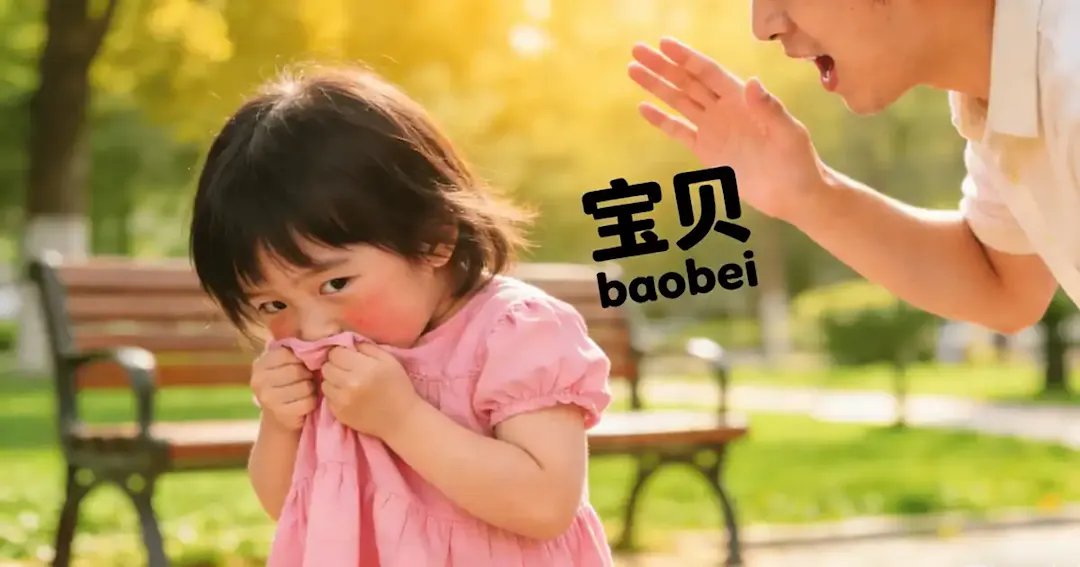

If your family uses Chinese, you’ve probably heard 宝贝 (baobei)—in a grandparent’s voice note or a kid’s video. Most parents aren’t just asking “what’s the translation,” but what it implies: Is it romantic? Is it okay for kids to say? Will it sound awkward?
That’s why people search baobei meaning. Literally it means “precious one,” but in real life it’s a relationship signal—sweet in family settings, sometimes flirty between partners, and not always appropriate in public. This guide covers the meaning, pronunciation, when to use it, texting vibes, common mistakes, and easy kid-friendly alternatives.
What is “baobei”? A simple definition parents can trust
At its core, baobei meaning is “treasure” or “precious one.” 宝贝 (bǎobèi) is a warm term of endearment used for someone you care about deeply—most commonly a child, sometimes a romantic partner, and occasionally (but less often) between close friends as a joke.
Here’s the most practical way to think about it:
If a parent says 宝贝 to a child, it’s like “sweetheart,” “my precious,” “my dear.”
If a partner says 宝贝 to a partner, it’s closer to “babe”—but the vibe can range from cute to cheesy depending on the couple and the setting.
If someone says 宝贝 to a stranger, it can sound off, overly intimate, or sales-y (like a flirtatious cashier vibe), depending on the situation.
That’s why parents searching baobei meaning are usually really asking: “What does it imply, and should my child use it?”
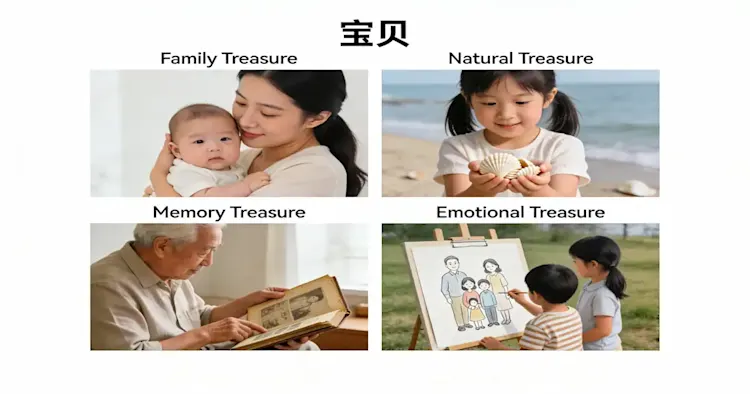
Why 宝贝 can mean “treasure” and “baby” at the same time
To understand baobei meaning in 2026, it helps to see why the word naturally became affectionate.
宝 = treasure
宝 means “treasure,” “valuable,” “precious.” It’s the emotional core of the word: you’re telling someone they matter.
贝 = shell (and a “valuable” feeling)
贝 originally connects to shells used as valuables in ancient contexts. You don’t need the history lesson to use the word—but it explains why 宝贝 doesn’t feel random. It literally stacks “precious + valuable thing,” which is why it became a natural term for someone you adore.
So why do people translate it as “baby”?
Because in modern everyday usage, 宝贝 is often used the way English speakers use “baby/babe.” The literal meaning is “treasure,” but the social meaning depends on who says it and how.
A quick “translation cheat” for parents:
Family context: 宝贝 ≈ sweetheart / dear / my precious
Couple context: 宝贝 ≈ babe / baby (sometimes intentionally cutesy)
Talking about an actual baby: 宝贝 can still work, because “the baby is our treasure” is the implied feeling
Baobei meaning in real life: Who can say it to whom
This is where most families get stuck. Baobei meaning isn’t just “what does the word mean,” but “what does it say about the relationship?”
1) Parent → child (the safest, most common usage)
In family Mandarin, 宝贝 is incredibly normal. It’s often used the way you’d use “sweetie” in English—especially with younger kids.
Real-life lines you’ll hear (and can use):
宝贝,过来洗手。 (Sweetie, come wash your hands.)
宝贝,鞋子穿好。 (Sweetheart, put your shoes on.)
宝贝,今天学校怎么样? (My dear, how was school today?)
宝贝,慢慢说,我听着呢。 (Take your time, I’m listening.)
宝贝,做得真棒。 (You did great.)
If your child is 3–8, 宝贝 can feel very natural. If your child is 10–15, they may start to cringe a little (totally normal). Some families shift to a name + 小 (like 小安, 小杰) or keep 宝贝 for private moments.
2) Partner → partner (romantic, sometimes “cheesy,” often private)
Among couples, 宝贝 is common—especially among younger couples—but it can sound very sweet and a bit performative in public.
Examples:
宝贝,你到了吗? (Babe, are you there yet?)
宝贝,别生气了。 (Don’t be mad, babe.)
宝贝,今天辛苦了。 (You worked hard today, babe.)
宝贝,我想你了。 (I miss you, babe.)
What it signals: closeness, affection, sometimes a playful “softening” move during conflict. In texting, it can also signal “I’m asking for a favor” (more on that below).
3) Friend → friend (possible, but usually joking)
Between friends, 宝贝 can happen, but it’s not the default. If it’s used, it’s often:
teasing (“okayyy, baobei”)
playful affection among very close friends
heavily dependent on tone and context
If your child calls a classmate 宝贝 because they heard it in a drama, that’s where awkwardness can happen. Not harmful—just socially off.
How to pronounce baobei correctly: tones, rhythm, and the “kid-proof” trick
Yes, tones matter here—because “cute words” are often the ones kids repeat the most. And if they repeat it confidently with the wrong tone, it sticks.
Baobei pronunciation: bǎo bèi
bǎo = third tone (dips)
bèi = fourth tone (falls)
The rhythm native speakers use
In real speech, parents often say it quickly as one smooth unit: “bǎobèi.” In careful speech (like when calling a child over), you might separate it slightly: “bǎo… bèi.”
Variants you’ll hear in 2026
If you’re looking up baobei meaning, you’ll likely also hear these:
宝贝儿 (bǎobèir): adds an “-r” flavor common in some northern speech patterns; can sound extra affectionate or a little playful
小宝贝: “little precious one,” very kid-centered
心肝宝贝: “my heart-and-liver precious,” meaning “my absolute darling” (extra intense, often humorous or dramatic in tone)
If your child is already picking up phrases like 宝贝 from videos and chats, that’s actually a great sign: they’re motivated by real language, not worksheets. The tricky part is helping them learn context + tone so they don’t feel embarrassed using Mandarin around relatives or friends. A structured speaking class can help—especially one that gives immediate feedback on “when this sounds natural.” If you want a guided way to build that confidence, you can try a LingoAce Chinese trial class and see whether the pacing fits your child’s age and comfort level.

FAQ
What does baobei meaning change across regions
The core meaning stays the same: “precious one.” What changes is how often people use it and whether it sounds extra cutesy in public. Many families overseas keep it as a warm home word, while couples may use it more in private texting.
Is baobei meaning always romantic?
No. Baobei meaning is often non-romantic in family settings—parents use it for children all the time. It becomes romantic mainly when used between partners, especially in messages or soft, intimate conversations.
What’s the difference between baobei vs baobao?
Baobao leans more directly toward “baby,” while baobei is “precious one/treasure” and can feel more age-flexible for kids. Couples use both, but baobao often sounds even more “cute-baby talk.”
How do you pronounce baobei correctly (tones) without sounding robotic?
Aim for bǎo bèi with a natural flow. Model it once, have your child echo once, then use it in a real sentence (like “宝贝,过来”). Real sentences make tones feel less like a test and more like speech.
What does baobeir (宝贝儿) meaning add?
It’s the same meaning, but the “-r” ending adds a regional flavor (often northern speech) and can sound extra affectionate or playful depending on the speaker.
Conclusion
Here’s the clean takeaway: baobei meaning is “treasure/precious one,” but the signal depends on the relationship. For parents and kids, it’s a warm family word. For couples, it can be romantic and sometimes a little cheesy in public. In texting, it often signals affection, softening, or “I’m about to ask you something.”
If your child is hearing and repeating words like 宝贝, that’s a good thing—they’re engaged with real Mandarin. The next step is making sure they learn context, tone, and natural alternatives so they feel confident using Chinese in everyday life. If you’d like help building that real-world confidence through guided speaking practice, consider booking a LingoAce Chinese trial class and see how your child responds to structured, feedback-based conversation.