Imagine this: you're in a parking lot, your kid suddenly darts toward a shopping cart (why do they always do that?), and you want to shout “Be careful!”—but your brain freezes. Is it 小心? 注意? 当心? And what if you pick the wrong one? You might sound odd.
This guide is for busy parents who need the quick-and-dirty version of be careful in Chinese. It includes a clean cheat sheet, ready-to-copy phrases, and some fun little games to help your child not just recognize the words but actually say them when it matters.
Be Careful in Chinese: The 10-Second Cheat Sheet
If there's only one thing you remember about be careful in Chinese, let it be this:
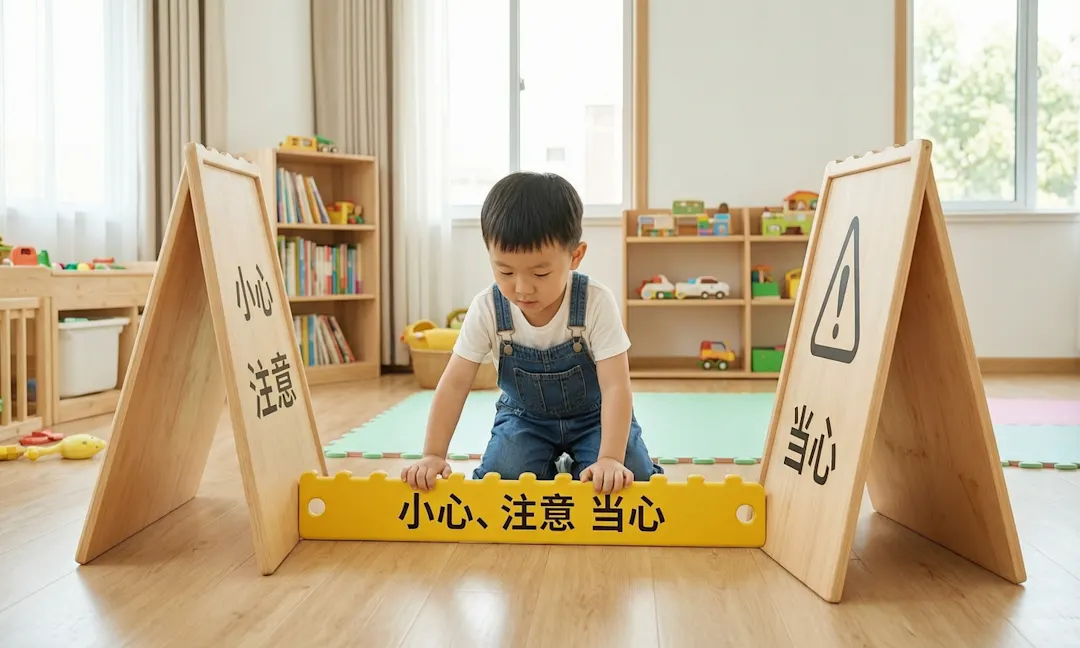
小心 (xiǎoxīn) = "watch your step / be careful (a bit dangerous)"
当心 (dāngxīn) = "watch out (stronger, more urgent)"
注意 (zhùyì) = "pay attention (focus / instructions)"
And yes, sometimes people say 注意安全 ("pay attention to safety"), which overlaps with "be careful," but it has a calmer tone than shouting 小心!
Quick Comparison Table
English moment | Best Chinese pick | Pinyin | What it really means | Example |
“Careful! That’s hot!” | 小心 | xiǎoxīn | physical risk | 小心烫! (Be careful, it’s hot!) |
“Watch out—bike!” | 当心 | dāngxīn | urgent warning | 当心!有车! (Watch out, a car!) |
“Pay attention to teacher.” | 注意 | zhùyì | focus / listen | 注意听老师讲。 (Listen carefully.) |
“Be careful crossing the street.” | 小心 / 注意安全 | xiǎoxīn / zhùyì ānquán | careful + safety | 过马路要小心。 过马路注意安全。 |
Be Careful in Chinese with 小心 (xiǎoxīn): The Everyday "Danger" Version
Parents love 小心 because it's short, clear, and not too dramatic. If your child is learning be careful in Chinese, start here.
What 小心 Is Best For
Slipping or falling
Hot things (soup, kettle, sun-heated car seat buckle… yep)
Sharp corners, doors, drawers
Street crossing, stairs, bikes
10 Ready-to-Use Lines
小心! (Careful!)
小心点。 (Be a bit careful.)
小心一点。 (Careful, okay?)
你慢点,小心摔倒。 (Slow down—don’t fall.)
小心台阶。 (Watch the step.)
小心地滑。 (Caution: slippery floor.)
小心手! (Watch your fingers!)
小心门。 (Watch the door.)
小心烫。 (Careful—it’s hot.)
过马路要小心。 (Be careful crossing the street.)
小心一点 sounds gentler than a sharp 小心!. Same meaning, softer tone.
Kids often understand the phrase but freeze when they need it quickly. If you’ve seen that “blank face” moment, you’re not alone. Practicing be careful in Chinese as short “mini bursts” helps.
Be Careful in Chinese with 当心 (dāngxīn): Stronger "Watch Out"
当心 is what you use when you want someone to become alert—right now. It’s not rude, just more “heads up.”
When 当心 Is the Better Pick
Something is about to happen (bike coming, ball flying, door swinging)
Warning signs that feel official
Moments where you want attention plus caution
8 Useful 当心 Phrases
当心! (Watch out!)
当心车! (Watch out for cars!)
当心碰头。 (Mind your head.)
当心夹手。 (Watch your fingers—don’t get pinched.)
当心落物。 (Beware of falling objects.)
当心触电。 (Risk of electric shock.)
当心台阶。 (Watch the step.)
当心门夹。 (Watch the door—might pinch.)
If your child plays sports, this is surprisingly relevant. Coaches (or other parents) use short warnings like this. It’s part of real-life listening, not just “class Chinese.” Which is kind of the whole point of learning be careful in Chinese in the first place.
If your child understands these phrases but rarely says them, consider booking a LingoAce trial class and ask the teacher to practice “safety + school phrases” in short role-plays. It’s a small ask, and it tends to click fast.

Be Careful in Chinese with 注意 (zhùyì): “Pay Attention,” Not “Danger!”
This is the classic mix-up. Many English speakers want to translate “be careful” as 注意, but 注意 is usually about focus: pay attention, notice something, follow instructions.
When 注意 Is Correct
Classroom or homework directions
Reminding a child to listen, look, notice details
Polite “heads up” about rules
10 注意 Lines Kids Hear a Lot
注意听。 (Listen carefully.)
注意看。 (Look carefully.)
注意安全。 (Pay attention to safety.)
注意脚下。 (Watch your step.)
注意车辆。 (Watch for cars.)
注意别迟到。 (Be careful not to be late.)
注意不要打扰别人。 (Be mindful—don’t disturb others.)
上楼注意。 (Be careful going upstairs.)
注意你的手。 (Watch your hands.)
注意规则。 (Pay attention to the rules.)
So… can 注意 mean “be careful”? Sometimes, yes—especially in phrases like 注意安全 or 注意脚下. But it feels more like “be mindful” than “danger, stop.”
If you’re teaching be careful in Chinese to a child, a simple rule works:
Risk right now → 小心 / 当心
Focus + rules → 注意
When You Don’t Want to Scare Them: Softer, Kinder Versions
Because honestly, yelling isn’t always the vibe—especially for anxious kids.
Here are gentle options that still work:
慢一点,小心点。 (Slow down—be careful.)
你先停一下,好吗?小心。 (Pause for a second, okay? Careful.)
别急,注意脚下。 (No rush—watch your step.)
And if your kid is older (8–15) and gets embarrassed easily, try:
看一下周围,小心点。 (Quick look around—be careful.)
It sounds more “I’m helping” than “I’m scolding.”
This is one of those small parenting wins: you keep the message, lose the power struggle. And you still reinforce be careful in Chinese without turning it into a lecture.
A Practical “Kid Scenario” List (Copy, Paste, Repeat)
Below is a quick set of situations you can literally rehearse once and reuse for months.
5 Scenarios Parents Run Into Weekly
Playground / Scooter
小心!别跑太快。 (Careful—don’t run too fast.)
当心!后面有人。 (Watch out—someone’s behind you.)
Kitchen
小心烫。 (It’s hot—careful.)
小心刀。 (Be careful with the knife.)
Parking Lot / Street Crossing
过马路要小心。 (Be careful crossing.)
注意车。 (Watch for cars.)
Doors / Elevators / Stairs
当心夹手。 (Don’t get your fingers pinched.)
注意脚下。 (Watch your step.)
School Reminders
注意听老师讲。 (Listen to the teacher.)
注意安全。 (Be mindful of safety.)
FAQ
1) What is the most common way to say “be careful in Chinese”?
Usually 小心 (xiǎoxīn). It’s short, natural, and works for most physical-risk moments. If you’re unsure, start with 小心 and you’ll rarely be “wrong.”
2) What’s the difference between 小心 and 注意 (be careful in Chinese confusion)?
小心 is more like “careful / watch out” when something could go wrong physically. 注意 is “pay attention / be mindful,” especially for instructions and rules. They overlap a bit in phrases like 注意安全, but the tone is different.
3) Is 当心 stronger than 小心?
Yes—当心 feels a bit more urgent, like “watch out!” It’s great when you need someone’s attention fast (bike coming, door swinging, etc.).
4) How do I say “be careful” to a child without sounding harsh?
Use softeners: 小心点 / 小心一点 / 慢一点,小心点. Your tone matters more than the exact word. If your child is sensitive, pairing it with “pause” language helps: 先停一下,小心。
5) What’s a good “watch out in Chinese” phrase?
当心! is the closest quick shout. 小心! also works, especially in family settings. Both are common ways to express be careful in Chinese in real life.
Conclusion
If you’re choosing between 小心 vs 注意 vs 当心, it’s basically this: 小心 for immediate physical caution, 当心 for stronger “watch out,” and 注意 for attention and rules. Keep a small set of phrases, repeat them in the same situations, and your child will start saying them without thinking—eventually.
Want your child to actually _say_ these phrases (not just understand them)? Book a LingoAce trial class and ask for a short role-play lesson built around “be careful in Chinese” scenarios—playground, kitchen, street crossing. That’s the fastest path to automatic speaking.