
The Mid-Autumn Festival is full of captivating stories, but no tale is more central to its folklore than the legend of Chang'e, the graceful goddess who lives on the moon. Her story of love, sacrifice, and immortality has been told for centuries and is deeply intertwined with the festival’s traditions of family and reunion.

The Legend of Chang'e and Hou Yi
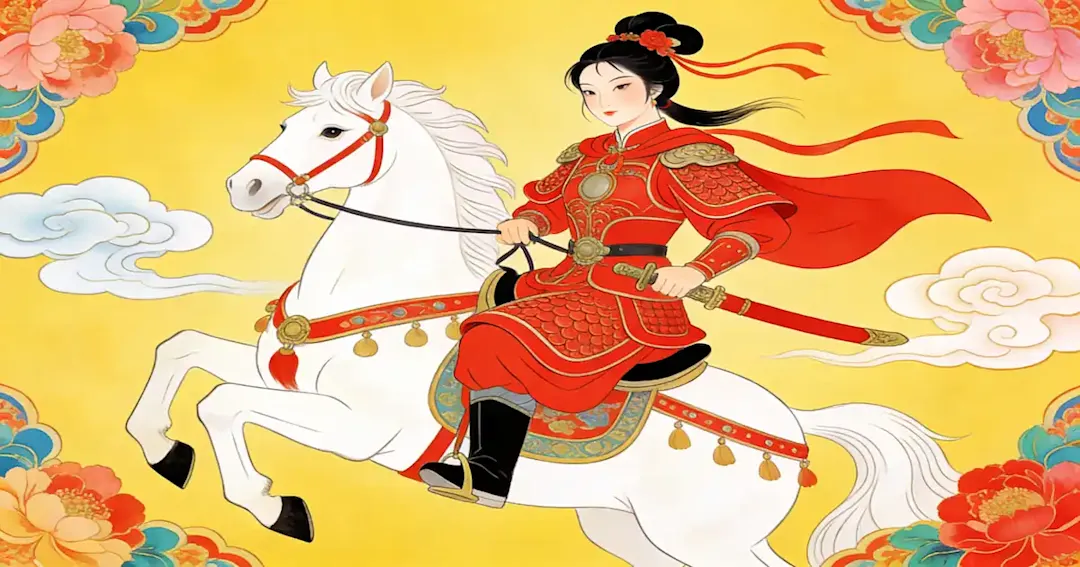
The story begins with Chang'e and her husband, Hou Yi, a legendary archer. In ancient times, ten suns blazed in the sky, scorching the earth and making life unbearable for humanity. With his immense skill, Hou Yi shot down nine of the suns, saving the world and its people. As a reward for his heroic act, the Queen Mother of the West gave him an elixir of immortality, enough for two people to become gods.
However, Hou Yi did not want to leave his wife, Chang'e, so he hid the elixir in their home. The story takes a tragic turn when Hou Yi’s jealous apprentice, Peng Meng, tried to steal the potion while Hou Yi was away. To protect it from falling into the wrong hands, Chang'e drank the entire elixir herself. As she began to float towards the heavens, she chose to live in the closest celestial body to her husband: the moon.
On learning the truth, the heartbroken Hou Yi looked to the sky, hoping to catch a glimpse of his wife on the moon. He prepared a feast with her favorite foods and fruits in their courtyard, a tradition carried on by families today to honor the reunion.
Chang'e's Companions: The Jade Rabbit and Wu Gang
Chang'e is not alone on the moon. She is said to live in the lonely Moon Palace with the Jade Rabbit, a selfless rabbit who was rewarded with immortality. Together, they pound the elixir of life using a mortar and pestle. Another mythological figure, Wu Gang, is also on the moon, cursed to forever chop down a magical cassia tree that regrows with every swing of his axe.
The Symbolism of the Chang'e Legend
The story of Chang'e is far more than just a myth; it's a powerful symbol. It explains why the moon is so central to the Mid-Autumn Festival, representing a yearning for reunion and the bittersweet nature of sacrifice. Chang'e's story also connects to other key festival traditions, like the sharing of Mid-Autumn Festival mooncakes, which are round and shared among family to represent unity, just as Chang'e and Hou Yi are forever connected by the moon.
FAQs About Chang'e
1. Who is Chang'e?
Chang'e is the Chinese moon goddess and a central figure in the folklore of the Mid-Autumn Festival. She is known for her courage and grace.
2. Why did Chang'e fly to the moon?
Chang'e drank an elixir of immortality to prevent a jealous apprentice from stealing it. As a result, she became immortal and floated to the moon to be close to her husband, Hou Yi.
3. Is the story of Chang'e true?
The Chang'e legend is a traditional myth passed down through generations. While it is not a historical fact, it is a significant part of Chinese culture that embodies themes of love, loss, and reunion.
Conclusion
The legend of Chang'e is a beautiful, timeless tale that teaches us about sacrifice, love, and the enduring hope of reunion. On the night of the Mid-Autumn Festival, as families gaze at the full moon, they are not only admiring its beauty but also remembering this ancient story and its powerful lessons.
For a complete guide to all the fascinating traditions and stories of this celebration, read our article on Mid-Autumn Festival traditions and stories.