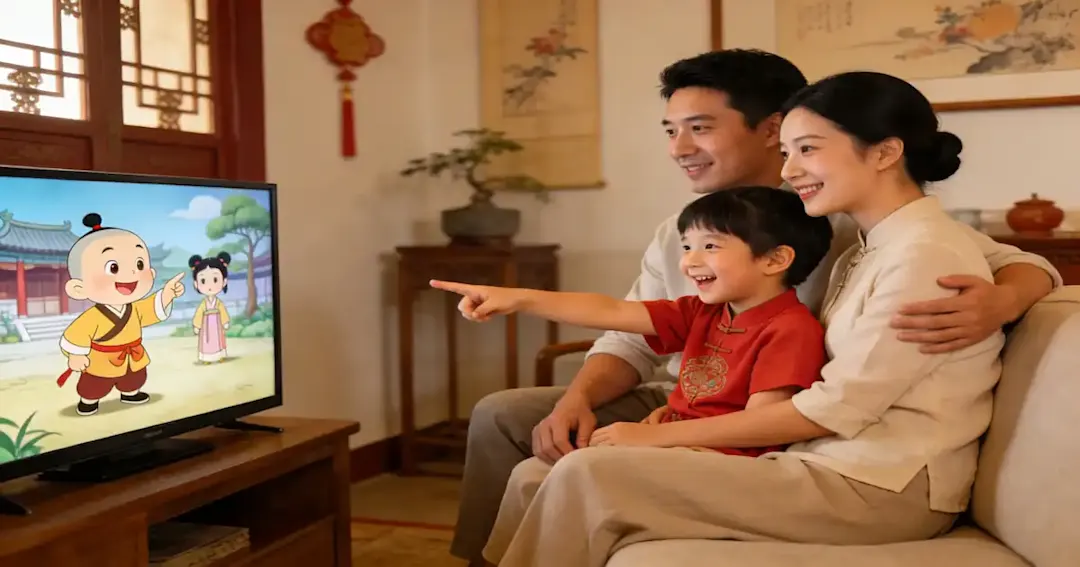
If your kid already loves cartoons, chinese animation can turn that “screen time” into something closer to “language time”—without you needing to be a full-time Mandarin teacher. The trick isn’t picking the fanciest show. It’s picking the right kind of audio: clear voices, repeated phrases, obvious context, and a pace your child can actually follow.
This list is built for North America parents with kids 3–15 (heritage and non-heritage families). Use it like a menu: pick one title, watch 10 minutes, and do a tiny “repeat one line” game. That’s it.
Chinese animation picks for ages 3–6
This age is all about sound + routine. You’re not aiming for perfect tones. You’re aiming for: “My kid hears Mandarin often enough that it starts to feel normal.”
1) Pleasant Goat and Big Big Wolf
What it is: fast little episodes with simple plots. Why it matters: lots of repeated phrases—kids start predicting what comes next (which is basically listening practice disguised as fun). How to use it: pick one catchphrase, pause, let your child say it once. Done.
2) Big Ear Tutu
What it is: family-life moments (school, snacks, small feelings). Why it matters: the vocabulary is practical and easy to reuse at home. How to use it: after the episode, you borrow one line at dinner: “你吃饱了吗?” and see if your kid giggles.
3) BabyBus Chinese
What it is: short songs and scenes built for toddlers/preschoolers. Why it matters: songs lock in rhythm and pronunciation without the “study” vibe. How to use it: play the same song during brushing teeth for a week. Repetition beats variety here.
4) Little Fox Chinese Stories
What it is: clear, slow storytelling made for language learners. Why it matters: it’s one of the easiest ways to get comprehensible Mandarin input. How to use it: let your child point at the screen and name one thing per episode (猫、车、苹果).
5) Super Wings / Deer Squad
What it is: familiar kids cartoons with Mandarin audio options in some versions. Why it matters: familiar plot = less cognitive load = more brain space to notice sounds. How to use it: preview the audio (dubs vary). If it’s too fast, save it for later.
Small parent reality check: if your child only watches three minutes, that still counts. Three minutes + one repeated line is better than “we’ll start next week” forever.

Chinese animation picks for ages 7–9
Now kids can follow a plot, which means you can use story questions to pull out language naturally.
6) Calabash Brothers
What it is: classic heroic story, very “mythic.” Why it matters: repeated structure and clear good-vs-evil scenes help comprehension. How to use it: ask one question in English, then add one Mandarin label: “Who is the 坏人?”
7) Black Cat Detective
What it is: mystery episodes with narration. Why it matters: narration is often clearer than character chatter. How to use it: pick 2–3 “detective words” (线索, 发现, 证据) and listen for them.
8) Haier Brothers
What it is: older-style educational adventure. Why it matters: more explanatory language = more “school Mandarin” vocabulary. How to use it: choose one topic episode and write down 3 words your child recognizes.
9) Animated idiom mini-series
What it is: tiny stories that explain a Chinese idiom. Why it matters: bite-sized listening with a beginning/middle/end. How to use it: one clip per day, then use the idiom playfully once (“今天真是画蛇添足了…”).
Here’s the moment many parents hit: your child watches chinese animation, understands more than you expect… but still answers in English. It feels like progress and not-progress at the same time.If you want a low-pressure way to add that structure, you can book a LingoAce trial class and tell the teacher which show your child is watching. A good teacher can pull vocabulary and speaking prompts from the same themes—so the cartoon habit feeds the lesson, and the lesson feeds the cartoon habit.

Chinese animation picks for ages 10–12
At this age, kids often “outgrow baby cartoons” but still need content that isn’t pure slang chaos.
10) Monkey King: Hero Is Back
What it is: big adventure energy; strong visuals. Why it matters: action + emotions make meaning easier to guess from context. How to use it: choose one emotional line and reuse it jokingly at home (“我不服!”).
11) The Legend of Hei
What it is: warm, modern fantasy with clean audio. Why it matters: natural speech rhythm without being too messy. How to use it: do a “steal-a-line” challenge: your child picks one line to say at dinner.
12) Legend of Luo Xiaohei
What it is: short scenes, expressive characters. Why it matters: shorter scenes = less fatigue; easier to repeat lines. How to use it: replay a 20-second scene twice. That’s a win.
13) Mythology short animations
What it is: culture-packed mini stories. Why it matters: stories kids already half-know make listening easier. How to use it: after watching, ask: “If you had to explain this story to Grandma, what would you say?”
Chinese animation picks for teens (13–15)
Teen listening improves faster when the content feels legit, not “for little kids.”
14) The King’s Avatar
Why it helps: modern dialogue and real teen interest. Note: agree on one “no-phone during episode” rule so they actually listen.
15) Link Click
Why it helps: natural modern Mandarin. Note: themes can be heavier—preview first.
16) Scissor Seven
Why it helps: everyday speech + humor timing (hard but useful). Note: check violence/humor style before you commit.
17) Fog Hill of Five Elements
Why it helps: short, intense, visually stunning—great for motivated teens. Note: not beginner-friendly. More “cool art” than “easy Mandarin.”
FAQ
1) What is “donghua,” and is it the same as chinese animation?
“Donghua” is a common term people use for Chinese animation. In practice, parents use both terms to mean animated shows/films made in Chinese (or strongly tied to Chinese studios and stories).
2) What’s the best chinese animation for kids who are total beginners in Mandarin?
Start with slow, repetitive audio: songs, short episodes, and family-life shows. If your child can follow the plot easily, they’ll pick up more sounds without getting annoyed.
3) Should my child watch chinese animation with English subtitles or Chinese subtitles?
For beginners: use English subtitles briefly to understand the story, then turn them off for a few minutes so ears do the work. If your child reads some Chinese, Chinese subtitles can help—but don’t use them every time.
4) How much chinese animation per week actually helps Mandarin listening?
Consistency beats volume. Even 10 minutes a day helps if you add one tiny speaking moment (repeat one line, or name one object). Two hours once a week usually fades fast.
5) Where can I watch chinese animation legally in the US/Canada
Licensing changes, so the safest approach is to check major streaming services, official YouTube channels, and reputable kids apps—and do a quick 3-minute preview for content and pacing.
Conclusion
If you want chinese animation to help your kid’s Mandarin, you don’t need the “perfect” show. You need a show your child will watch again, with audio they can actually track.If you’re waiting for the “right time” to start, it won’t feel right. Try this tonight: 10 minutes, one repeated line, done. Then repeat tomorrow.
And if you’d like your child to move from listening to speaking with confidence—especially if you don’t feel comfortable correcting Mandarin at home—book a LingoAce trial class as a next step. You can even tell the teacher which chinese animation your child is into, and build speaking practice from it.