You’ll learn how Chinese calligraphy styles translate into fonts, how to keep things readable for kids, how to avoid missing-glyph disasters, and how to choose fonts safely for school projects, posters, invitations, or family art.
Fonts can spark interest, but they don’t build real writing confidence by themselves. If your child is getting curious about characters, that’s a good moment to support the underlying skills too—stroke order, structure, recognizing common parts of characters—so the interest doesn’t fade after one craft project.
What is a chinese calligraphy font?
It’s not just “brushy”
In a Chinese context, “calligraphy” points to writing traditions with recognizable styles—some structured, some wildly expressive. A chinese calligraphy font tries to capture that feeling in a consistent digital typeface. That’s hard, and you’ll see the trade-offs.
It’s also not “any Chinese font”
A lot of beginner confusion comes from this: people search “calligraphy font,” but what they actually need is a readable handwriting-like font for learning materials. Those are different jobs.
Here’s a simple way to think about it:
Calligraphy-style fonts:
best for short phrases, headings, decorative pieces, name art.
Learning-friendly fonts (like KaiTi/Kaiti):
best for anything your child needs to read carefully or copy accurately.
The sneaky problem: “Chinese-looking” fonts that aren’t Chinese
Some fonts look like ink strokes… but only support Latin letters. If the font menu preview shows A B C in brush strokes, don’t assume it supports Chinese characters.
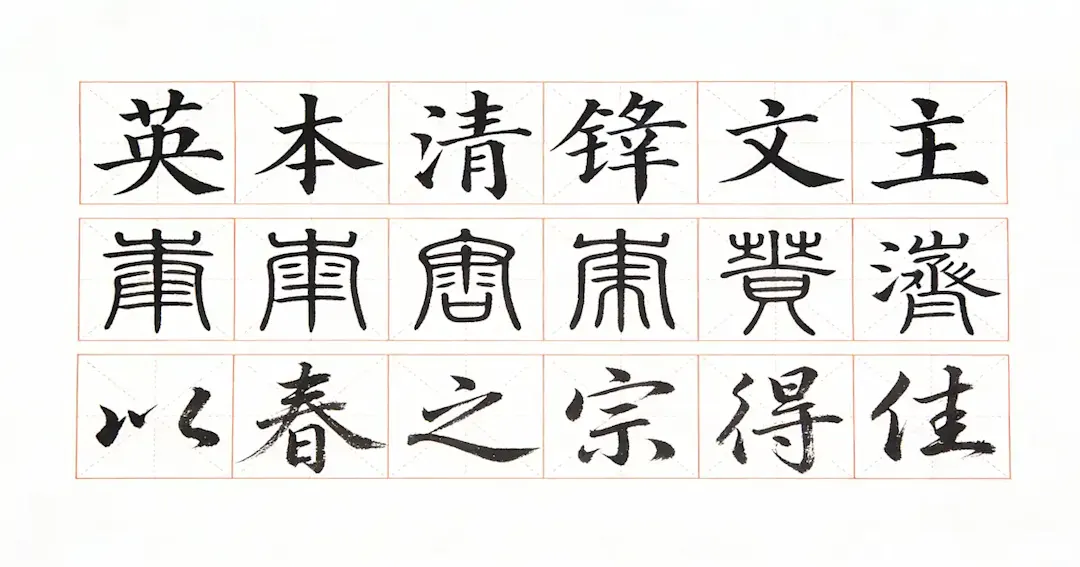
Chinese calligraphy font styles: the 5 big families
A lot of fonts don’t label themselves accurately, so don’t stress about perfect categories. You’re really choosing a “feel.” Still, knowing the main families helps you pick faster—and avoid fonts that look “cool” but become unreadable.
1) Seal-style feel (formal, stamped, ceremonial)
Looks like:
rounded, even strokes; ancient and symmetrical.
Great for:
“name stamp” aesthetics, formal headings, small decorative seals.
Not great for:
anything your child has to read quickly.
2) Clerical-style feel (wide, grounded, historical)
Looks like:
broader strokes, flatter shapes, a calm seriousness.
Great for:
cultural posters, “museum label” vibes, titles with a traditional mood.
3) Standard/Regular-style feel (structured, recognizable)
Looks like:
clear character structure, more consistent proportions.
Great for:
family art where the characters should still be readable.
If you want a chinese calligraphy font that doesn’t scare off beginners, you often land here.
4) Running-style feel (lively, handwritten, still readable-ish)
Looks like:
connected energy, faster movement, personal handwriting.
Great for:
short names, short blessings, titles.
Parent reality check:
for kids still learning characters, running-style can feel like a puzzle.
5) Cursive-style feel (dramatic, expressive, often not readable)
Looks like:
sweeping strokes, heavy stylization, sometimes characters melt into each other.
Great for:
art pieces where “emotion” matters more than legibility.
Not great for:
your child’s homework cover page, unless you enjoy last-minute reprinting.
If your child is still building character recognition, this is one of those quiet turning points: you can keep things inspiring and readable, or you can choose style-first and risk the “I can’t read this” frustration. That frustration shows up fast.

Chinese calligraphy font vs KaiTi: what should parents use for kids?
KaiTi is the classic “handwriting-like but structured” look that many learning materials use. It’s not truly calligraphy in the artistic sense, but it can feel calligraphy-adjacent—more personal than a modern print font.
When a chinese calligraphy font is a good idea for kids
Titles on posters: “My Family in Chinese”
A short couplet for Lunar New Year
A name artwork piece for the bedroom wall
A one-line caption for a photo
When KaiTi usually wins
Worksheets
Any multi-sentence text
Copying practice
Anything graded for readability
And if your child is showing interest in how characters are built (not just how they look), that’s a good time to add a bit of real structure—stroke order, spacing, common radicals. Some families do this casually at home; others prefer guided support. LingoAce Chinese classes are one option parents use when they want steady progress without turning home into a second classroom.

Readability checklist: choosing a chinese calligraphy font kids can actually read
This part sounds boring until you’ve printed something and realized the characters are basically decorative squiggles.
A quick at-home readability test
Pick 10–15 characters your child knows (or is learning). Print them in the font at:
12 pt (small)
18 pt (comfortable)
28 pt (poster size)
Then ask: can your child identify 5 characters in a row without guessing? If they hesitate on every one, the font may be beautiful—but it’s not kid-readable.
What matters most for readability
Stroke separation:
Can you see where one stroke ends and the next begins?
Internal spacing:
Crowded centers make characters blur together.
Consistency:
Some fonts look great on common characters, then fall apart on less common ones.
Weight extremes:
Very thin “hairline” strokes disappear when printed. Very heavy strokes can turn into blobs.
Best real-world uses for a chinese calligraphy font
This section is intentionally practical. These are projects parents and kids can complete without needing a design degree.
Name art scroll (bedroom wall)
Use a chinese calligraphy font for the name (big).
Add pinyin or English name in a clean font underneath (small).
Tip: if your child is still learning, pick a more structured calligraphy style so they can recognize the character shapes.
Lunar New Year cards and couplets
Calligraphy font for the main blessing line.
Readable font for the smaller message (to grandparents, teachers, friends).
Book report or culture day poster
Title in a chinese calligraphy font.
Body text in a readable Chinese font (KaiTi or a standard font).
This pairing looks polished and avoids readability drama.
Family “house rules” sign in Chinese
Honestly, kids love this when it feels like “real life Chinese,” not homework.
Use calligraphy font for the heading.
Use readable font for the rules so everyone can actually read them.
Birthday banner with a Chinese phrase
Short phrases work great in a chinese calligraphy font. Long paragraphs do not. That’s basically the whole secret.
FAQ
Are Chinese calligraphy fonts readable?
Some are, especially more structured calligraphy styles. Many are not, particularly cursive-like designs. For kids, treat a chinese calligraphy font as a “title font” unless you’ve tested readability at the size you’ll use.
What’s the best chinese calligraphy font style for a child’s name artwork?
A structured, regular-style calligraphy look usually works best: it feels traditional but keeps character shapes recognizable. Running-style can be beautiful too, as long as your child can still identify the characters.
Why does my chinese calligraphy font show boxes for some characters?
That font likely has limited character coverage. Test with the exact characters you need, and consider pairing a decorative calligraphy font with a more complete font for any longer text.
Can I use a chinese calligraphy font on a website?
Yes, but you’ll need proper web font setup and licensing. Many decorative fonts aren’t optimized for web performance or broad character coverage. For websites, families often keep body text in a reliable CJK font and use calligraphy style only for headings.
Should my child learn KaiTi before calligraphy?
If your child is still learning to recognize and write characters, a readable style like KaiTi can build confidence faster. Calligraphy styles can be a fun motivation layer—especially when paired with real practice, not used as a replacement for it.
Conclusion
A chinese calligraphy font can make Chinese feel special—more cultural, more personal, more “alive” than a generic print style.And if your child is excited by the look of characters right now, that’s a nice window. You can use that curiosity to build real skills—stroke order, structure, recognition—so Chinese feels less like “copying shapes” and more like something they can own.
If you’d like support turning that interest into steady progress, you can book a LingoAce trial class to see how guided lessons help kids build real confidence with Chinese reading and writing.