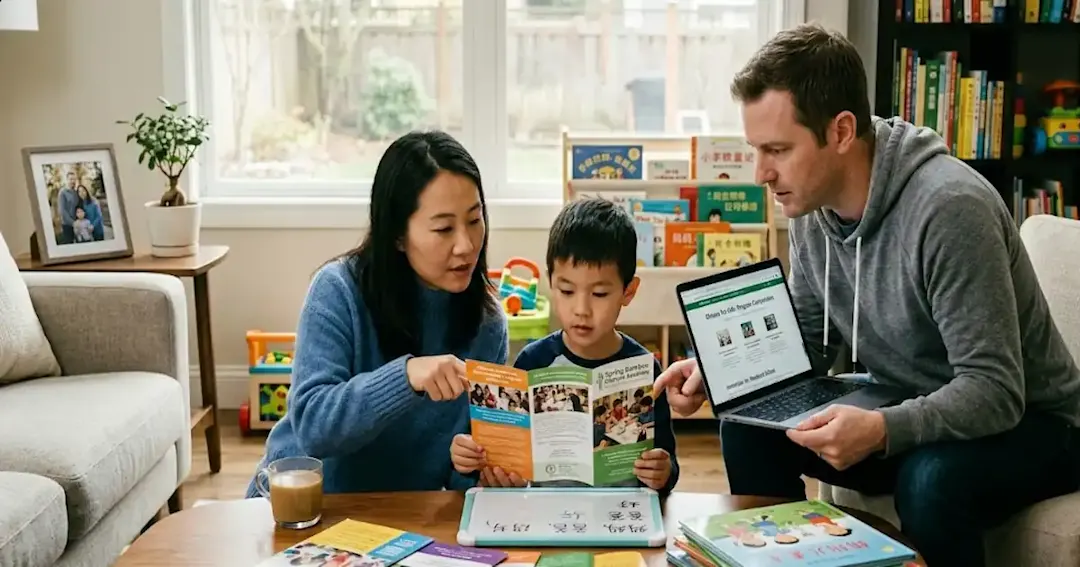
It is a fair concern. Parents often worry that adding one more language will feel overwhelming, confusing, or simply unrealistic in an already busy family routine. Some wonder whether Chinese will become “one language too many.” Others feel interested, but hesitate because they do not know how to make it sustainable.
The good news is that bilingual children are not “disqualified” from learning another language. In many cases, they are actually in a strong position to do it well—especially when Chinese is introduced with the right pace, the right support, and the right learning structure.
That is why Chinese classes for bilingual families are not just about adding another subject. They are about helping children build a new language in a way that fits how multilingual families already live, speak, and learn.
In this guide, we will look at why bilingual families often consider Chinese, what challenges they commonly face, what kind of class setup works best, and how to choose a program that feels realistic for both children and parents.

Why bilingual families often consider Chinese
Not every family starts for the same reason, but the motivations are often surprisingly similar.
Some families already live in a multilingual home and want their child to grow up with broader cultural understanding. Some want to connect children more deeply with Chinese-speaking relatives, friends, or community life. Others see Chinese as a practical long-term skill and want to begin while language learning still feels natural and playful.
For many parents, the thinking is less about pressure and more about opportunity. If a child is already used to hearing more than one language, then adding Chinese can feel like a meaningful extension of that environment—provided it is done thoughtfully.
Chinese can be especially appealing for bilingual families because it offers more than vocabulary and phrases. It opens the door to culture, stories, festivals, family communication, and a wider understanding of how language shapes the world. For children growing up in international, multicultural, or globally minded households, that often feels like a strong fit.
Can bilingual kids really learn Chinese without getting overwhelmed?
Yes—but the method matters.
Children in bilingual families are often already used to switching between sounds, rhythms, rules, and contexts. That does not mean they will automatically find Chinese easy, but it does mean they are usually familiar with the idea that different people, places, and activities can connect to different languages.
What causes overwhelm is usually not “too many languages.” It is more often one of these problems:
expectations that are too high too early
inconsistent routines
lessons that do not match the child’s age or stage
teaching that assumes the child already has a Chinese-speaking home environment
a program that feels like extra academic pressure instead of meaningful communication
In other words, bilingual children do not necessarily struggle because they are learning multiple languages. They struggle when the learning design does not match real family life.
That is why the best Chinese classes for bilingual families usually focus on steady progress, strong speaking support, clear structure, and realistic goals instead of trying to force fast results.
What makes bilingual families different from other learners?
Bilingual families often have real strengths, but they also have very specific needs.
Strengths bilingual children may already have
Many bilingual children are already developing skills that can help with learning Chinese:
they understand that one thing can have different names in different languages
they are often less surprised by pronunciation differences
they may be more comfortable switching between language contexts
they are already growing up with some awareness of culture and communication differences
These are useful foundations. A child who already knows that “home language,” “school language,” and “community language” can be different may be more open to adding Chinese than parents expect.
Common challenges bilingual families face
At the same time, bilingual families often face questions that monolingual families do not:
Will Chinese weaken the child’s stronger languages?
How do we fit a third language into a busy schedule?
What if parents do not speak Chinese themselves?
How do we avoid making language learning feel like pressure?
Should we focus on speaking first, reading first, or cultural exposure first?
These are exactly the questions a good program should be ready to address.
When are Chinese classes a good fit for bilingual families?
Chinese classes are often a good fit when the family wants a consistent, low-pressure way to build exposure and speaking confidence over time.
This is especially true when:
your child is already comfortable hearing more than one language
your family values multicultural learning
you want a structured path rather than random exposure
you do not want Chinese to depend entirely on parents teaching it at home
your child responds well to live interaction, stories, visuals, and routine
Chinese can also be a strong fit when a family wants to build a language gradually without turning the home into a full-time language school. For many bilingual households, this balance matters a lot. Parents want the child to learn, but they also want family life to stay warm, natural, and manageable.
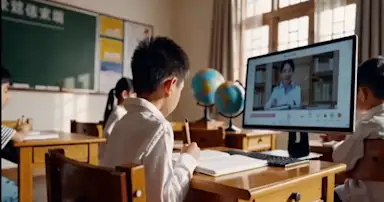
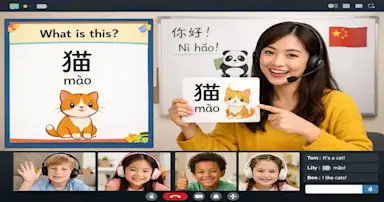
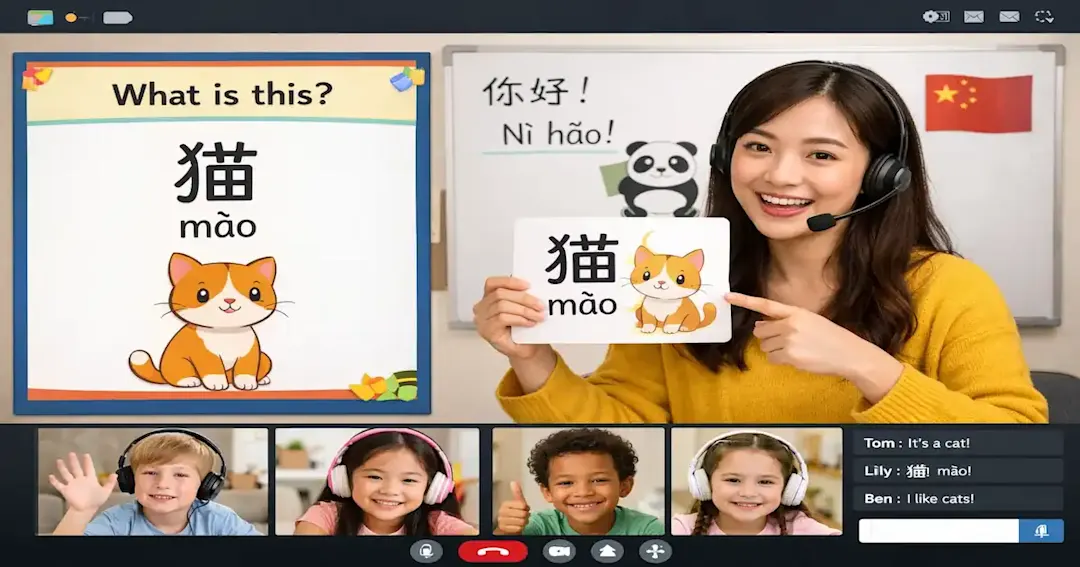
A well-designed online Chinese class can help here by giving children regular instruction, live speaking opportunities, and age-appropriate guidance—without asking parents to create the entire system themselves.

What should bilingual families look for in a Chinese program?
Not every Chinese program is built with bilingual families in mind. Some are too rigid. Some move too fast. Some assume that a parent can reinforce everything at home in Chinese. Some focus so heavily on memorization that children lose interest early.
A better fit usually includes the following elements.
1. Clear age and level matching
A child in a bilingual family is not automatically “advanced” just because they already know two languages. Chinese placement should still match the child’s age, attention span, and actual exposure level.
A good class should answer questions like:
Is this suitable for beginners?
Does the lesson pace fit my child’s age?
Will the teacher support speaking confidence step by step?
Is the class designed for children, not adults?
This matters because a five-year-old bilingual child and a ten-year-old bilingual child may both be beginners in Chinese, but they need very different teaching approaches.
2. Strong speaking support
For many families, the first goal is not perfect writing. It is comfort, listening, and speaking.
A program that helps children hear useful language, repeat it naturally, and use it in simple real-life contexts is often a much better starting point than one that jumps too quickly into pressure-heavy drills.
This is especially important in bilingual homes, where parents are often trying to protect the child’s confidence across multiple languages at once.
3. A structured but flexible curriculum
Bilingual families usually need consistency, but not rigidity.
The best programs offer a clear learning pathway while still fitting real family life. Parents should be able to see where the child is going, what they are learning, and how progress builds over time. At the same time, the schedule and learning rhythm should feel sustainable.
If Chinese only works in theory but not in practice, families will struggle to keep going.
4. Teachers who understand children, not just language
A great Chinese class for children is never only about language expertise. It is also about how well the teacher can engage a young learner, adjust pace, build confidence, and make the child want to participate.
For bilingual families, this matters even more. Children may compare Chinese with the languages they already know, feel shy about pronunciation, or need more encouragement before speaking. A child-friendly teacher can make that transition much smoother.
5. Support for families who do not speak Chinese at home
Many bilingual families are not Chinese-speaking families. They may already be balancing English plus another home language, and Chinese is entirely new.
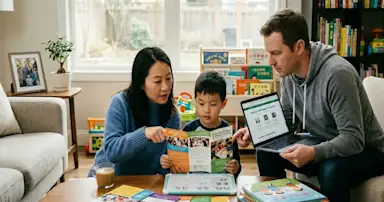
That means the program should not depend on parents being able to reteach every lesson afterward. It should be understandable, guided, and designed so that parents can support the child even if they are also beginners.
Should bilingual families choose 1-on-1 or group Chinese classes?
This depends on the child’s learning style, confidence, and goals.
1-on-1 classes may work well if:
your child is shy or hesitant to speak
your child needs more individualized pacing
your family wants a highly personalized learning path
your child is balancing several activities and needs efficient lesson time
Group classes may work well if:
your child enjoys learning with peers
your child is motivated by interaction and classroom energy
your goal includes participation, routine, and social confidence
For many bilingual families, 1-on-1 classes are especially helpful in the beginning because they give children more speaking time and reduce the fear of making mistakes. Once confidence grows, families may feel more open to other formats too.
How can bilingual families add Chinese without creating pressure?
This is one of the biggest concerns parents have, and it is a very reasonable one.
The goal should not be to suddenly “run a trilingual household.” The goal should be to let Chinese become a steady, positive part of family life.
Here are a few practical ways to do that:
Keep the goal realistic
Not every child needs to become fluent immediately. For many families, a strong early goal is simply this: let the child enjoy Chinese, understand familiar words, and feel willing to speak.
That is already meaningful progress.
Let Chinese have its own space
Chinese does not need to compete with every other language in the home. It often helps when it has a clear context, such as lesson time, story time, songs, festivals, or a few recurring routines.
Children often respond better when each language has a natural place instead of being forced everywhere all at once.
Focus on consistency over intensity
One sustainable class per week, followed by a little review or natural exposure, is often more effective than an ambitious plan that quickly becomes hard to maintain.
For bilingual families especially, long-term rhythm matters more than short bursts of pressure.
Celebrate use, not perfection
If a child says a few Chinese words with confidence, that is progress. If they remember a phrase from class and use it at home, that matters. If they begin recognizing sounds, greetings, or cultural references, that is a real step forward.
Language confidence grows when children feel successful before they feel evaluated.
A common mistake bilingual families make
One common mistake is assuming that because a child already learns multiple languages, they should be able to move quickly in Chinese too.
But Chinese may still be completely new in sound system, structure, and script. The child may need time to get comfortable, even if they are doing well in other languages.
Another mistake is trying to make parents responsible for everything. In many bilingual families, parents are already managing school language, home language, and daily routines. Chinese learning should support family life, not overload it.
That is why a good program should feel like a reliable partner, not one more burden.
What progress can bilingual families realistically expect?
The answer depends on age, frequency, consistency, and motivation. But in general, families can expect meaningful progress when children have:
regular live exposure
clear lesson goals
opportunities to listen and speak
a supportive teacher
a routine they can stick with
Early progress often shows up in small but important ways: a child begins recognizing common words, understands classroom phrases, answers simple questions, sings along with familiar songs, or becomes less afraid to try.
Over time, that foundation can grow into stronger speaking, listening, reading, and cultural understanding.
The key is not instant perfection. It is sustainable language growth.
Why many bilingual families choose online Chinese classes
For bilingual families, online learning can solve a practical problem: how to build consistency without making logistics too heavy.
A quality online program can make Chinese easier to continue because it offers:
regular class time from home
access to trained teachers
a clear learning pathway
fewer commuting demands
a format that fits busy multilingual family life
This can be especially helpful for families who want structured support but do not have easy access to suitable local options.
At the same time, online classes work best when they are interactive, age-appropriate, and designed for children—not when they simply move textbook instruction onto a screen.
How LingoAce can support bilingual families
For bilingual families, the best Chinese program is often one that combines structure, flexibility, and child-centered teaching.
LingoAce is a strong option for families looking for a program that helps children build Chinese step by step through live, engaging lessons designed for young learners. Instead of expecting every family to fit one rigid model, the learning experience can feel more realistic for families who are already balancing multiple languages, busy schedules, and different learning needs.
If you are wondering whether Chinese classes are the right next step for your bilingual child, a free trial can be a helpful place to start. With LingoAce, families can explore live online Chinese learning in a way that feels supportive, age-appropriate, and manageable for real family life. Book a free trial class and see how your child connects with Chinese in a warm and encouraging learning environment.

FAQ
Are Chinese classes good for bilingual families?
Yes. Many bilingual families find that Chinese classes work well when the program is age-appropriate, structured, and realistic about family routines. The goal should be steady progress, not pressure.
Will learning Chinese confuse a child who already speaks two languages?
Usually no. Children can learn multiple languages successfully when each one has a clear context and the expectations are appropriate for their age and stage.
What are the best Chinese classes for bilingual families?
The best Chinese classes for bilingual families are usually the ones that offer strong speaking support, a child-friendly teacher, clear level placement, and a sustainable learning structure.
Can parents who do not speak Chinese still support their child?
Yes. A good Chinese program should not depend on parents being fluent. Families can still support learning through routine, encouragement, and simple follow-up without teaching everything themselves.
Should bilingual kids learn Chinese online or offline?
Both can work, but many families choose online Chinese classes because they are easier to fit into busy schedules and can provide consistent access to trained teachers from home.
Final thoughts
For bilingual families, adding Chinese is not about proving that a child can handle “more.” It is about deciding whether Chinese has a meaningful place in your child’s life and choosing a learning path that makes that possible in a sustainable way.
The best Chinese classes for bilingual families are the ones that respect how multilingual homes really work. They help children grow steadily, build confidence step by step, and give parents a clearer, more realistic way to support language learning without turning it into extra pressure.
If your child is already growing up across languages, Chinese does not have to feel like too much. With the right program, it can become a natural extension of your child’s multilingual world. And sometimes, the easiest way to see whether a class is the right fit is simply to let your child experience it first.