
If you’ve ever caught yourself thinking, “My kid speaks some Mandarin, but would they actually keep up in a Chinese classroom?”—you’re not alone. In 2026, more North American families are doing a little mental math: grandparents back in China, a possible short-term move, a summer school program, even just wanting a child to feel confident when visiting relatives. The problem is that the Chinese education system can feel like a black box from the outside—lots of big exams, lots of homework… and then what?Next, I will walk you through what the Chinese education system is like.
What is the Chinese education system
When people say the Chinese education system, they might mean one of three things:
The structure: what ages go to which schools, and what the common pathways look like.
The testing culture: how major exams shape choices, especially in middle and high school.
The day-to-day reality: pace, homework, parent involvement, and how schools “measure” progress.
You’ll also see overlapping terms that get mixed together online:
“China K–12”: a Western shorthand for schooling before university.
“Compulsory education”: schooling that the state requires and guarantees; families talk about this as the “baseline years.”
“Junior secondary” / “Senior secondary”: roughly “middle school” and “high school,” but the stakes and the schedule don’t always feel like North America.
Why does this matter if you’re sitting in California or Ontario? Because once you understand the map, you can make better calls about your child’s Chinese learning. Otherwise it’s easy to chase the wrong thing (more speaking practice, more flashcards) when what’s actually missing is the ability to read a grade-level passage and write a clear paragraph.
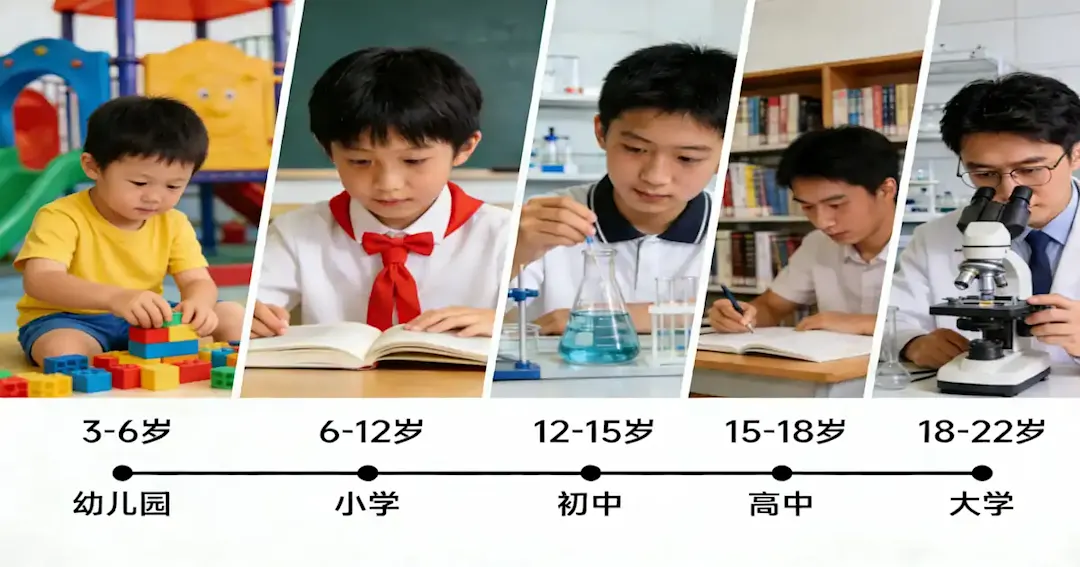
Chinese education system structure by age and grade
Ages 3–6: Kindergarten (幼儿园)
Kindergarten is not part of compulsory schooling, and the experience can vary a lot. Some kindergartens are play-based; some are more academic than North American parents expect. If you’re planning a move, ask specifically about:
language of instruction (Mandarin, local dialect, bilingual),
daily schedule,
and whether there’s early literacy practice.
If your child is a heritage learner, they may sound fluent to relatives, but when asked to recognize characters or follow classroom routines in Chinese, that’s where confidence can wobble. It’s a very normal wobble.
Ages ~6–12: Primary school (小学)
Primary school is where many children build the foundation for reading, writing, math, and—importantly—study habits. Two practical notes for parents looking in from abroad:
Chinese language arts (语文) is often a big identity subject. It’s not only “learning words.” It’s reading comprehension, short essays, recitation, and writing with structure.
The pacing can feel faster than many North American parents expect, especially around character recognition and writing.
Ages ~12–15: Junior secondary / middle school (初中)
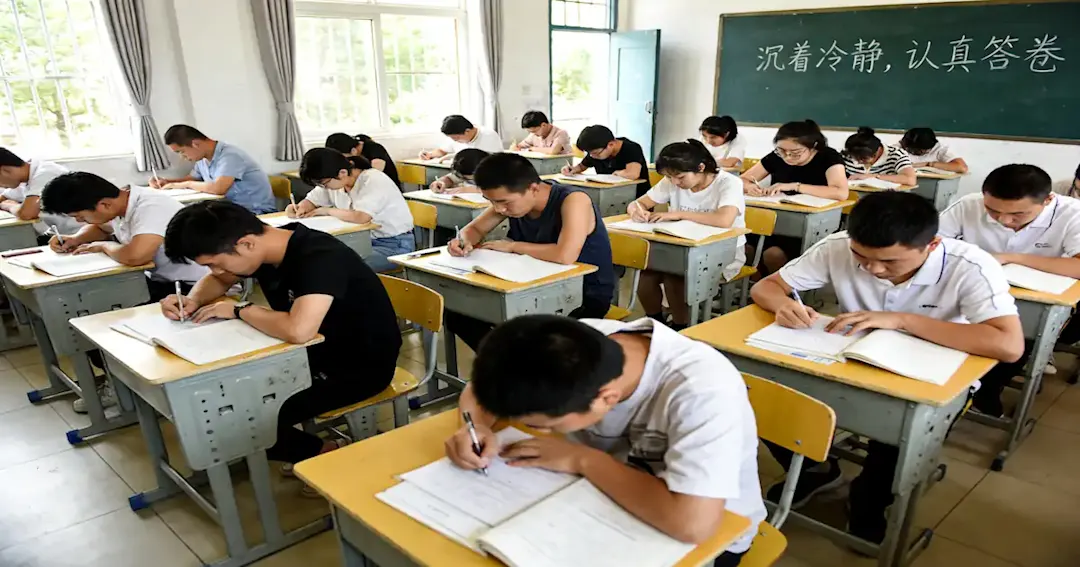
This is where people start whispering about Zhongkao. Even if your child isn’t taking the exam, the culture around it shapes schedules: more tests, more ranking, more “we need to be ready.” Some schools ramp up earlier; some later.
Ages ~15–18: Senior secondary / high school (高中) + vocational track (职高/中专等)
Students commonly split into academic high school and vocational options. The split is nuanced and region-specific, but the big idea is: high school is not one single lane. Families choose (or are guided into) different pathways that lead to different post-secondary options.
Chinese education system curriculum—what kids actually study
Let’s keep this concrete. Parents don’t need a curriculum document; they need to know what “being on level” looks like.
Chinese (语文): reading and writing are the core
In the Chinese education system, “Chinese class” is not just language—it's a gatekeeper for thinking skills and test performance. Typical expectations include:
reading longer passages and answering comprehension questions,
learning characters and using them correctly in writing,
writing short essays that have a clear structure (opening, development, conclusion),
building vocabulary that’s not used in daily conversation (more formal, more academic).
A child can speak Mandarin at home and still freeze when asked to write a paragraph with transitions. That’s not a character flaw. It’s a skills mismatch.Start with a lesson to pinpoint their level, then build skills step by step through graded reading and short, structured writing. If you’d rather not DIY the plan, a trial class with LingoAce can be an easy first step to see if the pace feels right for your family.
Math (数学): pace + practice
Math tends to be structured, with a strong practice component. Many parents describe it as “more drill-based,” but it also depends on teacher and school.
English (英语): starts early in many places
English is commonly taught in primary school in many regions. For North American families, this is more of a cultural note than a worry point—your child is likely already exposed to English, but the test format can be different.
Science and social studies: vocabulary matters
Subjects like physics, chemistry, history, and geography can become vocabulary-heavy quickly. This is where heritage learners sometimes struggle: they know the concept in English but not the Chinese term, and the term is what the test asks for.
If your child might join a school in China even temporarily, subject vocabulary can be the surprise pain point. Kids will say, “I know this!” and then get stuck on the words.
For example,LingoAce offers online Chinese classes for kids with structured lessons and teachers who can guide reading and writing in a way that feels manageable at home. If you want to see what level your child is at and what a realistic plan looks like, you can book a trial class and use it as a low-stakes “starting point” rather than a big commitment
Chinese education system workload—homework, tutoring, and the real daily rhythm
This is the section parents read twice.
A “typical day” is hard to generalize, so I’ll describe a pattern you’ll hear about often: school day, homework, extra practice, sleep, repeat. In some schools, the homework is manageable and the family protects free time. In others, especially around exam years, nights get longer.
Here’s what tends to drive workload in the Chinese education system:
Frequent testing: more mini-tests means more review cycles.
Ranking pressure: even informal class rankings change how kids feel about studying.
Peer norms: if classmates are doing extra worksheets, your child notices.
Parent decision-making: families choose tutoring not because they love it, but because it feels risky not to.
kids often become strategic about effort. Some kids sprint in exam years and relax later; some do the opposite; some burn out. Parents outside China sometimes assume “Chinese kids are just disciplined.” That’s a lazy story. They’re responding to an environment.
FAQs
1) Can my North American child “transfer in” easily?
Sometimes yes, sometimes no. It depends on city policy, school capacity, paperwork, and your child’s Chinese literacy. In the Chinese education system, the biggest practical barrier is often reading/writing level rather than speaking.
2) If my child speaks Mandarin at home, are they basically fine?
They’re ahead socially, yes. Academically, not necessarily. Classroom Chinese involves reading passages, writing essays, and understanding subject vocabulary—skills that don’t automatically appear from dinner-table conversation.
3) How much homework is “normal”?
It varies widely by grade, city, and school. Parents often report workload spikes around exam years. If you’re choosing a school, ask for a sample weekly schedule rather than relying on general impressions.
4) What’s the difference between Zhongkao and Gaokao again?
Zhongkao is commonly tied to high school placement; Gaokao is commonly tied to university admissions. Both shape study culture, but they affect different stages.
5) Are international schools always less stressful?
Not always. Some are more balanced; others are intense in different ways (projects, language load, applications). Stress level depends on expectations and fit, not just the label.
6) What’s the one skill that helps the most if we might move?
Steady Chinese literacy. If your child can read age-appropriate materials and write simple, structured paragraphs, they adapt much faster—inside or outside the Chinese education system.
7) What if we’re only visiting China for the summer—do we need to worry?
You don’t need to panic, but a bit of preparation helps. A child who can read basic signage, short stories, and write a few sentences will feel much more independent (and less frustrated).
8) How do I know if my child is “on track” in Chinese?
Use three quick checks: reading fluency (can they read smoothly?), comprehension (can they explain what they read?), and writing (can they write a short paragraph without melting down?). If one of these is weak, that’s where you focus.
Conclusion
The Chinese education system isn’t one single experience—it’s a structure plus a culture, and both shift by region and by grade level. Still, a few parent-level truths hold up: exams shape pathways, literacy shapes confidence, and consistency beats panic. If you keep your child reading and writing in Chinese a little bit each week, you’re quietly building the skills that matter most—whether your family stays in North America or spends time in China.
If you’d like a clearer baseline and a plan that fits a busy schedule, consider booking a LingoAce trial Chinese class as a next step. It’s an easy way to see your child’s current level (especially reading and writing) and get a realistic roadmap