
Most people who search Chinese etiquette are trying to solve one practical problem: in family visits, group dinners, gift-giving, and holiday occasions, what can kids do so they come across as natural, respectful, and not accidentally “rude”?
This 2026 family guide breaks Chinese etiquette into four everyday modules—greetings, table manners, gifts/red envelopes, and “face” (how you communicate and correct others). You’ll get kid-friendly, ready-to-use scripts, quick fixes for common missteps, and a simple 10-minute at-home practice routine.
What Is Chinese Etiquette?
When people say Chinese etiquette, they usually mean the small choices that signal respect, care, and social harmony: how you greet, how you offer and receive, how you handle mistakes, and how you show consideration for age and role.
Chinese etiquette is the set of small choices that signal respect, care, and relationship awareness—how you greet, offer and receive, handle mistakes, and show consideration for age and role.
Two differences that matter for North America families:
Context matters more than strict rules
(elder vs. peer, host vs. guest, home vs. restaurant, holiday vs. casual).
Harmony often matters more than blunt clarity
(especially in front of others). That’s where “face” comes in: helping people feel respected and not embarrassed.
Chinese Etiquette for Greetings and First Impressions
Small changes that make a big difference
1) The safe default greeting
For kids, “Hello!” plus eye contact and a calm voice goes far.
If your child is learning Mandarin, a practical progression is:
你好 (nǐ hǎo)
— safe default for most people
您好 (nín hǎo)
— more respectful; useful with elders, teachers, and formal introductions
If a child forgets, don’t panic. Model it once and move on. The point is the warmth, not perfection.
Kid can say (ages 3–7): “Hello, Auntie/Uncle!” / “Nín hǎo!”
Kid can say (ages 8–15): “Hello! It’s nice to see you.” / “Nín hǎo, hěn gāoxìng rènshi nín.” (Nice to meet you.)
2) Friendly small talk that signals care
Some Chinese greetings are less about information and more about connection. For example, asking about eating can be a culturally warm greeting rather than a literal question, and it often gets explained in learner-facing guides because it surprises English speakers.
If you’re not comfortable teaching that exact phrase, you can keep the same spirit:
“Did you have a good day?”
“How’s school?”
“How have you been?”
The goal is to teach kids a simple idea: show interest first, then talk about yourself.
3) Titles and family terms
Many North America Chinese communities use “Auntie/Uncle” for close family friends. It’s not about literal family trees; it’s a respect signal.
If your child struggles, give them one rule they can remember: “When you don’t know the name, use a respectful title.”
Examples:
“Auntie / Uncle” (community setting)
“Teacher” (school/community class)
“Grandpa / Grandma” (even if not biological, when the family uses it)
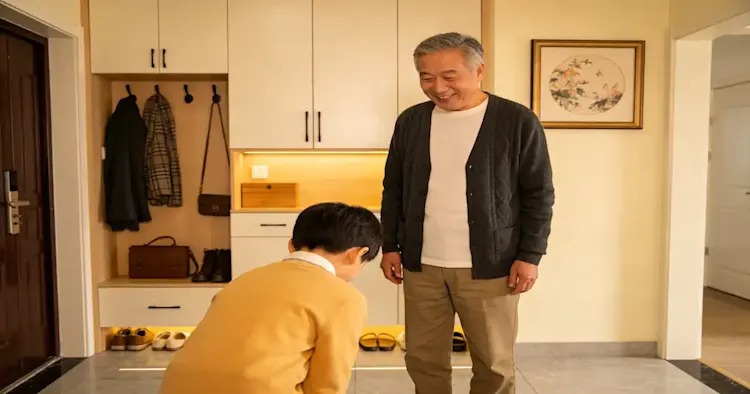
4) The tiny body-language habits that read as respectful
Kids don’t need to bow. But these habits help:
Speak one notch softer around elders
Pause and let elders finish speaking
When handed something, use
two hands
if possible (especially gifts, red envelopes, documents)
This “two hands” habit becomes a lifesaver later, because it works across many situations and looks intentional.
If you’d like your child to practice polite phrases and cultural context with a teacher—so they can actually use them in conversation—LingoAce offers trial classes you can book as a low-pressure way to see if online Chinese learning fits your family.

Chinese Etiquette for Dining: Restaurants and Family Meals Without Stress
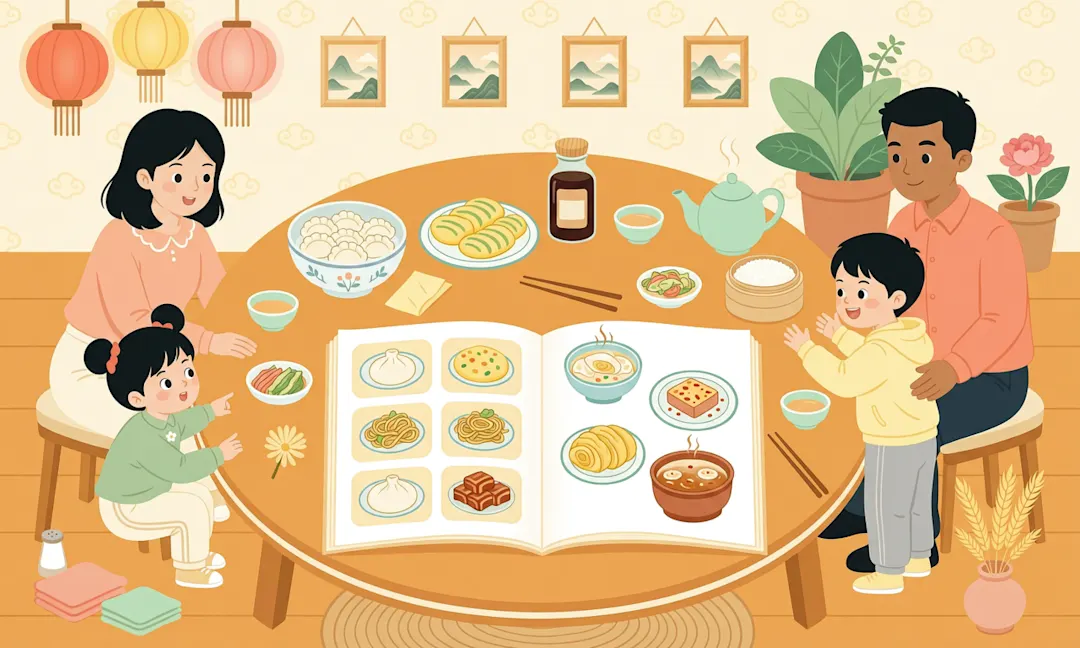
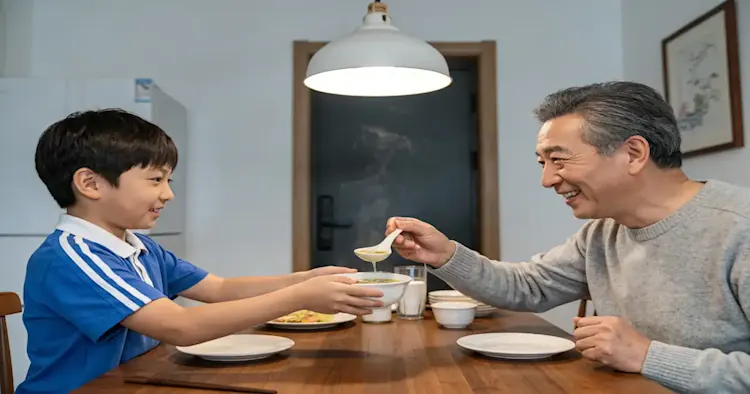
Dining is where families feel the most pressure, and Chinese etiquette can feel “high stakes” because everyone is watching. The good news: you can teach the “why” in one sentence and then focus on three practical skills:
waiting cues;2.chopsticks habits;3. receiving/serving politely.
Focus on three skills: wait for cues, chopsticks habits, and polite accepting/sharing.
Starting to eat
“Let’s wait until Grandma/Grandpa starts.”
Chopsticks rules that actually matter
Don’t stick chopsticks upright in rice.
Don’t point with chopsticks.
Don’t rummage through shared dishes—take the closest piece.
If you touched it, take it (don’t put it back).
Two scripts that save dinners
When offered food: “Thank you!” / If full: “Thank you, I’m full.”
When sharing: “Would you like some?” (offer first, then take)
Toast (kid can say)
If clinking with elders, keep your glass slightly lower (water/juice counts).
Chinese Etiquette and “Face” (面子): How to Correct Kids Without Backfiring
You don’t need to teach kids a heavy cultural theory. In practice, Chinese etiquette here is a parenting tool: protect the relationship first, then fix the behavior.
“Face” is often described as a mix of dignity, social standing, and how someone is seen in a group; it shows up in everyday decisions about praise, criticism, and public situations.
1) The mistake: correcting in public
In some families, public correction—especially from a child to an adult—can feel like a “face loss” moment. That’s why a kid saying “You’re wrong” at the table can hit harder than intended.
Try this pattern instead:
In public:
redirect softly
In private:
explain the rule and practice the better script
2) Teach “give face” as kindness
Giving face can be as simple as:
praising effort in front of others
thanking someone publicly
letting an elder finish a story even if it’s long
For kids, frame it like this: “We’re helping people feel respected.”
3) A teen-friendly script for disagreements
Teens often get stuck between honesty and harmony. Give them a script that keeps both:
“I see what you mean. Can I share another idea?”
“That makes sense. I learned it a slightly different way.”
It’s not fake. It’s socially intelligent.
A 10-Minute Chinese Etiquette Practice Routine for Busy Families
If you’re busy, you need something you can do repeatedly—short, predictable, and not cringe.Try this once or twice a week. Think of it as a mini Chinese etiquette workout—short, repeatable, and low-drama.
Minute 0–2: One greeting + one respectful habit
“Hello, Auntie/Uncle” + two hands when receiving something
Minute 2–6: Three mini roleplays
Food offer
Adult: “Have more.”
Kid: “Thank you! I’m full.”
Gift receiving
Adult hands a small item
Kid: “Thank you. This is thoughtful.”
Minute 6–10: One “repair” sentence
Teach a repair phrase that saves the moment:
“Sorry—what I meant was…”
“Excuse me, may I try again?”
That’s it. Short practice builds confidence fast—especially for kids who freeze in front of relatives.
FAQ: Common Questions Ask About Chinese Etiquette
What are the biggest Chinese etiquette mistakes kids make at the dinner table?
The most common ones are chopsticks behavior, grabbing the “best” piece from a shared dish, and speaking too loudly or interrupting elders. A quick fix is teaching one placement rule for chopsticks and one “wait for Grandma” cue.
What gifts are considered unlucky in Chinese culture?
It varies by family and region, but many guides warn against gifts tied to negative symbolism or wordplay and recommend safer, shareable items if you’re unsure. When in doubt, choose something practical or edible, and present it neatly.
How do I explain “face” to a child without making them anxious?
“Face means helping people feel respected.” Then teach one skill: correct people privately, not publicly. You’re teaching kindness, not fear.
Is it rude to open gifts immediately?
Sometimes, yes—especially in more traditional settings. If you’re unsure, ask the host or follow their lead. For kids, a simple rule works: “Wait until the grown-ups say it’s time.”
What should my child say instead of a blunt “No” to food or a request?
Try a soft landing: “Thank you, I’m full,” “Maybe later,” or “I’ll try a little.” This keeps the relationship warm while still setting a boundary.
Conclusion
Learning Chinese etiquette as a family isn’t about turning your child into a miniature adult. It’s about giving them a few reliable habits—greet respectfully, handle food and gifts thoughtfully, and protect relationships when mistakes happen. Start with the situations your family actually lives: dinner out, visiting relatives, birthdays, and community events. Then practice one tiny script a week. Consistency beats perfection.
If you want your child to build real confidence using polite Chinese phrases in the right moments , book a LingoAce trial class and let them practice with a teacher who can coach both language and cultural context.