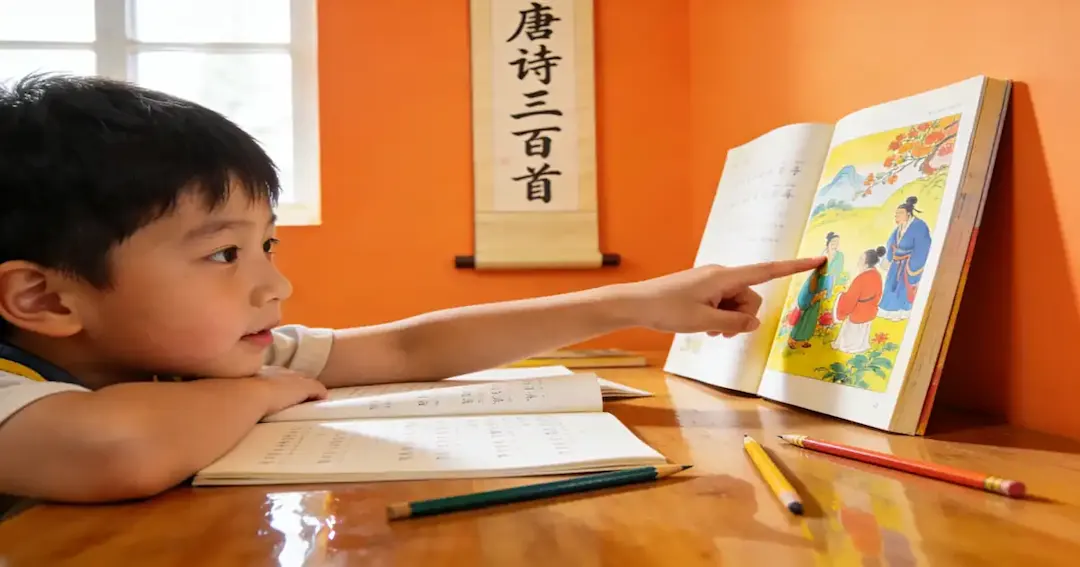
Exploring the World of Chinese Characters: A Journey of Chinese Enlightenment for Children Aged 3-6
In this era of globalization and close connections, Chinese is not only one of the most spoken languages in the world but also an important tool for cultural exchange and business interactions. For Chinese families living overseas, teaching their children Chinese is not just about passing down a millennia-old cultural heritage, but also about providing them with more choices and opportunities in their future lives. Especially during the early developmental stages of children, the period between 3-6 years old, learning Chinese in a fun and educational way can effectively cultivate their language abilities and sense of identity with Chinese culture. This article will guide parents and children to delve into the mysteries of 15 everyday Chinese characters, stimulate children's interest in learning, and provide practical teaching methods and resources to support Chinese education in overseas Chinese families.

The Chinese Learning Journey for Children Aged 3-6
Why choose to start Chinese enlightenment at 3-6 years old? Children at this stage are in a sensitive period for language, full of curiosity about new things and with a strong learning capacity. Through learning everyday Chinese characters, children can not only recognize words but also understand culture through them, developing a sense of language. The importance of recognizing everyday Chinese characters is self-evident; they are the most frequently encountered and resonant vocabulary for children. How to use these characters to interact with children has become both a challenge and an opportunity for overseas Chinese parents.
Delving into 15 Everyday Chinese Characters
Dad, Mom: The first lesson of the family. In a child's world, parents are the closest beings. Teaching children to write "爸" (dad) and "妈" (mom) not only lets them feel the warmth of the family but also deepens their understanding of Chinese characters through emotional communication. For example, when children can write the characters for "dad" and "mom," they will excitedly show them to their parents, and such interaction is a precious moment in the learning process. Person, Big, Small: Describing the surrounding world. Through these basic characters, children begin to observe and describe the environment they are in. These characters have simple structures and are easy to write, forming the foundation for children's understanding of the world. For instance, children can compare the sizes of different objects during play and then use "大" (big) and "小" (small) to describe them, activities that can deepen their understanding and memory of the characters. Sun, Moon: The basic elements of nature. The sun and moon are indispensable parts of children's daily lives, and learning these two characters help

s children better understand the concepts of time and nature. For example, parents can observe the moon together at night and recite the lines from the "Book of Songs," "The movement of the sun and moon is as if they are coming out from within; the stars and the Milky Way are brilliant as if they are coming out from it," letting children feel the wonderful connection between Chinese characters and nature. Mouth, Hand, Foot: Recognizing body parts. Through these characters, children learn to express their body parts, which is crucial for their self-awareness and expressive abilities. Through simple interactive games like "Simon says," parents can instruct children to "touch the mouth" or "raise the hand," and while performing the actions, children are also learning these basic characters. Eye, Ear, Nose: The enlightenment of the sensory world. These characters help children recognize and understand their senses, the tools with which they explore the world. Parents can teach these characters by describing the things children see with their eyes, the sounds they hear with their ears, and the smells they smell with their noses, allowing children to learn in the context of actual experiences.

Play, Eat: Children's daily activities. Playing and eating are the most common activities in a child's daily life, and through these two characters, children can naturally integrate Chinese characters into their daily routines. Parents can guide their children to say "I am playing" or "I am eating" during playtime or meals, helping them deepen their understanding of these characters through practical use.
Teaching Methods and Resources
Suggestions for creative teaching activities. To make learning Chinese characters lively and interesting, parents can design some educational and fun games, such as Chinese character puzzles and matching card game

s, allowing children to learn while playing. For example, parents can create a set of character cards, each with a Chinese character and a corresponding picture, and children can learn by matching the pictures with the characters. Interactive learning tools and applications. There are many Chinese learning apps on the market designed for children, which stimulate their interest in Chinese characters through interactive and gamified methods. For instance, the app "Baby Learns Chinese Characters" offers a variety of interactive games that help children learn characters in a pleasant atmosphere. Recommended Chinese educational resources. In addition to online resources, parents can also refer to professional Chinese textbooks and books, such as "Baby's First Book of Chinese Characters," which provide systematic learning guidance. These books usually contain rich illustrations and stories that help children better understand the meanings and uses of Chinese characters.
Conclusion
Through this article, we hope that parents will recognize the importance of learning Chinese characters for children aged 3-6. We encourage parents to participate in their children's Chinese learning process and explore the mysteries of Chinese characters together. At the same time, we also call on the overseas Chinese community to provide more support and create an environment conducive to Chinese education. Let's join hands to lay a solid foundation in language and culture for our children's future. At LingoAce, each course is the result of our team's over a hundred hours of curriculum design, material creation, simulated teaching, teacher training, and quality control. We invite you and your child to join a free trial class and personally experience the extraordinary Chinese learning experience that LingoAce offers!