Numbers hold an oddly emotional place in Chinese culture. Ask someone why they chose a certain date for a wedding or why they paid extra for a particular phone number, and you’ll often get a small smile before they explain the meaning behind it. Some numbers feel warm and lucky; others carry a chill simply because of how they sound.
Once you start exploring Chinese lucky numbers, you begin to notice how these tiny symbols shape everyday choices—quietly, almost invisibly, yet very much alive in the background of modern life.
What looks like a simple digit to outsiders can carry decades of belief, family tradition, and a little hope tucked inside it.

What Are Lucky Numbers in Chinese?
In China, certain numbers are believed to bring good fortune, while others are thought to bring the opposite. It might sound whimsical at first, but these preferences influence real decisions—big ones.
A business might choose an office floor based on a number’s meaning. Parents might wait for a good date to register a marriage. Even choosing a phone number or license plate becomes a little ritual of hope.
And when it comes to unlucky numbers, people avoid them in the same way Western cultures shy away from the number 13—only here, the symbolism goes much deeper.
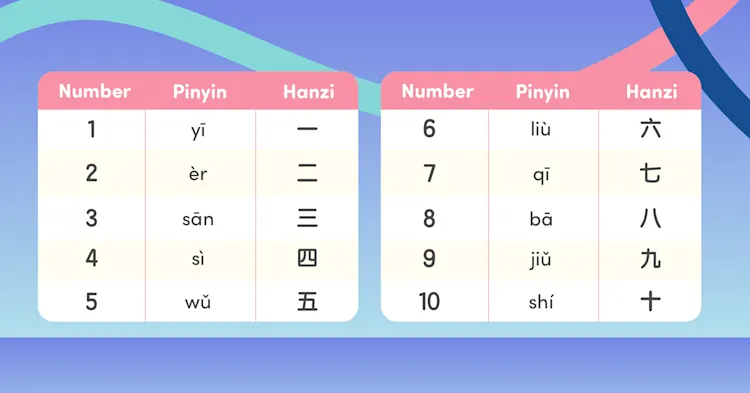
Chinese Number Guide: Counting From 1 to 10 in Chinese
Before diving into the luckiest numbers, it helps to hear how they sound. Pronunciation often decides whether a number feels fortunate or not in Chinese culture.
What Numbers Are Luckiest in Chinese?
Number 8 (八, bā)
If there’s one number that makes people’s eyes light up, it’s 8. The sound of “bā” resembles “fā,” a word tied to wealth and rising fortune.
No surprise—it shows up everywhere. People pay shocking amounts of money just to secure a phone number or license plate filled with 8s.
One famous story still circulates online: someone in Hangzhou once tried to sell an A88888 license plate for nearly $140,000. Sounds wild, but in the world of Chinese lucky numbers, it makes perfect sense. Properties with an 8 in their address even tend to sell faster or at higher prices. It’s the kind of superstition that quietly shapes modern life.

Number 6 (六, liù)
The number 6 has a softer, easygoing kind of luck. It sounds like the word for “smooth,” and people love that idea—life unfolding with fewer bumps, fewer headaches.
There’s a cheerful phrase that people sometimes say: “六六大顺”, a blessing that everything goes smoothly, almost effortlessly. It’s warm, encouraging, a little playful. Businesses especially adore this number because it feels like an invitation for success.
Number 9 (九, jiǔ)
9 is powerful in its own quiet way. It sounds like the word for “long-lasting,” which makes it a meaningful number for weddings and anniversaries. When you wish someone a love that lasts forever, nine becomes a natural symbol.
Culturally, it even hints at something grander—longevity, achievement, cycles that come full circle. There’s an old expression “九九归一”, telling the story of returning to the origin. It’s deep, poetic, the kind of symbolism Chinese culture does so well.
Number 3 (三, sān)
The number 3 has a light, hopeful energy. Its pronunciation echoes the word for birth, renewal, beginnings. It often shows up in new projects or business ventures because people like the thought of steady growth.
A lovely idiom linked to it is “三生有幸”—a way of saying “I’m incredibly fortunate,” with a tone of gratitude. It feels personal, almost emotional.
Number 2 (二, èr)
While 2 might seem ordinary to some cultures, in China it represents harmony. Pairs. Balance. The idea that good things come in twos.
It’s a comforting number. Weddings love it. Partnerships love it. There’s even a saying, “一举两得”, meaning “one move, two gains.” Practical, optimistic, very Chinese.
Unlucky Numbers in Chinese Culture
Of course, not every number brings good feelings.
4 (四, sì) is the most avoided of all because it sounds heartbreakingly close to “death.” You’ll see buildings skip the fourth floor, phone numbers carefully chosen to avoid it, and people flinch a little when it shows up in sensitive situations.
13 also carries a shadow—not entirely Chinese in origin, but the superstition has blended into local beliefs over time.
Together, these numbers show how deeply numerology and sound symbolism run through daily life.
How to Say Lucky Numbers in Chinese
8: 八 (bā) 6: 六 (liù) 9: 九 (jiǔ) 3: 三 (sān) 2: 二 (èr)
Final Thoughts
When you look closely, Chinese lucky numbers aren’t just superstition—they’re tiny cultural fingerprints. The meanings people attach to them say a lot about what they hope for: a peaceful life, steady progress, moments that last. It’s strangely comforting to see how much optimism people tuck into something as small as a number.
For kids learning Mandarin, this kind of cultural detail usually sparks curiosity. They start noticing patterns in words, sounds, little coincidences that adults take for granted. It gives them the feeling that the language isn’t just vocabulary and tones; it’s a whole world where even numbers have personalities.
If you’re thinking about helping your child explore that world, LingoAce offers a gentle place to start. The teachers know how to meet kids where they are, and the lessons feel calm yet purposeful—nothing rigid, nothing overwhelming. It’s the kind of environment where a child can slowly fall in love with Mandarin without even realizing it’s happening. You can always try a free class just to see whether it clicks for your family.