"Mom, do Chinese people celebrate Christmas?"
When 7-year-old Leo asked his mother, Mrs. Liu, this simple question, she found herself stuck.
A "yes" felt wrong—it's not a traditional family holiday. A "no" felt equally wrong—she had just seen photos of giant, glittering Christmas trees in Shanghai.
This is the "Christmas Puzzle" that countless parents face. Leo's confusion is universal for any child learning Chinese: he's caught in a conflict between visible facts (trees, Santa) and invisible tradition (family, meaning).
The missing piece is cultural context in language. This article uses this classic story to show why teaching this "why" (the cultural context) is far more important than just teaching the word for "Santa."

Decoding the Difference: Malls, "Peace Apples," and Spring Festival
Stuck between a "yes" that felt misleading and a "no" that felt incorrect, Mrs. Liu did what many parents do: she turned to an expert. She decided to bring this "Christmas Puzzle" to the one person she knew could provide the full picture: Leo's LingoAce teacher.
This is where the magic of 1-on-1, contextual learning happens.
Instead of just giving a simple answer, Leo's teacher (Wang Laoshi) saw it as a perfect opportunity. She smiled and designed a "cultural discovery" lesson on the spot, to "decode" the Christmas in China idea for him in three steps:
The 3-Step "Decoding" of Christmas in China
Step 1. The "Phenomenon": A Commercial, Secular Holiday
First, the teacher Wang showed Leo photos of bustling Chinese shopping malls. This is where he learned the vocabulary 圣诞老人 (Shèngdàn lǎorén) (Santa Claus) and 礼物 (lǐwù) (gift).
"In big cities," she explained, "Christmas is highly visible and looks very festive. But for most people, it's a 'shopping festival' and a 'party day' for young adults to go out to dinner.
It is not a religious holiday, and it is not an official public holiday, so children still go to school."
Step 2. The "Custom": How Homophones Created the "Peace Apple"
This is where the lesson in cultural context in language truly begins. China hasn't just adopted Christmas; it has adapted it with its own unique, and very Chinese, customs.
The most famous example is the "Peace Apple." Teacher Wang showed Leo a picture of a beautifully wrapped, decorated apple, often sold in a special box for a high price on December 24th. In Chinese, Christmas Eve is called 平安夜 (Píng'ān Yè), which literally translates to "Peaceful Night" (from the carol "Silent Night").
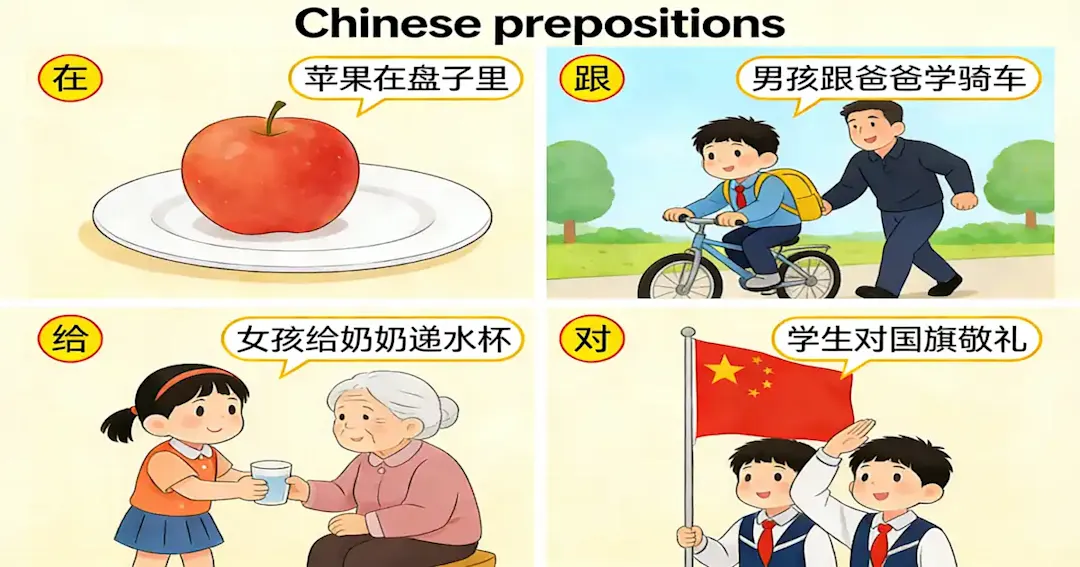
The word for "apple" is 苹果 (Píngguǒ). That first syllable, píng, sounds exactly like the píng in "peace."
This is a perfect, bite-sized example of xiéyīn (谐音), or "homophones"—a concept that is absolutely critical to understanding Chinese culture for kids. It’s the same cultural logic that makes the number 8 (八, bā, which sounds like fā, "to get rich") lucky, and the number 4 (四, sì, which sounds like sǐ, "death") unlucky. It's also why "fish" (鱼, yú) is a must-have dish at Spring Festival, as it sounds just like "surplus" (余, yú), representing a wish for abundance.
This "peace apple" is a custom that is 100% "Made in China." It shows Leo that Chinese culture is playful and creative, often borrowing an idea and then adding its own deep linguistic meaning to it. Teaching this one concept opens a door to understanding why certain numbers are popular or avoided, and why so many blessings are built around wordplay.

Step 3. The "Essence": Contrasting Christmas with Spring Festival
The final step was the most important. "To understand what Christmas in China is," the teacher explained, "you must understand what it is not."
She then contrasted it with 春节 (Chūnjié), the Spring Festival.
Public Holiday: "Christmas is a normal workday. Spring Festival is a 7+ day national holiday where the entire country stops."
Core Unit: "Christmas is for friends. Spring Festival is 100% for family."
Travel: "For Spring Festival, hundreds of millions of people travel home. This is called 春运 (Chūnyùn). For Christmas, everyone stays in their own city."
Rituals: "Spring Festival has 团圆饭 (tuányuánfàn) (reunion dinner) and 红包 (hóngbāo) (red envelopes). Christmas has... shopping sales."
This contrast made the answer clear. Do Chinese people celebrate Christmas? Yes, as a fun, commercial "party day." But does it matter in the same way? No.
The Breakthrough: Understanding Cultural Weight
After Teacher Wang contrasted Christmas with the Spring Festival, there was a pause. Leo, who had been quietly absorbing the information, suddenly lit up.
"Oh!" he said, the connection clicking into place. "I get it! So in China, Christmas is fun... but Spring Festival is important!"
This was the breakthrough. It wasn't about a "yes" or "no" answer to "do Chinese people celebrate Christmas." Leo had grasped a much more complex and vital idea: cultural weight.
He understood that two holidays can look festive, but have completely different levels of meaning and importance. He hadn't just learned what Chinese people do; he had learned why. This is the true meaning of cultural context in language. He finally understood why his family treated Christmas as a fun, optional novelty, while Spring Festival was a serious, non-negotiable family event. The puzzle was solved.
How a "Peace Apple" Teaches Cultural Context
This experience gave Leo's parents a key realization about their son's education.
First, they realized their child's curiosity was a "gold mine." When Leo asked "why," that was when his motivation to learn was highest. A textbook can't answer a 7-year-old's complex question about cultural nuance. But a real, native-speaking teacher can seize that moment of curiosity and turn it into a deep, lasting lesson.
Second, they learned that cultural context in language is fluency. Leo learning the "peace apple" (Píngguǒ / Píng'ān) connection was infinitely more valuable to his real-world understanding than memorizing ten other fruit words from a flashcard. Why? Because it taught him how the language works. It opened a door to the world of Chinese wordplay, puns, and symbolism—a core part of communicating like a native speaker.
Third, they understood the limits of their old tools. They realized why flashcard apps and cartoons had failed them. An app can teach the word "apple," but it can never explain the Píngguǒ / Píng'ān connection. A cartoon might show a Christmas tree, but it can't explain why it's in a mall and not a home. These tools teach what, but they can't teach why.
Finally, they understood that a professional teacher—especially in a learning Chinese online program—provides the full picture. This taught Leo how to think about culture, not just what to memorize about it. The core question of "do Chinese people celebrate Christmas" was answered, but a much more important skill was taught.
How LingoAce Turns Every "Why" into a Learning Breakthrough
Leo's "Christmas puzzle" is just one of countless "whys" that children in cross-cultural Chinese culture for kids programs will encounter.
"Why are Chinese dragons 'good' but dragons in my storybooks are 'bad'?"
"Why is 4 an unlucky number?"
"Why do you get 'lucky' money in a red envelope?"
At LingoAce, we believe teaching cultural context in language is just as important as teaching vocabulary. We are not just building "Chinese speakers"; we are helping them understand the world. Our 1-on-1, immersive classes are built around this philosophy. Our certified, native-speaking teachers are trained to be more than just language instructors; they are cultural guides who can field any "why" question your child thinks of.
They won't just teach your child the word for "dragon"; they'll explain why the 龙 (lóng) is a symbol of power and good fortune, unlike its Western counterpart. They won't just teach the number 4; they'll explain the sì / sǐ (death) homophone that gives it its cultural power.
This is the LingoAce difference. We don't just provide answers; we provide the rich, cultural context that makes those answers stick.
Book your child's first free trial class today, and experience a deep, cultural lesson that doesn't just teach the words, but the "why" behind them.

FAQs About Christmas in China
1. Is Christmas an official public holiday in China?
No, it is not. This is a key point of cultural context. Unlike in the West, December 25th is a normal workday. Schools, offices, and government buildings are all open as usual. This is the clearest sign that it is not an "official" or traditional holiday.
2. My child is confused: do they give gifts at Christmas in China?
This is a great question. The answer is yes, but only in specific contexts. Gifting is generally not a family-to-child tradition (like Santa). Instead, it's a social custom among young adults, friends, or couples. The "gifts" (礼物, lǐwù) are often small, like the "Peace Apples" we discussed, or are part of a 'Secret Santa' exchange at an office party. The massive, family-centric gift-giving associated with Western Christmas does not happen.
3. Why is the "Peace Apple" (平安果, Píng'ānguǒ) custom so important?
The "Peace Apple" is the perfect example of cultural context in language. It's important because it's a modern, uniquely Chinese invention. It shows that the culture adapted the holiday by using a homophone (a word that sounds like another):
平安夜 (Píng'ān Yè) = "Peaceful Night" (Christmas Eve)
苹果 (Píngguǒ) = "Apple" Giving a Píngguǒ is a pun for wishing someone Píng'ān. This teaches children about the deep importance of wordplay and homophones in Chinese culture for kids.
4. Is Christmas in China a religious holiday at all?
For over 99% of the population who participate, no. It is a completely secular, commercial, and social event. It's important to note that China does have a Christian population who observes Christmas as a religious holiday with church services. However, the public celebration (trees, sales, "peace apples") that your child sees is entirely separate from this.
5. How does Christmas in China compare to other Western holidays, like Halloween?
This is a perfect comparison. Christmas in China is celebrated by young people in big cities in much the same way as Halloween. Both are seen as "imported" holidays and fun, commercial excuses to go out, have parties, and for malls to create a theme. Neither has any traditional or historical root in Chinese culture, unlike the Spring Festival.