By the time Dongzhi Festival 2025 (冬至)rolled around, the street where the Li family lived already looked like a holiday postcard.
Plastic reindeer half-deflated on lawns. A snowman with one eye missing watched cars go by. Inside the grocery store, “Jingle Bells” had been on loop long enough that even the cashier mouthed the words without thinking.
At school, everything pointed to Christmas. The winter concert song list, the art projects, even the classroom door decorations. If you didn’t know better, you might think no other winter traditions existed.
Somewhere between all of that glitter and noise sat a smaller date on the calendar: the Dongzhi Festival. Mei, the mother in the Li family, had grown up with that day. To her, it was as normal as the changing seasons. To her children, it was a word on a worksheet and not much more.
She remembered, in uneven flashes, her own parents muttering about the longest night, about yin and yang, about light returning after dark. She remembered bowls of tangyuan thick with steam, the kitchen windows fogged up so much that she used to draw shapes with her fingers.

For years, living in abroad, those memories stayed in her head but not really in her house. The family meant to “do something” for the Dongzhi Festival, but December always filled up before they got to it.
What changed in 2025 was not that they suddenly had more time. They didn’t. It was that a throwaway question from the back seat made Mei realize: if she didn’t give this festival some room in their life, it might vanish quietly between Christmas parties and math homework.
This is the story of how one ordinary bilingual family turned a single winter-solstice weekend into something their kids still talk about – and how that small experiment shifted how the children felt about their Chinese lessons.
1. How the Dongzhi Festival entered one family’s December
The Dongzhi Festival did not arrive in the Li family’s schedule via a formal “family meeting.” It slipped in sideways.
One Thursday evening, the sun had already gone down by the time Mei picked up the kids. The car was warm, the windows slightly foggy, and somewhere under the coat pile in the back, a lunchbox was leaking crumbs.
Traffic crawled. The radio host mentioned the winter solstice. It was a quick line, almost background noise.
“Wait,” nine-year-old Ethan said suddenly, over his sister’s attempt to sing along. “Is that the night with the… rice ball soup? The one at Nai Nai’s house?”
He waved his hands in a circle to demonstrate “round,” because the word wasn’t coming.
Lily, younger by a few years, looked up from her drawing of a Christmas tree. She had a faint memory of a trip, of relatives, but the food didn’t stick in her mind.
Mei kept her eyes on the road, but the question snapped her fully awake.
“You mean tangyuan,” she answered. “We ate them during the Dongzhi Festival. Remember? The sweet round dumplings?”
Ethan paused. “We only did that once,” he said finally. “I don’t remember what it was called.”
He wasn’t accusing anyone. He was just stating a fact. For him, the festival that had quietly shaped his mother’s winters was a one-off event buried in jet lag.
That night, after the kids had crashed into sleep and the dishwasher hummed in the background, Mei sat at the table with her phone, half scrolling, half thinking. Her open tabs were a familiar list: “easy winter crafts,” “fun Christmas snacks for kids,” “help child enjoy Chinese class,” “online Chinese course reviews.”
She had hovered over several platforms – LingoAce among them – more times than she wanted to admit, then closed the page, telling herself the kids were already busy with weekend Chinese school.
But Ethan’s comment – we only did it once – wouldn’t leave. It followed her into the kitchen, into the laundry pile, into her thoughts while answering work emails.
At some point, the question shifted. Instead of “Do we have time to celebrate the Dongzhi Festival properly?” it became “Is there one small thing we can do so it doesn’t exist only in a textbook?”
She didn’t magically draft a perfect plan. What she did have, though, was a picture in her mind: Christmas lights outside, tangyuan bowls inside, a couple of simple Chinese phrases said out loud instead of staying in the workbook.
That was enough to get her to try.
2. The Dongzhi Festival conflict: when culture feels like extra homework
The Li family’s situation was not unique. On paper, the children were “learning Chinese.” In practice, Chinese lived in an awkward space between weekend chores and tired evenings.
Every Saturday morning, they repeated a familiar routine: alarms going off earlier than anyone wanted, hurried toast, a small fight over who lost which shoe, then the drive to Chinese school. In the car, Ethan sometimes announced that Chinese was his “hardest subject” just loud enough for everyone to hear.
Lily, not wanting to be left out, copied him. “It’s my hardest too,” she would say, even when her homework was mostly drawing characters in big boxes.
By the time they got home, everyone was already low on patience. The idea of cheerful review time on Sunday afternoon often lost to laundry, grocery shopping, and the very normal desire to just sit down.
Then came the worksheet.
That week, the teacher handed out a page about the Dongzhi Festival. On it, there were the characters 冬至, a small illustration of a family eating round dumplings, and a short paragraph explaining the festival.
Ethan stared at it, pencil tapping.
“More things to memorize,” he muttered. “We don’t even celebrate this at home.”
It wasn’t said with anger. It came out as a slightly puzzled complaint, the way a child might point out that something doesn’t quite add up.
From his point of view, he was right. The Dongzhi Festival seemed to live only in the world of quizzes and reading passages. It had no place on their fridge, no smell in their kitchen, no tradition attached to it.
For Mei and her husband, Daniel, this created a subtle but serious conflict. They wanted their children to feel that Chinese was part of who they were, not just another subject competing with math and reading. But looking at the calendar, the month already overflowed: classroom parties, a neighbor’s open house, a winter concert, a charity drive.
How could a quieter festival like Dongzhi stand next to the loudness of Christmas?
The answer, it turned out, was not to match the volume. It was to scale the festival down until it could actually fit. Instead of “We need a perfect traditional celebration,” the question became, “What is the smallest, real thing we can do this year?”
That tiny shift opened the door to a different kind of Dongzhi Festival – one that was honest about their limits.
3. The turning point: a simple Dongzhi Festival weekend that worked
Their Dongzhi Festival 2025 weekend started in a place that many family plans start: the parking lot of an Asian supermarket.
On Saturday morning, instead of running three errands, the Lis cut the list down. One main goal: get what they needed for tangyuan.
They walked past aisles of snacks and instant noodles and stopped in front of a freezer full of colorful packages. Some dumplings had cartoon characters on them; others were plain but promising.
“Okay,” Daniel said, handing the decision over. “You two are in charge. Choose our tangyuan.”
The kids bent down to read labels. Ethan struggled through the pinyin. Lily guessed flavors by color. After a few minutes of back-and-forth – sesame or peanut, sweet or sweeter – they settled on two bags.
Mei turned one of the packages so they could see the characters.
“See this?” she said. “汤圆, tangyuan. Say it.”
They did, not perfectly, but close enough. For once, the new word arrived in their mouths with cold plastic in their hands instead of under a vocabulary heading.
That evening, nothing looked fancy. The kitchen table still had homework papers pushed to one side. A stray Lego waited to stab someone’s foot. The only real change was that devices were parked out of reach and the overhead light was turned down.
“Tonight,” Daniel announced, “we’re doing our own Dongzhi Festival at home.”
They filled a pot with water, waited for the first small bubbles, then poured in the frozen tangyuan. Lily insisted on stirring. Ethan watched for them to float, counting under his breath.
“Yī, èr, sān, sì…” He hesitated, then skipped a number. No one fixed it right away. The counting itself mattered more than the accuracy.
As the kitchen warmed, Mei told them a story. Not a polished, history-book version, but the kind of story a parent tells while standing at the stove: how, when she was little, adults talked about this being the longest night; how families tried to stay warm together; how some people said that after Dongzhi, light slowly started winning again.
She slipped in a phrase here and there.
“冬至,” she said, tapping the calendar on the wall. “Dongzhi. Longest night.”
Later, as they sat around the table, bowls of tangyuan cooling, she taught them one simple greeting.
“冬至快乐, Dōngzhì kuàilè,” she said. “Happy Dongzhi Festival.”
They repeated it, a little shyly, the way children test out new words. Outside the window, the neighbor’s Christmas lights blinked on and off as if answering.
The second part of the weekend was quieter but just as important.
On Sunday afternoon, the family logged into a trial lesson for an online Chinese course. Mei had picked the time carefully, between lunch and the point of no return when everyone turns into a puddle on the couch.
Before class, she sent the teacher a short message: “We celebrated the Dongzhi Festival yesterday. We ate tangyuan. Could you talk about it a little?”
The teacher greeted the children on screen and, after a warm-up, brought up a picture of a family eating round dumplings.
“Do you know what this is?” she asked slowly.
Lily nearly bounced. “We ate that!” she said. “We had tangyuan yesterday!”
From there, the teacher pulled gently: what flavor did they eat? How many? Who cooked? She introduced one or two simple sentences about the Dongzhi Festival, choosing words the kids could handle, turning their weekend into part of the lesson.
The connection clicked. Chinese no longer lived only in a classroom or only in the kitchen. It moved between both.

4. After the Dongzhi Festival weekend: what really changed
It would be easy to imagine a neat ending here: the children suddenly begging for extra Chinese homework, asking deep questions about yin and yang, proudly reciting paragraphs about the Dongzhi Festival.
Real life stayed less dramatic.
Monday morning still came with missing socks and rushed cereal. Ethan still complained about writing characters sometimes. Lily still drew on the edges of her homework sheets.
Yet, under all that normal noise, a few things had shifted.
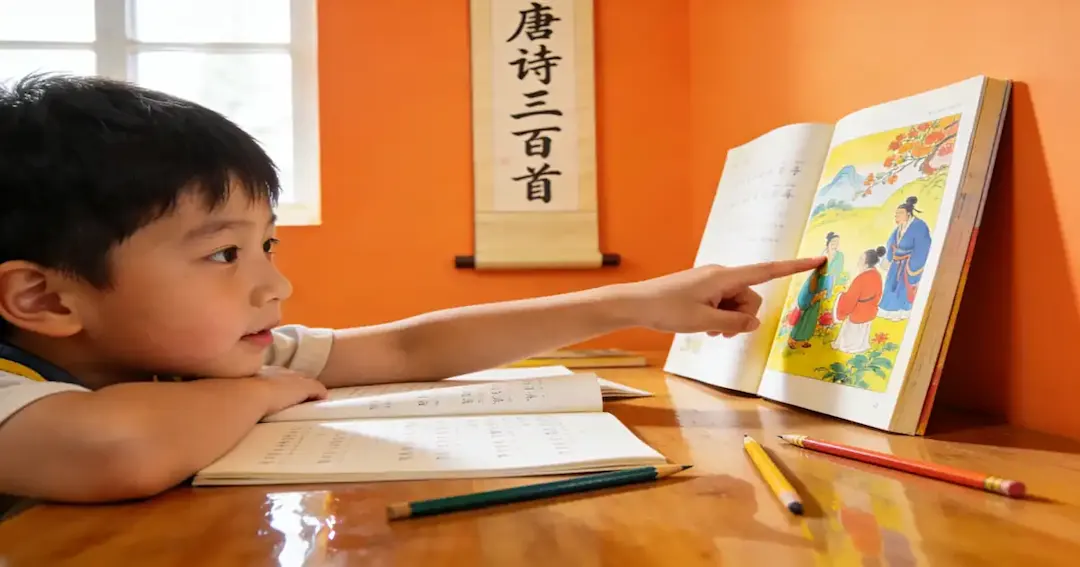
First, the festival gained a place in the children’s mental map. A week later, when Ethan opened his Chinese textbook, he stopped at a small picture he might previously have ignored: a family, round dumplings, steam.
“Is that the Dongzhi Festival?” he asked, without waiting for anyone to quiz him.
He connected the image not to a test, but to the night when they had counted floating tangyuan and laughed over mispronounced numbers.
Second, a handful of Chinese words no longer felt like strangers. “Tangyuan” was anchored to taste and texture, not just sound. “冬至快乐” carried the memory of sitting together at the table, of saying the phrase out loud while the neighbor’s Christmas decorations blinked outside.
That grounding gave future lessons somewhere to land. When the teacher brought up winter festivals again, the children didn’t meet the topic cold. They leaned forward, ready to talk about something they actually did.
Third, there was a change that happened more quietly in the parents. Mei’s constant, background guilt – the feeling that she was always “failing” at being a proper heritage parent – softened. She could point to one clear, lived tradition and say, “This is ours.”
The Dongzhi Festival became an anchor, not a missed opportunity.
Choosing an ongoing Chinese course after that felt less like adding pressure and more like giving structure to something that had finally come alive. With a platform like LingoAce or a similar program, the kids could meet festivals, stories, and everyday scenes again and again in class, instead of just seeing them as one-time events.
It wasn’t perfect. It was, however, real. And real is what children remember.
5. What other parents can learn from this Dongzhi Festival story
The Li family’s experience is only one example. Still, for other parents – whether they share the same background or not – their Dongzhi Festival weekend can offer a few practical hints.
1. Shrink the plan until it fits your life
Instead of building an entire festival from scratch, they chose a single core action: cook tangyuan together. One pot, one evening.
For another family, the “core” might be different:
reading one short story about the Dongzhi Festival before bed,
lighting a small candle and talking very simply about the longest night,
drawing two circles on paper – one for dark, one for light – and letting kids color them however they want.
The size doesn’t matter as much as the fact that it actually happens.
2. Let your Chinese be honest, not flawless
During that weekend, Mei did not transform into a textbook narrator. She mixed Chinese and English, paused, corrected herself mid-sentence, and occasionally laughed at her own mistakes.
Children notice tone more than grammar. They remember whether the adult in front of them seemed tense or relaxed, whether the language felt like something only “experts” were allowed to use or something the whole family could touch.
Choosing two or three simple phrases – “冬至快乐,” “我们吃汤圆,” “the longest night of winter” – and using them loosely over the weekend is enough. The goal is to make the language feel at home, not to pass an exam.
3. Bring the home story into the Chinese course
The moment when Lily shouted, “We ate that!” during the online class did not happen by accident. It grew out of Mei’s quick message to the teacher beforehand.
Other parents can do something similar, even if their situation is different:
Let the teacher know you’re trying a small Dongzhi Festival tradition,
Ask if the class can spend five minutes talking about it,
Share a photo of your tangyuan or craft as a starting point for conversation.
When a child realizes, “My life shows up in my Chinese lesson,” motivation tends to grow a bit on its own.
If a family is still looking for a Chinese course, it helps to find one that uses real-world themes — festivals, family routines, everyday objects — instead of relying only on drills. Platforms like LingoAce can weave the Dongzhi Festival and other traditions into age-appropriate lessons, so the story doesn’t stop at the kitchen table.
4. Use one festival as a yearly “hook”
The Li family decided that the Dongzhi Festival would be one of their repeatable points in the year. Not necessarily the biggest or the most decorated, but reliably there.
Over time, children start to think in patterns: “In our family, we always eat tangyuan around the longest night,” or “We always say that winter phrase together.” After two or three years, that “always” is powerful.
Once that anchor feels solid, other moments – Mid-Autumn, Lunar New Year, or even a weekly Chinese story night – can attach more easily.
5. Be the guide, then hand off the heavy lifting
In this story, Mei and Daniel did not try to replace their children’s Chinese teachers. They created one meaningful Dongzhi Festival weekend and then let the course pick up the thread.
For many parents, that division of roles brings relief. You don’t have to design every activity or remember every grammar rule. You can focus on making space for a few lived experiences each year, then rely on professional teachers to fold those experiences into structured learning.
If a parent reading this wants Chinese to feel less like a constant tug-of-war and more like a series of shared stories, one practical step is to try a class with a platform that understands festivals and family rhythms. A program such as LingoAce's Chinese course can take moments like a simple Dongzhi Festival dinner and revisit them in playful, thoughtful ways in class.
In that way, when a child hears the words “Dongzhi Festival” years from now, they may not think first of a worksheet at all. They might remember rising steam, a crowded table, and the strange, wonderful feeling of speaking two languages over one bowl of tangyuan.