Exploring the Art of Seal Carving: A Gem of China's Intangible Cultural Heritage
Introduction
Within the five thousand years of Chinese civilization, intangible cultural heritage carries the memory and wisdom of the nation with its unique charm. Among them, traditional seal carving, as an ancient art form, is not only fascinating but also a brilliant jewel in the treasure house of Chinese culture. This article will take you into the world of seal carving art, explore the mysteries of this Chinese intangible cultural heritage, and reveal its value and significance in contemporary times.
Overview of Traditional Seal Carving Techniques
Seal carving, also known as seal engraving or carving on seals, is an art form that involves engraving characters and patterns on hard materials such as jade, bamboo, wood, and ivory. The history of seal carving can be traced back to ancient China, where it was not only a practical skill but also a pursuit of high art. In the list of China's intangible cultural heritage, traditional seal carving occupies an important place, representing the exquisite craftsmanship and profound cultural heritage of the Chinese nation.
The value of seal carving art is not only reflected in its exquisite craftsmanship but also in the cultural and historical significance it carries. Each seal carving work is an artist's understanding and recreation of traditional culture, displaying the wisdom and aesthetics of Chinese civilization in a unique form. The great Song Dynasty calligrapher Su Shi once said, "A seal is a painting of the heart." (Source: "Dongpo Zhilin") This statement captures the essence of seal carving art, which is not only a display of skill but also an expression of the artist's inner world.
The Exquisite Craftsmanship of Seal Carving
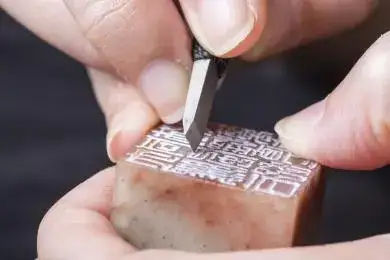
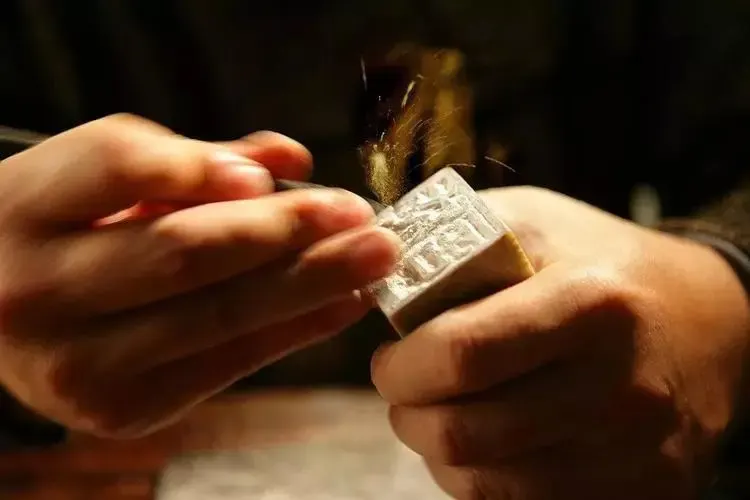
The process of creating seal carving art is a complex and delicate craft. First, the seal carver carefully selects materials such as stone, bone, or jade, each with its unique texture and color, which significantly influences the style of the final work. Then, the carver uses various types of chisels, such as flat, round, and oblique chisels, the mastery of which determines the thickness, depth, and style of the engraved lines.
During the carving process, the master carver follows the design pattern, requiring immense concentration and skill. Each incision must be precise, capturing the rhythm and beauty of the characters as well as the three-dimensionality of the patterns. The aesthetic appeal of seal carving lies in its simplicity and elegance, with each seal being a unique work of art.
The charm of seal carving art lies in its details and profound meanings. For example, the works of He Zhen, a Ming Dynasty seal carver, are known for their deep and restrained style, reflecting the cultural characteristics of the time. In contrast, Deng Shiru, a famous Qing Dynasty seal carver, is celebrated for his fresh, unadorned, and natural style, showcasing a different artistic realm. The works of these seal carving masters are still celebrated today and serve as valuable resources for learning and research.
The Inheritance and Modern Application of Seal Carving Culture
The transmission of seal carving skills has spanned thousands of years and continues to be cherished and promoted. Through traditional apprenticeships, these skills have been passed down from generation to generation, while modern educational institutions also offer seal carving courses, allowing more people to learn this ancient art. Moreover, seal carving art has taken on new roles in modern life, being applied in calligraphy, painting, decoration, and other fields, merging with modern design to create new artistic forms.
Internationally, seal carving art has gradually gained attention and become an important medium for cultural exchange. Through exhibitions and exchange activities, seal carving art has attracted many overseas art enthusiasts, serving as a bridge between different cultures.
In the contemporary era, the art of seal carving is not limited to traditional seal making; its influence has permeated modern artistic creation, brand design, and even the digital media field. Artists maintain traditional craftsmanship while integrating modern aesthetics to create seal carving works that resonate with both traditional charm and contemporary taste. This cross-era innovation ensures that the art of seal carving remains vibrant and relevant.
Conclusion
Seal carving art is not only an important part of China's intangible cultural heritage but also a crystallization of Chinese cultural wisdom. With its unique artistic form and profound cultural connotations, it showcases the history and culture of the Chinese nation. Each stroke in a seal carving work is imbued with rich philosophy and aesthetic value, making it an indispensable treasure in Chinese traditional culture.
In the context of globalization, learning Chinese has become an important bridge connecting the world with Chinese culture. For overseas Chinese, learning Chinese not only helps them better understand their cultural roots but also allows them to appreciate and comprehend intangible cultural heritages such as seal carving more deeply. By learning Chinese, we can get closer to those artistic works that carry history and wisdom, and feel the cultural essence and emotions of the times.
It is encouraged that overseas Chinese families have their children learn Chinese, not just to pass on the language but to carry on the culture, allowing the next generation to continue to spread and enhance China's intangible cultural heritage. In this process, institutions like LingoAce can provide professional Chinese educational resources, helping children learn Chinese in an enjoyable environment, understand China's history and culture, and thus better appreciate and understand traditional arts like seal carving.
References and Acknowledgments
In writing this article, we have referred to a variety of historical documents and authoritative sources to ensure the accuracy and reliability of the content. We are grateful to all individuals and institutions that have made efforts to protect and pass on the art of seal carving, whose hard work has allowed this ancient art to be handed down to this day and continue to flourish.
Consider letting your child learn Chinese! Chinese is the gateway to China's long history and unique culture.
At LingoAce, each course is the result of our team's over a hundred hours of course design, textbook production, simulated teaching, teacher training, and quality control. We invite you and your child to participate in a free trial class and experience LingoAce's extraordinary Chinese learning experience firsthand!