
Introduction
In the East of the world, there is an ancient beverage that is not merely a simple liquid but a symbol laden with profound culture and history—this is Chinese tea. For overseas Chinese, a cup of fragrant Chinese tea is not just a taste of home; it is a means of cultural inheritance and a way of self-identification. This article will take you into the world of Chinese tea, exploring its history, varieties, art, and philosophy. Let us savor every detail of this cultural journey together.
The History and Origin of Chinese Tea
Tea, as the leaves of a plant, was first discovered and used as a medicinal herb in China. According to "The Classic of Herbal Medicine" by Shen Nong, the legendary emperor tasted various herbs and used tea to counteract the effects of seventy-two poisons he encountered daily. This legend highlights the significant status of tea in ancient China. Over time, tea gradually transitioned from medicinal use to a daily beverage, especially during the Tang Dynasty when tea consumption and culture reached a peak. "The Classic of Tea" by Lu Yu is the world's first monograph on tea, detailing the knowledge of tea cultivation, production, and appreciation, showcasing the depth and breadth of Chinese tea culture. The Tang Dynasty poet Bai Juyi wrote in "Asking Liu Nineteen": "Green ants new fermented wine, small red clay stove. As evening comes and the sky is about to snow, can one drink a cup without?" This not only depicts a cozy tea-drinking scene but also reflects the widespread consumption of tea in society at that time.
Types and Characteristics of Tea Leaves
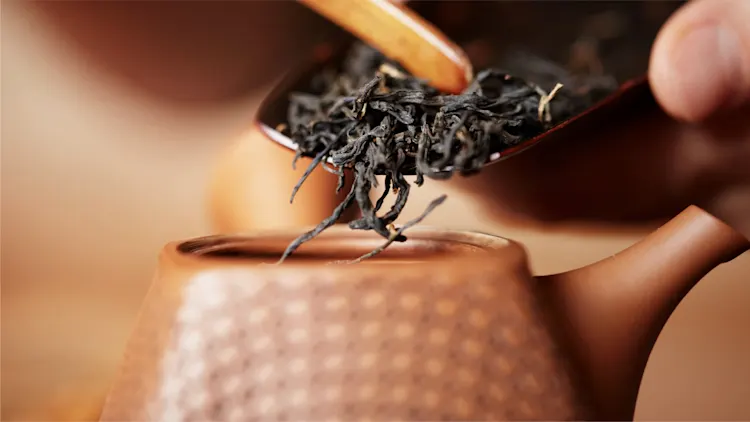
China is the birthplace of tea and boasts the richest variety of tea types. From the refreshing and light green tea to the rich and full-bodied black tea, and the fragrant oolong tea, each type has its unique flavor and regional characteristics. For instance, West Lake Longjing tea is renowned for its four outstanding qualities: color, fragrance, flavor, and shape, while Yunnan's Pu'er tea is famous for its quality that improves with age. Behind each type of tea leaf lies a story about the land, climate, and culture. The Song Dynasty tea connoisseur Cao Bin praised Longjing tea in "Tea Records" saying: "Its shape is like a needle, color like jade, aroma high and taste refined, making one never tired of drinking it." Such descriptions not only give us an intuitive understanding of Longjing tea's quality but also reflect the ancient pursuit of the ultimate tea experience.
Tea Art and the Art of Tea Brewing
Tea art is an indispensable part of Chinese tea culture, encompassing not only the skill of brewing tea but also an activity of aesthetic appreciation and social interaction. The essence of Chinese tea art lies in the harmonious unity of "color, fragrance, taste, and shape," as well as the meticulous pairing of "tea ware, water quality, and heat control." To brew a good cup of Chinese tea, one must master the correct water temperature, tea leaf quantity, and brewing time. For example, green tea should be brewed with lower temperature water to maintain its fresh taste, while oolong tea benefits from higher temperature water to better extract its rich aroma. Tea art performances, such as the Kung Fu tea ceremony, elevate the process of brewing tea to an art form, showcasing the profound connotations of tea culture through the tea master's skilled techniques and graceful movements. The Tang Dynasty poet Lu Yu mentioned in "The Classic of Tea": "The utility of tea is immense indeed!" This statement not only emphasizes the practicality of tea but also hints at the philosophical and aesthetic values embedded in the art of tea.
Tea Ceremony: A Philosophy of Life
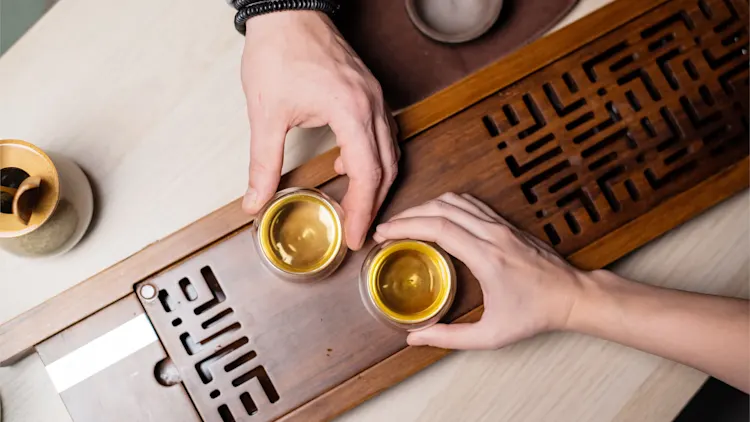
The tea ceremony, originating in China and later spreading to Japan before returning to China, has formed a unique cultural phenomenon. It is not just about the skill of brewing and drinking tea but is also a pursuit of spiritual harmony and communion with nature as a philosophy of life. The tea ceremony emphasizes the spirit of "harmony, respect, purity, and tranquility," advocating for an appreciation of life's calmness and serenity through the process of making and savoring tea. In the fast-paced modern world, the tea ceremony teaches people to slow down and find inner balance and peace through the tranquility of a cup of tea. The Song Dynasty literati Su Shi wrote in "Ode to the Red Cliff": "I opened my heart to the celestial tune and gazed upon the boundless ocean, then let out a long sigh to communicate with the divine." This expression of spiritual elevation through natural scenery and inner experience resonates with the spiritual realm sought in the tea ceremony.
Consider letting your child learn Chinese! Chinese is the gateway to China's long history and unique culture.
At LingoAce, each course is the result of our team's over a hundred hours of course design, textbook production, simulated teaching, teacher training, and quality control. We invite you and your child to participate in a free trial class and experience LingoAce's extraordinary Chinese learning experience firsthand!