If you’ve typed “fighting in Chinese” into Google, you’re probably trying to do one of two things:
Give your child (or friend) a quick “You’ve got this,” or
Figure out what to say when kids are… actually fighting.
And yes, those are wildly different.
This guide is for who want natural, kid-friendly encouragement in Mandarin—phrases your child can use before a test, a soccer game, a recital, or just a tough day. We’ll also cover the “oops” zone (when “fighting in Chinese” means arguing or physical fighting), because that mix-up happens a lot and it can get awkward fast.
Decide what “fighting” you mean (encouragement vs conflict)
Here’s the quick chooser I wish someone gave me sooner:
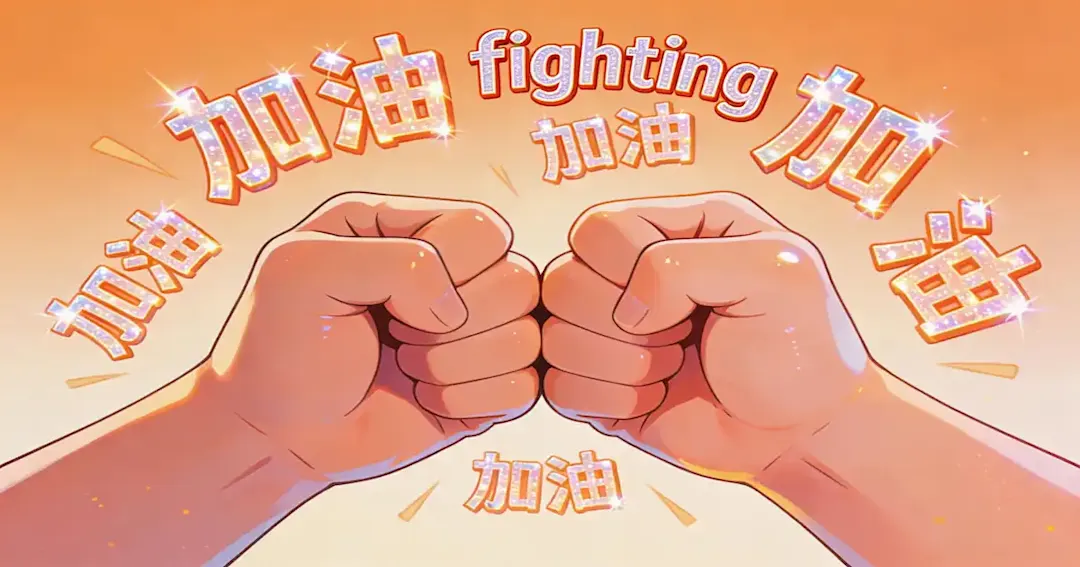
If you mean encouragement (like “Fighting!” in K-pop/drama clips), the most common Mandarin match is 加油 (jiā yóu)—think “Go for it,” “Keep going.”
If you mean arguing or physical fighting, you’re in 吵架 (chǎo jià) / 打架 (dǎ jià) territory.
Why this matters: parents often teach the wrong word first, then the kid repeats it at school. Not ideal.
So for the rest of this article, when I say “fighting in Chinese,” I’m mainly talking about encouragement—and I’ll clearly label the conflict phrases later.
Use 加油 naturally (and notice when it sounds “off”)
加油 (jiā yóu) is the default for encouragement. It’s short, easy, and kids remember it.
Where it works beautifully:
Before a test: 加油!你可以的!(Jiāyóu! Nǐ kěyǐ de!)
During sports: 加油!(Jiāyóu!) shouted from the sidelines
When a kid is stuck: 加油,再试一次。(Jiāyóu, zài shì yí cì.) “Keep going, try once more.”
Where it can sound a little weird:
When your child is upset (tears, panic, shut-down mood). “加油” can feel like pressure. In that moment, soft encouragement works better (you’ll get those in a second).
In real life, adults often pair “加油” with a warm follow-up so it doesn’t feel like a command. Something like:加油,我在这儿。(Jiāyóu, wǒ zài zhèr.) “Go for it, I’m here.”

Swap in “you can do it” phrases kids can actually remember
If your child only knows one encouragement phrase, they’ll overuse it. (And you’ll hear “加油加油加油” like a tiny robot. Been there.)
Here are practical alternatives for “fighting in Chinese”—with Chinese + pinyin + meaning + best moment:
The core “starter pack”
你可以的 (Nǐ kěyǐ de) — “You can do it.” Best for: nerves before a performance.
坚持一下 (Jiānchí yíxià) — “Hang in there for a bit.” Best for: homework frustration, practicing an instrument.
坚持下去 (Jiānchí xiàqù) — “Keep going.” Best for: sports training, longer tasks.
别放弃 (Bié fàngqì) — “Don’t give up.” Best for: when they want to quit mid-task.
慢慢来 (Mànmàn lái) — “Take your time.” Best for: anxious kids, perfectionists, kids who rush and make silly mistakes.
我相信你 (Wǒ xiāngxìn nǐ) — “I believe in you.” Best for: parent-to-child, emotional support moment.
A quick table
What you want to say (English) | Fighting in Chinese phrase | Pinyin | When it works best |
You’ve got this | 你可以的 | nǐ kěyǐ de | Before tests/recitals |
Keep going | 坚持下去 | jiānchí xiàqù | Sports/practice |
Don’t give up | 别放弃 | bié fàngqì | Mid-task frustration |
Take your time | 慢慢来 | mànmàn lái | Anxiety, rushing |
Add “comfort + direction” so it doesn’t feel like pressure
This is where encouragement turns from “phrases” into something your child actually responds to.
A simple pattern:I see you + one small next step
Try these (they’re parent-friendly and kid-friendly):
我知道很难。我们先做一点点。(Wǒ zhīdào hěn nán. Wǒmen xiān zuò yìdiǎndiǎn.) “I know it’s hard. Let’s do a tiny bit first.”
你已经很努力了。再试一次就好。(Nǐ yǐjīng hěn nǔlì le. Zài shì yí cì jiù hǎo.) “You’ve already worked hard. One more try is enough.”
慢慢来,我陪你。(Mànmàn lái, wǒ péi nǐ.) “Take your time, I’m with you.”
你可以的。先呼吸一下。(Nǐ kěyǐ de. Xiān hūxī yíxià.) “You can do it. First, take a breath.”
Notice how these still fit the “fighting in Chinese” encouragement vibe, but they don’t feel like barking orders.
Also—this is where pronunciation matters. If your child says “mànmàn lái” with the wrong tones, it can sound like something else or just confuse them. If you want a structured way to practice these in real speaking, a short trial class with a native teacher can be a low-stress shortcut.LingoAce trial classes usually help kids get the tones right while using phrases inside real situations, so it doesn’t stay “flashcard Chinese.”

Handle the other meaning (吵架 / 打架) without teaching harsh language
Some parents search “fighting in Chinese” because their kids are fighting with siblings. Or classmates. Or… the dog. So, here’s the clean version.
吵架 (chǎo jià) = arguing, verbal fighting
打架 (dǎ jià) = physical fighting
If you’re speaking to kids, you often want behavior language, not “fight language.” These are safer:
不要吵 (Bú yào chǎo) — “Don’t argue.” (short, a bit blunt)
用嘴巴说 (Yòng zuǐba shuō) — “Use your words.”
停一下 (Tíng yíxià) — “Pause for a second.”
先分开 (Xiān fēnkāi) — “Separate first.” (when things get physical)

FAQ
1) What does “fighting in Chinese” usually mean—just 加油? Most people searching “fighting in Chinese” mean encouragement, and 加油 is the most common match in Mandarin. It’s used to support someone before a challenge, not to describe conflict.
2) What is the jiayou meaning, and why do people say “add oil”? “加油 (jiā yóu)” literally relates to “adding fuel,” which is why you sometimes see “add oil” as a literal translation in English contexts. It’s widely used as an encouragement phrase.
3) How do you say “you can do it” in Chinese (kid-friendly)? A very kid-friendly option is 你可以的 (nǐ kěyǐ de). If your child gets anxious, 慢慢来 (mànmàn lái) is softer and often works better.
4) What’s the difference between 吵架 and 打架? 吵架 is verbal arguing; 打架 is physical fighting. If you searched “fighting in Chinese” because kids are pushing or hitting, “打架” is the word—but for parenting language, it’s often better to teach “Use your words” phrases instead.
5) What are polite alternatives to “fighting in Chinese” for school? Instead of shouting “加油” in every situation, kids can use calmer phrases like 你可以的 (you can do it) or 慢慢来 (take your time). These sound supportive without feeling intense, especially in classrooms.
Conclusion
In 2026, the safest, most natural way to think about “fighting in Chinese” is: encouragement first. Start with 加油, then rotate in 你可以的, 坚持一下, 别放弃, and 慢慢来 so your child can match the phrase to the moment. If you also needed the conflict meaning, remember: 吵架 = arguing, 打架 = physical fighting—different words, different vibe.
If you want your child to say these confidently (with correct tones, not guesswork), consider booking a LingoAce trial class. A good teacher can turn this list into real speaking habits—quickly, and without making your child feel like they’re “studying extra.”