
Representation starts with being in the rooms where decisions are made. In episode 03 of the Glowing Up Asian podcast, we talk to Katie Soo about her experience with the “Representation Matters” movement in Hollywood. During those early years, she was an executive at HBO Max, Warner Brothers, DC Comics, and Hulu. We also dive into her work at Asia Society Southern California where she helped form their Asian Women Empowered (AWE) initiative and explore why early career sponsorship is so critical to improving and increasing representation across all industries.

Katie starts by sharing her glow up origin story. She grew up in the SF Bay Area in an immigrant family. Early on, she developed a passion for the arts and wanted to become a painter. Eventually, she would build a career in the entertainment industry, holding leadership roles at HBO Max, Warner Brothers, DC Comics, Hulu, and now Dice. As a voting member of the Academy of Television Arts & Science and leader at Asia Society Southern California, she’s had both a front-row seat and an active role in increasing the Asian and Asian American representation that we see in the media today.
In our conversation, Katie shares her insights on the internal advocacy and mentorship that opened more opportunities for diverse storytelling, and what still needs to be done to keep up the momentum. We also discuss the powerful impact that this increased representation is having on kids growing up today. For parents raising the next generation of storytellers, Katie offers her advice on how to support and equip them with the skills needed to build a career in the arts.
Glowing Up Asian is a podcast series produced by LingoAce that breaks down the stereotypes and expectations about what it means to thrive as an Asian in America. Each episode welcomes a new guest to reflect on what it was like growing up Asian, how that’s changed for the next generation, and what that means for parents today. Together, we’ll explore their ‘glow up’ origin story and the role that education and culture played in their lives, while also exploring the issues that matter to the broader Asian American community.
Subscribe
Apple Podcast | Spotify | Google Podcast | YouTube | Amazon Music | iHeart Radio
Glowing Up Asian podcast show notes
Episode 03 | Interview with Katie Soo of Asia Society Southern California
Meet Katie Soo, Board Chair & Trustee at Asia Society Southern California. Katie is Chairwoman of the Board at Asia Society Southern California and Trustee for Asia Society Global. She is also the newly minted Chief Business Officer at DICE and an active voting member of the Academy of Television Arts and Science. She previously held leadership positions at major entertainment companies, including HBO Max, Warner Brothers, DC Comics, and Hulu – in the years leading up to the recent boom in Asian and Asian American representation in the media (0:35)
What was your glow up origin story? Katie never dreamed that she would have a career in the entertainment industry. As a kid, she wanted to be a painter and artist – to the discouragement of her family. Though it wasn’t because her parents disliked art. As Katie shares, “When you come from an immigrant background, and you’re realizing the American dream, a lot of times, happiness is structured around stability.” With those values instilled in her, she considered a career as a lawyer but quickly realized after a few internships that it wasn’t for her. Eventually, her path led her back to the creative arts. (1:28)
From your perspective, what made it possible for better and more Asian and Asian American representation in the media? “It starts with people being in the rooms where decisions are being made,” shares Katie. Oftentimes, the only way change can progress is when there are people championing that change throughout the whole lifecycle of a project – from development to marketing, and even to conversations about producing the content.
Likewise, how far along a company is on the “representation matters” movement also makes a difference. When Katie joined Warner Brothers, she describes it as a moment in time when the movement was well underway. Being on a diverse team that was actively championing underrepresented voices, she was able to be a champion herself and make decisions that would have a positive impact. By comparison, Dice is a company built with a diversity-oriented mindset and is already diverse at every stage and level of the company. Within this culture, Katie no longer needs to put so much effort into educating her peers on why diversity is important. (3:39)
What more is needed to sustain the momentum for Asian and Asian American representation in the media in the long run? We need to keep pushing for the change that we want to see in the world by bringing in more talent and good people who will champion this cause. Katie further elaborates, “I want to be in a place and be with people where I can be my whole self. I can bring my heritage. I can bring my culture. I can be a woman. I can be a mom. I can be all the things that represent my identity and my true self. I can be comfortable and vulnerable in sitting in that power because I’m in a room where that is welcomed and accepted and celebrated.” For this to happen, we need that room to exist. We need the people in those rooms to exist and to celebrate who we are. We need leaders to support those rooms and make them part of the company’s DNA. At the same time, we also need leaders to recognize the buying power of under-represented communities and that there is business value in creating products for them. (7:18)
Thanks to this increase in representation, more Asian American children may want to pursue a career in the creative arts. What advice do you have for their parents? After seeing the progress and feeling the momentum first-hand, Katie’s advice to parents is to tell their children, “Just do it.” In the past, few Asian parents would encourage their children to pursue a career in the arts. This often came from a place of care: not only is the work unstable, but their children’s opportunities would also be limited because of their race. That’s not the case anymore. The Asian American community has built the platforms and rooms needed to open the door for more of their stories to be told and more of their talent to be spotlighted. As a result, young people see themselves represented and feel comfortable saying that they deserve to be in the room. Parents should likewise feel empowered to look at their child and tell them: Go do it. Dream as big as you can possibly dream and go change that narrative and change the room for someone else. (8:45)
For young people with no connections, how can they find mentors in the industries that they want to break into? Katie’s advice is to focus on finding organizations that can help bridge mentor-mentee relationships as well as career sponsorships. If such organizations don’t exist in your industry, consider seeking out networking opportunities where you can connect with people who share your background or cultural heritage. For example, Asia Society’s Asian Women Empowered (AWE) was an initiative started by a group of Asian women who wanted to create rooms where they could share their stories and support each other. This meant not only helping those at the senior level break into boardrooms but also sponsoring young people in the early stages of their careers. In building this community, Katie shares that young Asian women could learn from more senior Asian women on how to grow in their careers and navigate the stereotypes and biases that Asian women face in the workplace. For Katie, she believes that increasing representation goes beyond seeing more Asian faces on the screen. It is critical that Asian leaders today lend their support and sponsorship to young people at the start of their careers. This includes those trying to break into their industries and those breaking ground in industries will little representation. This is how we drive change and continue the momentum across the board. (12:10)
How can parents help their children cultivate the soft skills that are essential to networking and their future career success? “Encourage your children to be curious, to learn, and to fall in love with learning,” says Katie. When you do this, your child will develop a thirst to want more and learn more. This is key because there is a big difference between feeling like you’re forced to do something versus feeling empowered to do something.
When you deconstruct the stereotype about Asian parents and good grades, you realize what they really want is for you to thrive. They want you to learn, be well-equipped to face this world, and pursue your own curiosity. “If you have this trait, then you can ultimately become unstoppable no matter what comes your way,” says Katie. (17:15)
Going back to glowing up Asian, many Asian Americans have grown up in this country feeling split between two cultures. How did you navigate that experience then and now? Having been raised by her grandparents, Katie feels fortunate to have grown up with a strong connection to her Chinese heritage. That said, she did experience some insecurities growing up with a foot in two words. She captures this duality in how she would describe her schooling as a kid. There was “American school” and “Chinese academy” – and they were two different worlds, all the time. Katie describes her glow up as learning to embrace her dual identity. As she became more seasoned in life, she realized that she didn’t need to pick. The fact that she could read the news in another language and appreciate pop music from around the world was an asset. Not only have these skills and perspectives helped broaden her worldview, but they have also taught her to be empathic. What’s inspiring to her is seeing how young people today are being encouraged to embrace their dual identities early and that they doing so without hesitation. (20:30)
Katie wraps our conversation with her hope that in the future, the need for better and more representation isn’t even a topic anymore. “My hope is that work done by generations before us and that we continue to do, continue to uplift all the things that are important to us so that one day, all our children live in a world where all of that is normalized. They no longer have to carry the torch in the way that we have.” (23:13)
Meet Katie Soo
Katie Soo is the Chairwoman of Asia Society Southern California and Trustee at Asia Society Global Board, a global non-profit that’s a leading force in bridging closer ties between Asia and the West through arts, education, policy, and business outreach. She is also the newly minted Chief Business Officer at Dice and an active voting member of the Academy of Television Arts and Science.
Previously, she was KiwiCo’s first CMO where she is now an advisor. She also held executive roles at HBO Max, Warner Bros. Digital Networks, DC Universe, Fullscreen, and Hulu, and was an early employee at Dollar Shave Club. She has received numerous accolades including Ad Age’s “40 Under 40,” Business Insider’s CMOs to Watch, Media Play’s 40 Under 40, PR Week’s “The Innovation 50,” and was also named on Goldhouse’s A100 list honoring the most impactful Asians in culture.
In addition to serving as an advisor to founders and startups such as Oura, Newbury Street, Saga.xyz and Bottomless, she also sits on the Advisory Board for California State University Entertainment Alliance and serves as a member of Vox Media’s Brand Council.
Follow Katie: Instagram | LinkedIn
Learn more about: Asia Society Southern California LinkedIn | Facebook | Instagram | Twitter
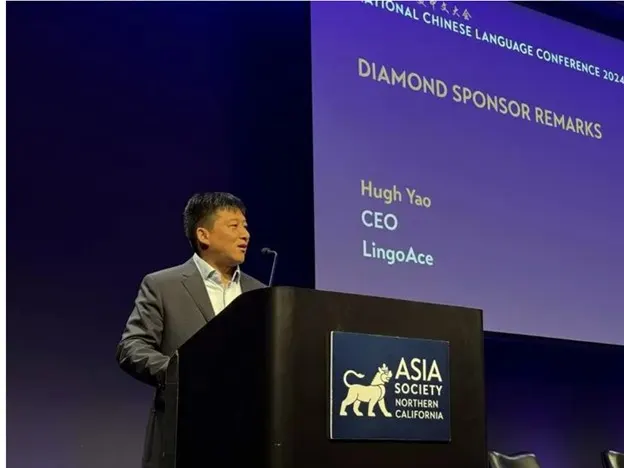
Glowing Up Asian is brought to you by LingoAce, a global education technology company on a mission to make it possible for children to learn from the best – no matter where they live.