December 22nd is the Chinese Winter Solstice or Dongzhi(冬至), the day that marks the beginning of the coldest days of winter. Many people don’t know that the Winter Solstice was one of the first solar terms created in China. Solar terms are days that mark significant natural phenomena throughout the year. More than 2,500 years ago, ancient Chinese people observed the movements of the sun with an ancient timekeeper instrument called Tugui and determined the exact day of Winter Solstice.
Chinese Winter Solstice: Beginning of nine periods (with each period lasting nine days)
"Zhi" of "Dongzhi" means extreme. On the Winter Solstice, the temperature drops to its most extreme point of the year, so it is the coldest time of the year around Winter Solstice. It also marks the day with the shortest period of daylight and the longest night of the year, as the sun moves to the southernmost place.
Ancient Chinese people divided 81 days after Winter Solstice into 9 periods of nine days each. After the end of the nine periods, spring arrives and flowers bloom.
The folk song called Double-Nine Song which is well known in China, vividly records the climate and phenology changes from the Winter Solstice to the Spring Equinox of the next year.
Double-Nine Song
So cold are the first and second Nines
That we do not dare hold out our hands
During Nines three and four
Water freezes, on ice we go
In the fifth and sixth Nines are to be seen
On the far bank of the river, the willows green
The rivers thaw during the seventh Nine
In the eighth we welcome the wild geese
Winter sees an end in the last Nine days
When blossoms and flowers smile in spring.

Chinese Winter Solstice: Celebrated as a holiday
The Winter Solstice holiday originated in the Han Dynasty, flourished in the Tang and Song Dynasties, and has been around ever since. It is said that in the Han Dynasty, the Winter Solstice holiday lasted for five days. During the holiday, people would return home, no matter the distance, to celebrate the holiday with their family.

The importance attached to the Winter Solstice and the atmosphere of holiday in ancient China is similar to the way present-day Chinese people celebrate the Chinese Lunar New Year. The holiday was important, because for ancient Chinese people, after the Winter Solstice, the daytime starts to become longer and the “Yang Qi”(positive life energy) starts to rise. Thus, the day is auspicious and just as important as the Chinese Lunar New Year.
Food and customs of Winter Solstice
Dumplings and Tangyuan
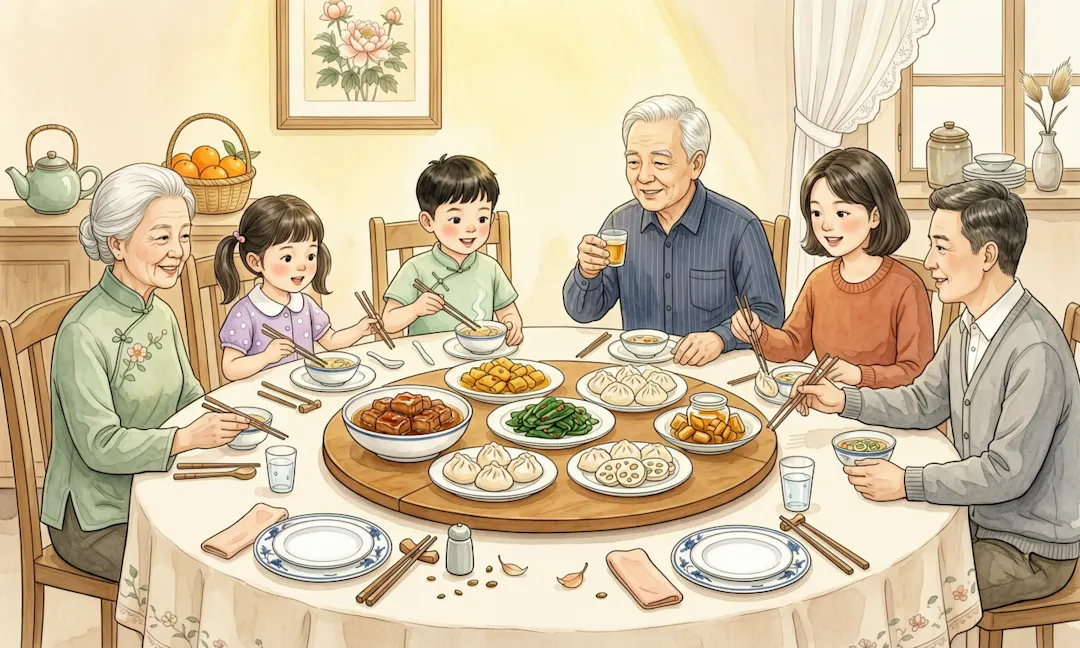
In the northern China, eating dumplings or wontons is a common folk custom on the day of Winter Solstice. There is even a folk saying: "eating dumplings on the Winter Solstice prevents your ears from freezing." While in the southern China, Tangyuan (glutinous rice balls) are more popular.

On the Winter Solstice, people dressed in new clothes, visited relatives and friends, and generally enjoyed themselves. They spent the longest night of the year in celebration with their families.
Chinese Winter Solstice: Poetry and Art
"Double-Nine Coldness Dispelling Drawing"brings poetry and art to the Winter Solstice

The Double-Nine Coldness Dispelling Drawing is usually an interactive, calligraphy artwork that features nine characters in traditional Chinese. The characters are typically translated as, "the weeping willows in front of the pavilion cherish and wait for the spring breeze." Each character has nine strokes, and there are 81 strokes in total. From the day of Winter Solstice to the end of 9 periods, one stroke is filled in every day according to the characters’ stroke order.
The color of the strokes used every day depends on the weather of the day. Red if it is sunny, blue if it is cloudy, green if it is rainy, yellow if it is windy and white if it is snowy.
One character is completed after each 9-day period. The whole artwork will be completed when the nine periods end and spring finally arrives.
While Winter Solstice was celebrated in ancient China, the spirit of the holiday continues. This Winter Solstice spend time with your family, and celebrate using the customs of ancient China.
Learn Chinese online with LingoAce! Subscribe to our newsletter!