
In Singapore, Chinese language teachers possess certain characteristics and backgrounds. Due to the popularity of bilingual education in Singapore, Chinese language teachers need to be proficient in Chinese and have a profound cultural background and teaching experience. Their responsibility is to teach students Chinese, help them master Chinese listening, speaking, reading, and writing skills, and understand the importance of Chinese culture.
In Singapore's bilingual education system, English is a compulsory first language for children, while a second language is determined based on their racial background. For Chinese children, the second language they learn is Chinese. The Chinese language curriculum starts from kindergarten and continues until high school. The Chinese language curriculum has been included in the examination subjects during high school and holds a 25% weight in the entrance examination. Therefore, Chinese parents in Singapore attach great importance to their children's Chinese language learning.
With the increasingly close relationship between Singapore and China and the increase in economic and trade exchanges, many Singaporeans, including non Chinese, hope that their children can better master the Chinese language in order to obtain more opportunities and help in their future development path. This reflects the importance of Chinese education in Singapore and the value perception for children's future.
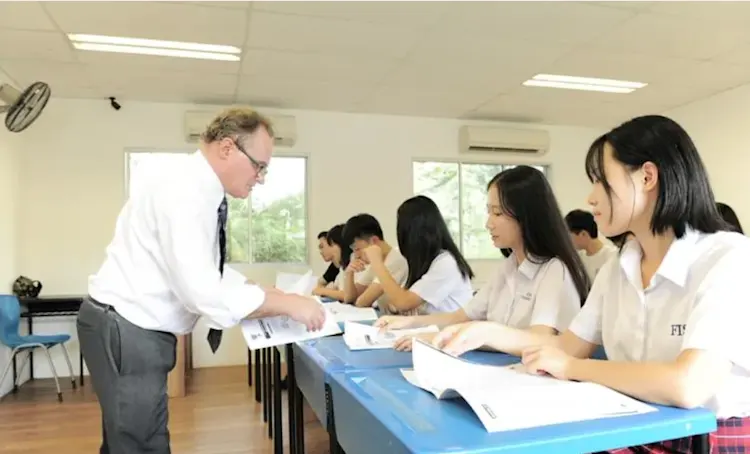
In Singapore, Chinese language courses are very similar to Chinese exams. In Singapore, the teaching content, objectives, and even exam format of Chinese language courses differ in detail from those of domestic Chinese language courses. For example, the teaching content includes the pronunciation, shape, word formation, sentence construction, close form characters, polyphonic characters, etc. of new characters, while the exam format includes shape analysis, pinyin correction, word meaning analysis, correcting incorrect sentences, reading comprehension, composition, etc. However, in terms of difficulty, Singaporeans speak English as their mother tongue and have relatively low proficiency in Chinese, so the content and teaching requirements of the textbooks are relatively simple.
In addition, Singaporeans have some specific differences in their Chinese vocabulary, such as using "Pasha" to refer to the market rather than the word "market". There are many similar situations like this. In addition, Singaporeans have some differences in their Chinese pronunciation compared to Mandarin. If you listen carefully, you may feel that their Chinese accent is similar to that of Taiwanese people. Singaporeans often mix Chinese dialects and Malay in their Chinese language, so when we hear a conversation between two people in Singapore, it is likely that as Chinese people, we cannot understand it.
Learning Chinese in Singapore is a headache. Compared to native English, learning Chinese is more difficult. Students not only need to learn correct pronunciation, but also need to master writing skills. Many children have deep dissatisfaction with the Chinese language, their interest in learning is not high, and their grades are average. In order to help their children achieve better grades, parents attach great importance to their children's learning and arrange for them to participate in Chinese tutoring classes for tutoring. Therefore, in the afternoon, you can see many students carrying heavy backpacks shuttling between the Chinese tutoring center and other tutoring classes.
Want your child to learn Chinese? LingoAce is one of the best ways to learn Chinese for kids. Each one-on-one lesson is the product of nearly 200 hours of curriculum development, teacher training, and quality control. Our classes are tailored to meet your child’s learning needs.
Experience a redefined Chinese learning experience first-hand and book a free trial class with us today.