

As a country with a highly developed tourism industry, Thailand's personal and social development cannot be separated from mastering a suitable foreign language. Nowadays, in the foreign language learning situation in Thailand, Chinese has become the dominant language.
According to official data, the number of foreign students studying in China for academic education in 2019 reached 184799. Among them, countries along the the Belt and Road have become the main source of growth of overseas students, and the source of students in this range is growing steadily. The top ten countries include South Korea, the United States, Thailand, India, Russia, Pakistan, Japan, Kazakhstan, Indonesia, and France. It is worth mentioning that Thailand ranks third in terms of quantity, which clearly demonstrates the increasing status of Chinese language in Thailand, playing an important role.
The influence of Chinese language continues to expand, attracting more and more countries to devote themselves to in-depth learning. As one of them, Thailand not only demonstrates a strong interest in Chinese, but also builds a solid bridge for exchanges between China and Thailand. Let's witness together the brilliance of Chinese language in foreign language education in Thailand!
Diverse Learning Approaches to Chinese Language
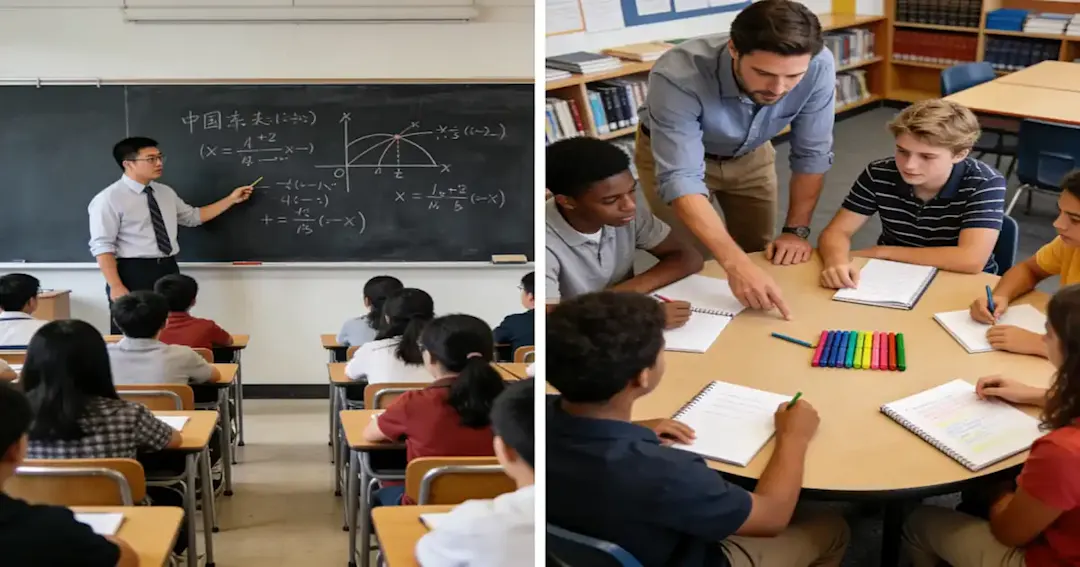
At present, more than 3000 schools in Thailand have offered Chinese language courses, covering the education stage from kindergarten to university, and almost all students have the opportunity to learn Chinese. In high school, Thailand's education system requires students to take a compulsory foreign language in liberal arts classes, and available language classes include Chinese, Japanese, French, Vietnamese, etc. Among them, the most popular is the Chinese class. During their university years, many Thai universities offer majors related to Chinese language, such as Chinese Language and Culture, Chinese Studies, and Business Chinese. Due to the fact that most schools offer Chinese language courses, the threshold for learning Chinese is relatively low, and students do not need to pay additional fees for learning Chinese.
Informal Chinese language education is also popular in Thailand, including tutoring classes and Confucius Institutes. With the continuous growth of market demand, the number of Chinese language tutoring classes in Thailand is also increasing. These tutoring classes usually have the main purpose of preparing for exams, such as the Thai National College Entrance Examination PAT 7.4, the Chinese Language Proficiency Test (HSK), and the Chinese Speaking Proficiency Test (HSKK). However, there are also some tutoring classes established to meet the personal interests and career needs of students. There are usually three forms of tutoring classes: one-on-one, small class, and large class. Teachers determine the fee standards based on the teaching time and number of students. The longer the learning time and the more students there are, the lower the fee accordingly. Among them, the price of one-on-one independent teaching is relatively high. The instructors of tutoring classes are usually full-time teachers on campus, who use their spare time to offer tutoring classes. There are also some tutoring classes offered by non school teachers. There are various forms of tutoring classes, and overall, they can be divided into two types: online and offline. Many Chinese language teachers use internet platforms for online teaching, some courses are live streaming, while others are recorded videos for students to learn independently. Especially during the special period of the epidemic, online teaching has become the main teaching method between teachers and students.
Confucius Institutes, as one of the important ways to learn Chinese, are widely known in the field of Chinese language education. The Thai royal family, government, and people attach great importance to Chinese language teaching. In recent years, the number of Chinese language courses offered in primary and secondary schools in Thailand has continuously increased, and the number of people learning Chinese in Thai society has also grown rapidly. Chinese and Thai universities and relevant departments are actively cooperating with the strong support of the Thai royal family, government, and the Hanban of China. Since the end of 2006, 14 Confucius Institutes and 11 Confucius Classrooms have been established in various parts of Thailand.
The Confucius Institute in Thailand has initially established a scale. Through sincere cooperation between China and Thailand, Confucius Institutes carry out Chinese language teaching and training for Chinese language teachers. At the same time, while providing Chinese language teaching services to Thai society, we also carried out consultation and exchange activities on Chinese education, culture, and other information. For example, the Confucius Institute at Chulalongkorn University offers free Chinese language courses and offers four days a week for students and teachers to learn Chinese. Even if students need to bear the cost of textbooks themselves, their enthusiasm for learning is still very high. This fully demonstrates the unique charm of Chinese language and its appeal to every student. The course is divided into classes based on the level of students, including basic classes, junior classes, and intermediate classes.
Confucius Institutes have adapted to local conditions and leveraged their advantages to form unique educational models, serving as a window and bridge for Thai people to learn Chinese language and culture, and understand China. They have been welcomed by the Thai government and the people of the whole country.
The current Chinese language education in Thailand is developing rapidly and covering a wide range, including not only universities, high schools, primary and secondary schools, but even preschool education. However, we should also recognize that there are still some shortcomings in Chinese language teaching. This includes issues such as classroom teaching situation, Chinese language teachers, and the level of emphasis placed on Chinese language courses by the school.
In terms of classroom teaching, it is necessary to solve some problems, such as how to diversify teaching methods and textbooks, stimulate students' interest and participation, etc. For Chinese language teachers, it is necessary to pay attention to whether the number and quality of teachers are sufficient, and whether they have received professional training and further education courses.

In addition, the level of emphasis placed by school leaders on the Chinese language curriculum is also a key factor. Does the school attach sufficient importance to the development and promotion of the Chinese language curriculum, and provide sufficient support and resources. Solving these issues will help further improve the quality of Chinese language education in Thailand and make it more comprehensive.
1. Classroom teaching situation issues
Teachers have observed that Thai students have different learning attitudes compared to domestic students. Compared to China, Thailand has a more relaxed learning environment and relatively less academic pressure, which also leads to some students not being fully engaged in the classroom, including in learning Chinese. At the same time, the punishment system for students in Thailand's education system is also not very reasonable: even if they fail, they only need to take make-up exams, and if it doesn't work out, they will continue to take make-up exams until they pass. Teachers believe that such a learning environment is very unfavorable for students to learn Chinese. Unfortunately, teachers themselves have limited ability to improve for this and can only do their best.
These learning attitude issues stem from the relatively low level of competition in Thailand, where students lack pressure and enter a "Buddhist" state. Volunteer teachers also pointed out that there are differences in students' Chinese proficiency in the classroom, which makes it difficult to complete the classroom content according to the teaching plan. This issue stems from the lack of coherence in the Thai Chinese language teaching program. Some students have already learned basic Chinese in elementary school, but need to start learning it again in middle school, which leads to a decrease in their interest in Chinese classes and a gap in their Chinese proficiency.
2. The issue of Chinese language teaching staff in schools
Among the five schools, except for two located in the city center, the level of Chinese language teachers in other schools is actually not very high. Some Thai teachers have not been to China, so there are significant problems in pronunciation and other aspects. Some Chinese teachers have not yet obtained the International Chinese Language Teacher Qualification Certificate, but these issues are not very serious. The biggest problem is the serious shortage of Chinese language teachers. For example, in one of the schools, there were nearly 2500 students, but only three Chinese language teachers. I don't need to say much, just the issue of classroom discipline is already a headache.
3. The level of importance that school leaders attach to Chinese language classes
There are significant issues with the level of emphasis placed on Chinese language courses by some school leaders compared to science courses. This can be seen from the situation I mentioned in question two. There is a significant gap between the number of Chinese language teachers and the number of students in schools, but the school leadership has not taken measures to address this issue, allowing it to exist. This indicates that the school fundamentally does not attach importance to the Chinese language curriculum. Although there are fewer teachers and more students in Chinese language courses, this situation has not occurred in other subjects, such as English courses. Although they are all foreign language courses, the problems that arise in Chinese courses have never appeared in English courses.
The biggest problem in Chinese language teaching in Thailand is the lack of good textbooks. For example, the pronunciation part of the textbook is not sufficiently targeted, the use of the textbook is off track with the student's level, and the post class practice questions cannot achieve the effect of consolidation. In terms of teaching equipment and classroom environment, some schools do not have dedicated Chinese language learning classrooms, while others do not have projectors or televisions, which leads to a lot of wasted class time and low learning efficiency.
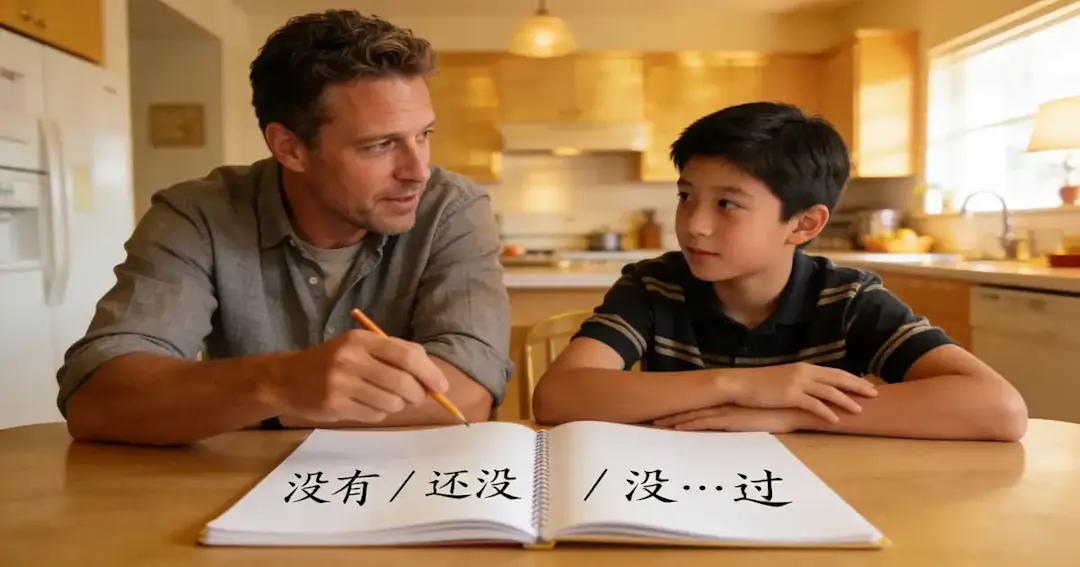
Want your child to learn Chinese? LingoAce is one of the best ways to learn Chinese for kids. Each one-on-one lesson is the product of nearly 200 hours of curriculum development, teacher training, and quality control. Our classes are tailored to meet your child’s learning needs.
Experience a redefined Chinese learning experience first-hand and book a free trial class with us today.