If you ask any high school student preparing for the AP Chinese exam, most will tell you the same thing: they’re not worried about memorizing vocabulary—they’re worried about using it. The AP Chinese Language and Culture exam isn’t just a test of words or grammar; it’s a test of communication, thinking, and culture.
That’s why finding a truly effective AP Chinese online course can make all the difference. The right course doesn’t just teach you to “score higher.” It trains your ear to understand spoken Chinese, your hand to write with accuracy, and your mind to think in Chinese naturally.
Think of it like learning to drive: having a good textbook helps, but you’ll never learn the timing of the road without someone guiding you in real-time. That’s where structured online learning—like the live, interactive model used by LingoAce—changes the game.
1. What Is the AP Chinese Course—and Why It Matters
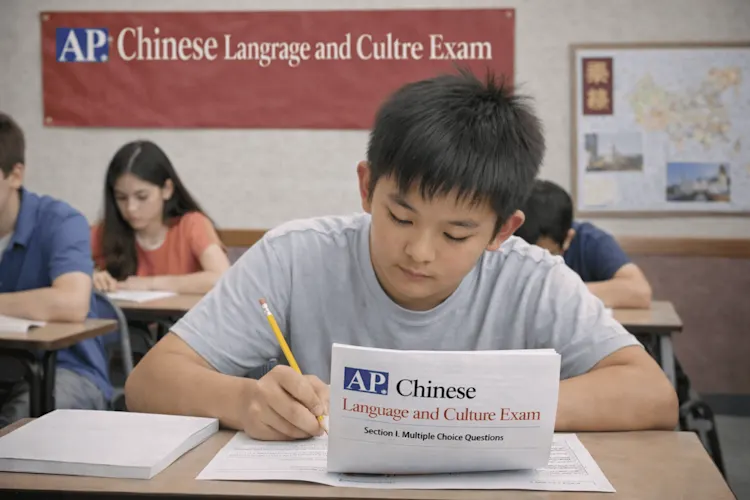
The AP Chinese Language and Culture exam, run by the College Board, is designed for high school students who want to earn college credit or demonstrate advanced proficiency in Mandarin.
It covers four key skills:
Listening (understanding natural-speed Chinese audio)
Reading (interpreting authentic materials)
Writing (typed responses using pinyin input)
Speaking (recorded responses using a microphone)
The exam also integrates cultural understanding—from traditions and festivals to modern social issues. According to College Board data, students who perform well often have consistent practice across all four areas, not just “more vocabulary.”
2. What Most Online AP Chinese Courses Offer (and What They Miss)
When you search for “AP Chinese online course,” you’ll find hundreds of programs claiming to boost your score. But not all online classes are built the same.
Most courses focus heavily on:
Grammar and vocabulary lists
Test-taking drills and mock papers
Pre-recorded videos
While these are useful, they often miss what really moves your score:
Spoken fluency practice (live response under time pressure)
Personalized feedback (why your tone or structure was unclear)
Cultural discussion (how to express opinions naturally in Chinese)
This is where structured, teacher-led courses like LingoAce stand out—combining interactive speaking, real-time feedback, and AP-style exam practice.
3. How to Choose the Right AP Chinese Online Course
Here’s a checklist top students and parents use before signing up for any online course, because the “best” course isn’t always the one with the most materials—it’s the one that matches how you actually learn and how the AP exam actually scores.
Curriculum Alignment – Does it follow the College Board AP Chinese framework?
Live Practice – Are there live speaking sessions or just video lessons?
Feedback Quality – Will you get personalized comments on your speaking and writing?
Cultural Context – Does it include discussion of Chinese culture, not just test drills?
Teacher Qualification – Are the teachers experienced with AP-level students?
Flexibility – Are lessons scheduled or self-paced?
Student Support – Do you get progress reports or parent feedback?

4. What Top AP Chinese Students Do Differently
Top scorers in AP Chinese exams don’t just attend classes—they use courses strategically, which means they practice in small, repeatable routines and treat every mistake as a pattern to fix, not a one-time accident.
They record themselves speaking weekly and compare with model answers.
They summarize Chinese articles in English and vice versa—to train both comprehension and translation logic.
They practice real exam simulations regularly, not just the week before the test.
They use structured feedback loops—often through platforms like LingoAce, where teachers point out recurring tone or grammar issues.
5. Why LingoAce’s Structure Works Well for AP Chinese Students
While many online courses are self-paced and lonely, LingoAce keeps AP learners engaged with a live class format, personalized pacing, and AP-specific teachers—so students don’t just “learn more,” they learn more efficiently, with fewer repeated mistakes.
It’s not just about completing lessons—it’s about:
Learning exam skills through real communication;
Getting teacher feedback immediately after each activity;
Practicing AP-style speaking tasks in real time;
Reviewing cultural topics (like holidays, values, or current issues) in Chinese, not English.
The result? Students don’t just prepare for an exam—they gain the fluency and confidence to use Chinese beyond it, which is exactly what strong AP performance reflects.
6. Recommended Resources for AP Chinese Learners
Resource | Description | Link |
College Board – AP Chinese Overview | Official exam structure and sample tasks | |
AP Chinese Course Overview (PDF) | Syllabus and learning objectives | |
DigMandarin AP Chinese Guide | Independent review of AP exam content | |
LingoAce Blog | Family-friendly study strategies and course advice |
7. Final Thoughts: Learn Smart, Not Just Hard
Scoring well in AP Chinese isn’t about spending more hours memorizing lists—it’s about studying with purpose. The best online courses don’t simply “teach content.” They coach you to think, respond, and communicate like a real Chinese speaker.
So when you pick your course, look for one that gives you structure, feedback, and motivation—not just homework.Because in the end, a good AP Chinese score is more than a number; it’s proof that you can connect meaningfully across cultures.