
Starting to learn Chinese can feel overwhelming. New sounds, unfamiliar characters, and a writing system that looks nothing like English often make beginners wonder if they’re starting in the right place.
That’s why HSK 1 vocabulary matters so much.
HSK 1 introduces the very first words Chinese learners encounter. These words are simple, practical, and closely tied to daily life. More importantly, they are chosen to help beginners use Chinese early, not just recognize it on a page.
This article walks through the core HSK 1 vocabulary themes, explains why these words come first, and shows how they fit into a natural learning path.
What Makes HSK 1 Vocabulary Different?
HSK 1 vocabulary isn’t random. It’s carefully selected based on frequency and usefulness.
Instead of abstract ideas, HSK 1 focuses on:
People and relationships
Everyday actions
Numbers and basic descriptions
Classroom and daily-life language
These words appear again and again in real conversations. Learning them early helps beginners feel progress quickly, which is critical for motivation—especially for young learners.

1. Pronouns and People Words: Talking About Yourself
One of the first things learners want to do in any language is talk about themselves and others.
HSK 1 introduces pronouns and people-related words such as:
I / you
He / she
Teacher / student
Friend
These words allow beginners to form meaningful sentences almost immediately. Even with limited grammar, learners can already say who they are, who they see, and who they’re talking to.This early sense of connection makes Chinese feel less distant and more personal.
2. Basic Verbs: Making Simple Sentences Work
Verbs give vocabulary life.
HSK 1 verbs focus on actions learners perform every day, including:
To be
To have
To go
To come
To like
With just a few verbs, beginners can already create dozens of useful sentences. Chinese grammar at this level stays simple, so learners spend more time practicing meaning instead of memorizing rules.This is often where learners realize Chinese sentences don’t have to be complicated to be useful.
3. Numbers and Time Words: Everyday Practical Language
Numbers appear early in HSK 1 for a good reason—they are used constantly.
Common HSK 1 number-related vocabulary includes:
Numbers from one to ten
Day
Today
Tomorrow
These words support real-life needs such as telling time, counting objects, or talking about routines. For children, numbers also create natural opportunities to connect Chinese with math and daily activities.
Learning numbers early builds confidence because they’re easy to recognize and reuse.
4. Family Words: Language Rooted in Daily Life
Family is a central theme in beginner Chinese.
HSK 1 introduces simple family-related words like:
Mom
Dad
Family
Child
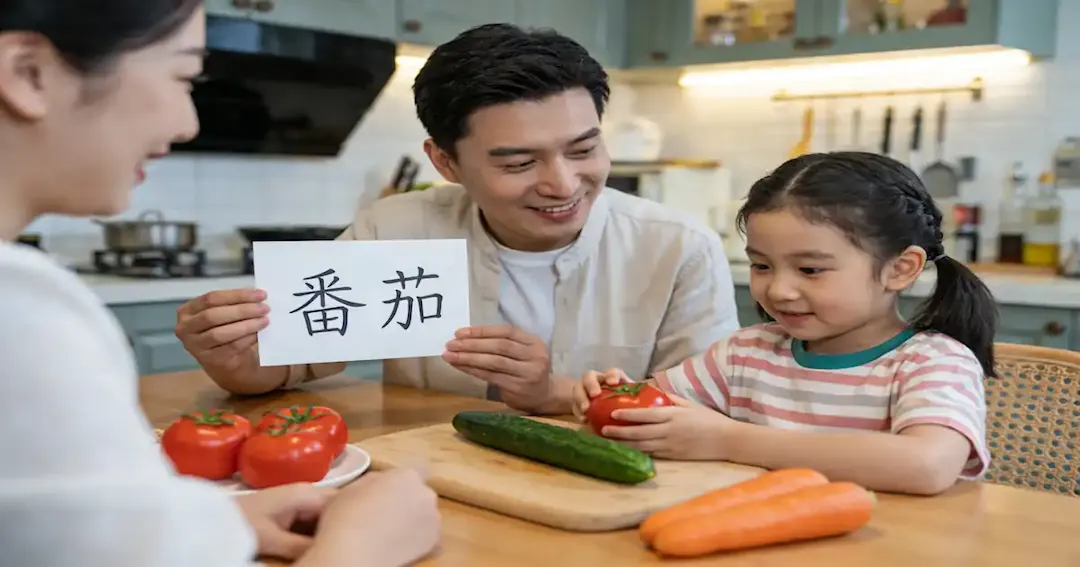
These words are emotionally familiar, which helps memory. Beginners don’t need to imagine new situations—they talk about their own lives.This is why family vocabulary is often introduced through stories, pictures, or conversations rather than flashcards alone.
5. Classroom and Learning Words: Understanding the Learning Space
Many HSK 1 learners study Chinese in a classroom or structured environment, so classroom words come early.
Typical HSK 1 learning-related vocabulary includes:
Teacher
Student
Book
Study
These words help learners understand instructions and participate more actively in lessons. They also reduce frustration by making the learning process itself more transparent.For younger learners especially, this vocabulary supports smoother communication during lessons.
6. Yes, No, and Question Words: Starting Conversations
Communication begins with simple responses.
HSK 1 includes essential interaction words such as:
Yes
No
What
Who
These words may look small, but they carry a lot of weight. They allow learners to respond, ask questions, and stay engaged—even with limited vocabulary.Being able to ask “what” or answer “yes” keeps conversations alive and makes practice more natural.
7. Everyday Objects and Places: Recognizing the World Around You
HSK 1 also introduces words learners see and use every day, such as:
Person
Home
Water
School
These nouns connect Chinese directly to the learner’s surroundings. Suddenly, Chinese isn’t just a subject—it’s a way to label the world around them.This kind of vocabulary works especially well when paired with real-life context rather than memorization alone.
How HSK 1 Vocabulary Fits Into a Learning Path
HSK 1 words are like the first building blocks of Chinese. On their own, they may seem small. Together, they support everything that comes later.
When learners understand how these words connect, learning becomes smoother:
Vocabulary supports listening
Listening reinforces pronunciation
Pronunciation builds speaking confidence
Many structured learning programs follow this principle, introducing vocabulary in context rather than as isolated lists. When words are learned through stories, routines, or guided practice, they stick.This is also why some learners progress faster—not because they memorize more words, but because they use them more often.
How Many HSK 1 Words Do You Need to Memorize?
HSK 1 officially includes around 150 words. That number may sound manageable, but memorization alone isn’t the goal.
A better question is:
How many words can you recognize, understand, and use naturally?
Learners who focus on frequent exposure—listening, speaking, and reading simple content—often need less “study time” than those who rely only on word lists.
The key is repetition with meaning.
Tips for Learning HSK 1 Vocabulary More Effectively
Instead of treating HSK 1 as a checklist, try these approaches:
Learn words in short phrases, not alone
Practice saying words out loud early
Connect words to daily routines
Many parents and learners find that guided programs help maintain this balance. A clear structure ensures that vocabulary grows steadily, without gaps or overload.
Final Thoughts: A Small List That Opens Big Doors
HSK 1 vocabulary may be small in size, but it plays a big role in building confidence.
These first words help learners:
Understand basic Chinese
Start speaking sooner
Feel progress instead of pressure
When learned with context and purpose, HSK 1 vocabulary becomes the foundation for a long and successful Chinese learning journey.
A Gentle Next Step for Learning HSK 1 Vocabulary
Learning HSK 1 vocabulary is not about rushing through a word list. It’s about giving beginners enough structure to feel steady, and enough flexibility to stay curious.
For many families and learners, this is where having the right kind of support makes a difference. A well-designed learning program doesn’t just introduce words—it helps learners hear them, say them, and recognize them in real situations.
Platforms like LingoAce take this approach seriously. Instead of teaching HSK 1 vocabulary in isolation, their lessons are built around themes, stories, and guided practice that match how beginners—especially children—actually learn. Words appear naturally, repeat often, and slowly become part of everyday language use.
Whether you continue learning on your own or with structured guidance, the goal stays the same: helping those first Chinese words turn into real understanding, one step at a time.