Moving from HSK 3 to HSK 4 isn’t just a small step up in Chinese learning—it’s a major shift that takes you from basic "get-by" Chinese to real intermediate fluency, matching the CEFR B2 level. But if you’ve hit a wall here, you’re not alone. Educators and linguists all agree: HSK 4 is the trickiest "plateau" in the entire HSK journey.
Why is it so challenging? Two big reasons stand out for most learners:
The sheer number of words: HSK 4 demands 1,200 vocabulary words—double the 600 you needed for HSK 3. That’s 600 new terms to learn, and they’re not easy ones.
The type of words: Unlike HSK 1-3, which stick to concrete things (like "table," "apple," or "teacher"), HSK 4 dives into abstract ideas, formal sentence structures, and synonyms that seem almost identical but aren’t. Plus, there’s no Pinyin on the exam paper—you have to recognize characters instantly, no phonetic help allowed.
Memorizing definitions is insufficient at this stage. The key to HSK 4 is lexical precision—knowing exactly when to use a word in complex contexts without Pinyin support.

To facilitate this transition, we have curated the 6 essential vocabulary categories that define intermediate fluency. Here is how to navigate the nuances of the new curriculum.
1. The "Synonym" Challenge: Figuring Out the Small (But Crucial) Differences
Synonyms are hands down the biggest headache in HSK 4 vocabulary. The Reading and Writing sections test this constantly—pick the wrong word, and you’ll end up with awkward Chinglish or grammar mistakes that cost you points. Let’s break down the pairs learners mix up most often.
A. Regularity vs. Frequency: 往往 (wǎngwǎng) vs. 常常 (chángcháng)
Most students mix these up. Here is the easiest way to tell them apart:
常常 (chángcháng) is for Subjective Wants. It covers things you hope to do or plan to do. It’s personal.
Usage: "I hope to see you often." (Subjective desire).
往往 (wǎngwǎng) is for Objective Facts. It describes a pattern or a natural law. It translates better to "tends to" than "often."
Usage: "When it rains, traffic 往往 gets bad." (Objective result).
Note: You can’t use it for future hopes.
Pro tip for the exam: 往往 needs a "setup." You can’t start a sentence with 往往 out of nowhere. There has to be a condition first (like "on rainy days" or "when I study late"). That’s a common trap in HSK 4—don’t fall for it!
B. Adaptation vs. Suitability: 适应 (shìyìng) vs. 适合 (shìhé)
They share the character 适 (shì), so they look similar, but their jobs in a sentence are totally different. Let’s keep it simple:
Word | Part of Speech | What It Means (In Plain Language) | Example |
适应 (shìyìng) | Verb | You change to fit your surroundings | 我已经适应了这里的生活。
(I’ve gotten used to life here.) |
适合 (shìhé) | Verb / Adjective | To suit / fit. Something fits you (or someone/something else) | 这份工作很适合你。
(This job is perfect for you.) |
C. Methodology vs. Process: 通过 (tōngguò) vs. 经过 (jīngguò)
These two get mixed up because they both relate to "getting from A to B," but one is about how you do it, and the other is about what happened along the way.
通过 (tōngguò): Answers the question "How did you do that?" It’s about the method or tool you used. Like, "By working hard, he succeeded"—the hard work is the means, so 通过 is correct.
经过 (jīngguò): Answers the question "What did you go through?" It’s about the process or time that passed. For example, "After three hours of talking, we reached an agreement"—the three hours of discussion is the process, so 经过 works here.

2. Abstract Nouns: Talking About Ideas, Feelings, and Society
HSK 1-3 is all about naming physical things, but HSK 4 wants you to talk about bigger stuff—like your career goals, stress at work, or what you think about a social issue. These abstract nouns are make-or-break for the Writing Section (Part 2), where you have to describe pictures that show things like "someone feeling stressed" or "chasing a dream."
Here are the key ones you need to know, plus the verbs that go with them (collocations matter a lot for HSK 4 scores!):
理想 (lǐxiǎng) – Ideal/Aspiration
Distinction: Not the same as 梦 (mèng, "dream"), which can refer to sleeping dreams. 理想 is strictly for career or life goals—like "realizing your dream job."
Collocation: Use it with 实现 (shíxiàn): 实现理想 (to realize one’s ideal).
压力 (yālì) – Pressure/Stress
Context: Super common in HSK 4 (think workplace or study topics).
Collocation: You can’t "make" pressure—you have to 承受压力 (bear it), 缓解压力 (relieve it), or say 压力很大 (I’m under a lot of pressure).
态度 (tàidù) – Attitude / Mindset
Context: This is often used to judge someone's character in the workplace or classroom.
Power Phrase: 积极的态度 (A positive attitude). Use this in the Writing Section to describe someone working hard or helping others.
看法 (kànfǎ) – Viewpoint / Opinion
The Upgrade: Stop saying juédé (I feel/think) for everything. It sounds basic. If you want to sound professional or objective, switch to 看法.
Usage: "我的看法是..." (In my view...).
基础 (jīchǔ) – Foundation
Context: Think of this as your "skill level."
Example: "汉语基础" (Chinese foundation). You’ll often hear sentences like, "His foundation is weak, so he needs to study harder."
Exam Strategy: Nouns are useless on their own. The secret to a high HSK 4 score is knowing which verbs stick to these nouns. Examiners aren't just looking for "pressure" (yālì); they are hunting for "relieve pressure" (huǎnjiě yālì). Always learn them as a pair.
3. From Casual to Formal: Verbs That Make Your Writing Sound Polished
HSK 4 is where you stop using "everyday" oral Chinese and start using "written" Chinese—especially in the Writing Section. Using casual verbs (like 说话 for "to talk") in formal writing will lower your score. Here’s how to "upgrade" your HSK 3 verbs to HSK 4-level formal ones:
Basic Concept (HSK 3) | Formal Upgrade (HSK 4) | Pinyin | When to Use It |
To get / receive | 获得 | huòdé | For nice, abstract things: honors, prizes, degrees, support, or opportunities (e.g., 获得奖学金 – to get a scholarship) |
To change | 改变 | gǎibiàn | For big changes: situations, destiny, habits, or mindsets (e.g., 改变生活 – to change one’s life) |
To talk / speak | 交流 | jiāoliú | For two-way communication: ideas, culture, or feelings (e.g., 交流经验 – to exchange experience) |
To hold (an event) | 举办 | jǔbàn | For formal events: conferences, competitions, or festivals (e.g., 举办会议 – to hold a meeting) |
To look for a job | 招聘 | zhāopìn | For company recruitment (e.g., 公司招聘员工 – the company is hiring employees) |
Pro tip: It’s okay to use casual verbs like 说话 in the Listening Section (since people talk casually), but switch to formal ones like 交流 in Writing—this tells graders you’re ready for intermediate Chinese.
4. Attitude Adverbs: Figuring Out What Speakers Really Mean
The HSK 4 Listening Section isn’t just about understanding words—it’s about getting the speaker’s mood or intent. These adverbs are like "emotional clues"—miss them, and you’ll get the answer wrong. Let’s break them down with real-life examples:
竟然 (jìngrán) – Unexpectedly: When something happens that you never saw coming. Like, "He actually gave up the opportunity!" – the speaker is shocked or disappointed.
难道 (nándào) – Could it be that...?: A rhetorical question—meaning the opposite of what’s being asked. If someone says, "Don’t you know?" (你难道不知道?), they’re really saying, "I can’t believe you don’t know this!"
确实 (quèshí) – Indeed/Truly: Used to agree strongly or confirm a fact. Like, "He is indeed very hardworking" – the speaker is emphasizing the truth.
故意 (gùyì) – Intentionally/On purpose: When someone does something on purpose. For example, "He was late on purpose" – useful for understanding arguments or apologies in Listening.
稍微 (shāowēi) – A little bit/Slightly: Softens a request or description. Like, "Please wait a little" (请稍微等一下) – sounds polite, not demanding.
5. Idioms (Chengyu): Small Phrases That Show Cultural Know-How
HSK 4 introduces four-character idioms (chengyu)—and while you don’t need hundreds (that’s HSK 6!), there are a few must-know ones that pop up in Reading and Listening. The key thing: treat them as one whole word—never split the four characters.
乱七八糟 (luànqībāzāo) – Disordered/Messy: For when things are a mess—either physically (a messy room) or mentally (jumbled thoughts).
一模一样 (yìmúyíyàng) – Identical: When two things are exactly the same. Like, "These two phones are identical" – great for describing objects in Listening or Writing.
讨价还价 (tǎojiàhuánjià) – To bargain/Haggle: Super useful for Listening dialogues about shopping. If you hear someone talking about prices in a market, this idiom will probably come up.
6. Separable Verbs: The Grammar Trap Everyone Falls For
Separable verbs (离合词) are unique to Chinese, and HSK 4 loves to test them—because they’re easy to mess up. These look like normal two-character verbs, but they’re actually "Verb + Object" combinations (like 见面 = "meet" + "face" or 请假 = "request" + "leave"). The rule is: you can’t add another object right after them.
Common HSK 4 separable verbs: 见面 (jiànmiàn, to meet), 请假 (qǐngjià, to ask for leave), 毕业 (bìyè, to graduate), 鼓掌 (gǔzhǎng, to applaud), 散步 (sànbù, to take a walk).
Here’s how to use them correctly (avoid these common mistakes!):
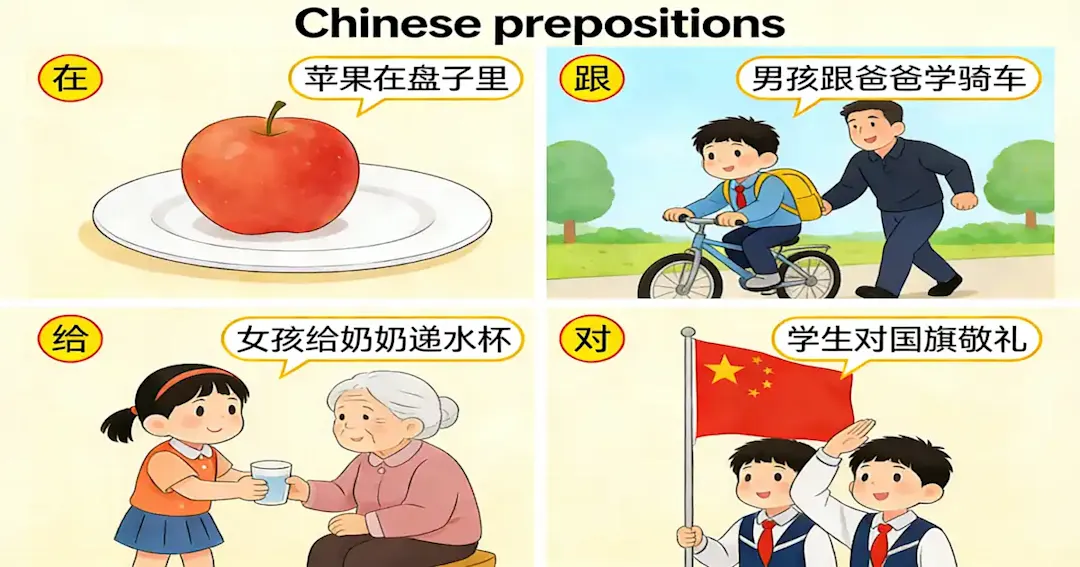
With a preposition: Don’t say 我明天要见面他 (I want to meet him tomorrow). Instead, add 跟 (with): 我明天要跟他见面.
Adding time duration: Don’t say 鼓掌了一会儿 (applauded for a while). Put the time inside the verb: 鼓了一会儿掌.
Practical Strategies for Memorizing HSK 4 Vocabulary
With 1,200 words and all these rules, cramming flashcards all day won’t help. Here’s what does:
Learn words in chunks: Instead of memorizing 打 (dǎ) alone, learn phrases like 打针 (dǎzhēn, injection), 打折 (dǎzhé, discount), or 打招呼 (dǎzhāohu, greet). HSK 4 tests how words work together, not just individual characters.
Read graded texts: Since there’s no Pinyin on the exam, you need to recognize characters instantly. Read HSK 4-level articles or stories—when you see a word like 关键 (guānjiàn, key) in a sentence, your brain remembers it better than if you just stare at a flashcard.
Get feedback: It’s easy to pick up bad habits (like mixing up 往往 and 常常) when studying alone. A teacher or tutor can catch those mistakes before they "stick"—saving you points on the exam.
HSK 4 Vocabulary FAQs
1. Is HSK 4 vocabulary enough to work in China?
Usually, yes! HSK 4 (CEFR B2) is the minimum for foreign work visas. You’ll be able to handle daily office communication and read basic work documents. But if you need to negotiate contracts or write legal stuff, you’ll need HSK 5.
2. How many unique characters do I need to know for HSK 4?
HSK 4 has 1,200 words, made up of about 1,064 unique characters. You have to recognize all of them without Pinyin—so practice character reading daily!
3. What’s the biggest difference between HSK 3 and HSK 4 vocabulary?
No more Pinyin, and way more abstract/formal words. HSK 3 is for "surviving" (ordering food, asking for directions), while HSK 4 is for "communicating" (talking about work, sharing opinions).

Wrapping Up: Precision Is the Key to HSK 4 Success
Mastering HSK 4 vocabulary isn’t about memorizing more words—it’s about mastering the right words, in the right way. It’s knowing when to use 适应 instead of 适合, 交流 instead of 说话, and how to avoid separable verb mistakes.
The good news? You don’t have to navigate this plateau alone. At LingoAce, our certified teachers specialize in breaking down HSK 4’s trickiest vocabulary and grammar. We’ll help you fix those common mistakes, learn collocations that impress graders, and build a study plan that works for you.
Book a Free HSK 4 Assessment Class with LingoAce today. Let our experts check your current level, identify your weak spots, and create a personalized roadmap to help you ace HSK 4—once and for all.