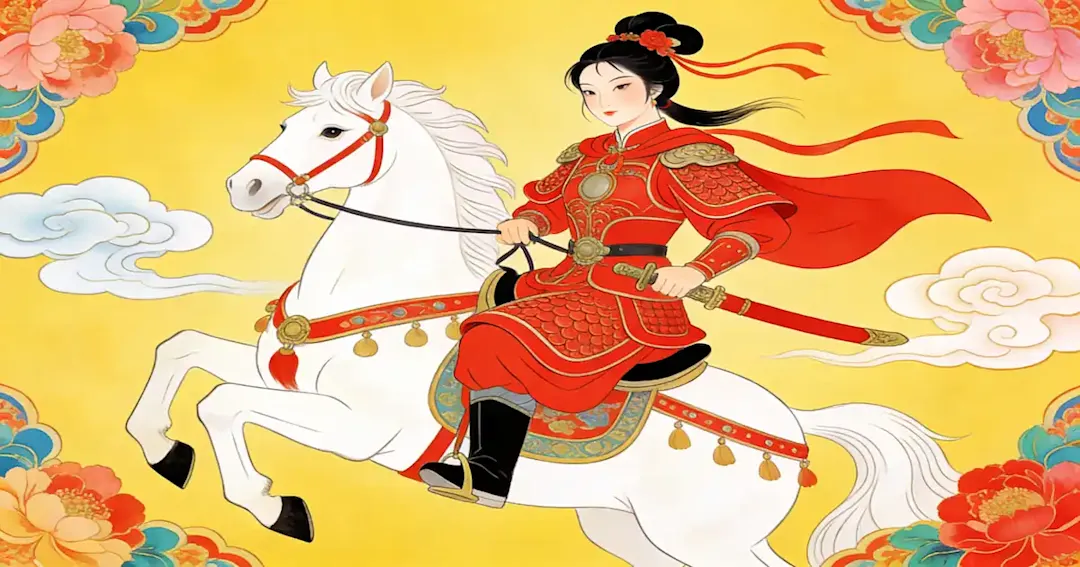
Your kid watches a version of hua mulan, eyes wide, humming the catchy bits… and then hits you with the question that always shows up at the worst possible moment:“Was hua mulan real?”
This guide is for parents who want a clear answer without turning story time into a debate club.
What is hua mulan, really?
When people ask “Is hua mulan real?”, they’re usually asking two different questions at once:
Did one specific person named Mulan exist exactly as shown?
Is the story meaningful, trusted, and culturally important?
Legends can be “not provable in every detail” and still be culturally true in the way families use the word true:
true to a set of values
true to a community’s memory
true to the emotions kids recognize (fear, pressure, love, stubborn courage)
In other words, hua mulan is less like a government record and more like a story people kept because it helped them explain what bravery looks like in real life—bravery that starts in ordinary places.
Why hua mulan still matters in 2026
In 2026, kids are surrounded by stories that move fast and wrap up neatly. hua mulan is sticky because it doesn’t stay neat once you talk about it for more than five minutes.
It opens doors to conversations parents actually need:
Responsibility vs pressure: When does helping become unhealthy people-pleasing?
Identity: Who are you when you’re performing a role for others?
Courage: Not “fearless,” but “scared and still moving.”
Belonging: Being one version of yourself at home and another at school.
And if your household is bilingual or bicultural, hua mulan hits even harder: it’s a story about crossing boundaries, reading the room, adapting, and still trying to keep your core intact.

The biggest “real legend” facts should know about hua mulan
You don’t need a timeline lecture, but a few anchor points make the story easier to frame:
hua mulan is tied to an old ballad/poem tradition. That matters because poems compress stories: they skip scenes, jump in time, and leave meaning between lines.
There isn’t one single “official script” of hua mulan. Many versions exist. Some emphasize family duty, some emphasize identity, some emphasize patriotism, some emphasize personal sacrifice.
The Disney-style arc is a modern storytelling shape. It’s not “wrong,” it’s just one adaptation style.
If your child connects with hua mulan—repeats lines, asks why characters choose certain actions, wants to retell the story—this is exactly the kind of interest that can turn into real language growth with a bit of structure.A program like LingoAce can take story-based curiosity and turn it into guided speaking + reading practice by age level, so you’re not inventing prompts and translations on the fly. A LingoAce trial class is simply a low-pressure way to see if your child clicks with that approach.
What kids can learn from hua mulan
1) Courage is a decision, not a personality type
For younger kids, “brave” sounds like something you either are or aren’t. hua mulan is a chance to reframe bravery as a moment-by-moment choice.
2) Identity can be flexible without being fake
A lot of kids already “code-switch” socially: one voice at school, one voice at home, one voice online. hua mulan lets them talk about that without talking about themselves directly (which they often hate).
3) Responsibility is healthier when it’s rooted in love, not fear
Many versions of hua mulan highlight stepping in for family. That can be powerful… or it can turn into the wrong lesson if handled badly.
4) Big choices come with trade-offs
Kids are used to stories where the hero chooses the “right thing” and everything becomes inspiring. hua mulan gives space for: “It’s hard. It costs something. And still—people do it.”
5) Recognition isn’t the point… but it still matters
Older kids, especially, wrestle with this: “If I do something hard and no one notices, does it still count?”
hua mulan for kids: a 10–15 minute family routine you can actually repeat
Here’s a routine that works even when everyone’s tired.
Step 1: Pick one “scene” to focus on
Not the whole story. One piece. Example options:
the moment the family faces a hard problem
the decision moment
the “I’m not sure I can do this” moment
the return / reveal moment
Step 2: Do a “6-sentence retell”
Ask your child to tell hua mulan in six sentences:
Where is Mulan at the start?
What problem appears?
What choice is made?
What changes?
What is the hardest part?
What do we learn?
If they get silly, let them. Silly is still language practice.
Step 3: Ask one question and stop
Choose one question from the lessons section above. One. Stop. Leaving them wanting more is oddly effective.
Step 4: Add one tiny Chinese word
Pick one word and repeat it twice. That’s it.
勇敢 (yǒnggǎn) — brave
家 (jiā) — home / family
我可以 (wǒ kěyǐ) — I can
故事 (gùshì) — story
FAQ
1)Was hua mulan a real person?
hua mulan is best understood as a legendary figure rooted in an old ballad tradition, rather than a fully verifiable historical biography. For kids, the more useful question is often: “What does the story teach, and why did people keep telling it?”
2)What can kids learn from hua mulan in 2026?
Kids can learn about courage as a choice, responsibility rooted in care, identity beyond labels, and how stories change across cultures. In 2026, those themes connect directly to school pressure, belonging, and confidence.
3)How is hua mulan different from Disney’s Mulan?
Disney’s hua mulan is one modern adaptation with its own storytelling arc and tone. Older tellings tend to be more compressed (poem-like) and may emphasize different values. Treat them as different versions, not “right vs wrong.”
4)What’s a kid-friendly way to teach hua mulan at home?
Use a 10–15 minute routine: pick one scene, do a 6-sentence retell, ask one question, and optionally practice one Chinese word. Short sessions repeated over time work better than one long “lesson.”
5)Is hua mulan good for bilingual or heritage Chinese families?
Yes—hua mulan naturally supports conversations about identity, language, belonging, and family roles, which show up often in bilingual households. It’s also a strong gateway into story-based language learning.
Conclusion
In 2026, the real reason hua mulan lasts isn’t just the armor or the plot twists. It lasts because it mirrors what kids quietly live through: pressure, identity, loyalty, and the moment you decide to be brave while still feeling scared.
If you’d like your child to go beyond “knowing the story” and start talking about stories in Chinese with real confidence, consider booking a LingoAce trial class. A good teacher can turn these cultural moments into steady progress—without turning your home into a second classroom.