
Parents of talented children often wonder, "Should I give my kids an IQ test?" But before you start down that path, let's first understand what IQ tests are and their purpose. IQ stands for intelligence quotient. An IQ test assesses one's cognitive abilities and intellectual potential. These tests have been around for over a century, since the early 1900s. French psychologist Alfred Binet and his colleague, Théodore Simon, developed the first practical intelligence test in 1905. The Binet-Simon Scale was designed to identify a child's "mental age" based on measuring different cognitive skills like memory, attention, and problem-solving ability.

What is an IQ Test for Kids?
High IQ scores often describe a person's genius in books, movies, and TV shows. What's really being referenced is the score from one of the more well-known standardized IQ tests. For kids, these tests include:
Wechsler Intelligence Scale for Children (WISC): The WISC is one of the most widely used IQ tests for children aged 6 to 16. It measures various cognitive skills, including verbal comprehension, perceptual reasoning, working memory, and processing speed. It is typically administered by licensed psychologists in clinical settings, schools, or private practice.
Stanford-Binet Intelligence Scales: This test assesses five factors of cognitive ability: fluid reasoning, knowledge, quantitative reasoning, visual-spatial processing, and working memory. It is suitable for children aged 2 to 18. It is conducted by trained professionals, often in educational or psychological assessment centers.
Kaufman Assessment Battery for Children (KABC): The KABC is designed for children aged 3 to 18 and focuses on assessing cognitive abilities related to problem-solving and learning. It includes both verbal and non-verbal tasks. This test is also administered by psychologists in educational settings or private practice.
Raven's Progressive Matrices: This non-verbal test measures abstract reasoning and is suitable for children aged 5 and above. It is often used to assess children with language or hearing impairments. This test is available in schools, psychological clinics, and sometimes online through educational websites.
Woodcock-Johnson Tests of Cognitive Abilities: These tests evaluate a wide range of cognitive skills, including comprehension, reasoning, and memory. They are suitable for children aged 2 to 90. This test is conducted by psychologists in schools, clinics, or specialized testing centers.
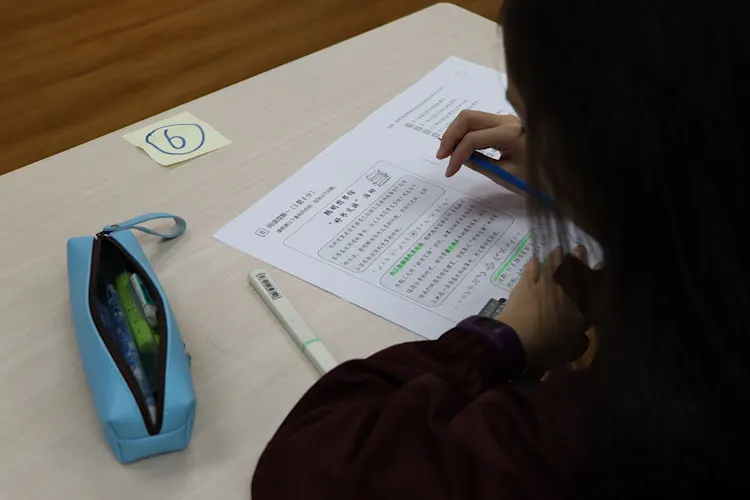
What is a Good IQ Test Question for Kids?
There are many IQ tests, some designed for children and some for adults. The core objective of these tests remains the same, which is to measure cognitive abilities such as:
Verbal Comprehension: Measures understanding and use of language.
Perceptual Reasoning: Assesses non-verbal and spatial reasoning.
Working Memory: Evaluates short-term memory and attention.
Processing Speed: Measures the speed of information processing.
IQ tests for kids are designed and administered differently than for adults. For example, the content and complexity of questions for children must be age appropriate. Also, the purpose of an IQ test for kids is different than for adults. For kids, IQ tests are used to identify areas of strength and areas needing support to guide educational and developmental interventions. By comparison, IQ tests for adults are used more for career counseling, academic placement, and identifying intellectual strengths and weaknesses.
A good IQ test question for kids should be age-appropriate, engaging, and designed to challenge their critical thinking and problem-solving skills without causing undue stress. For example, tests for younger children may focus on simple pattern recognition, basic arithmetic, and more basic vocabulary. Additionally, IQ tests for kids may be shorter and use more colorful images and interactive tasks to keep the child's interest and engagement throughout the assessment. Lastly, IQ tests for kids should be clear, concise, and accessible to cultural biases to ensure that all children, regardless of background, can understand and respond effectively.

List 10 IQ test questions for kids.
Here is a sample IQ test for kids that tests different cognitive abilities, from pattern recognition to world problems, memory, and critical thinking. The answer key is below. Please note that this IQ test should not be used for formal intelligence assessments.
1. Pattern Recognition: What comes next in the sequence? 3, 6, 9, 12, ___
2. Analogies: Sun is to Day as Moon is to ___
3. Spatial Reasoning: Which shape fits the blank space to complete the pattern?
4. Logical Reasoning: If all Shnooks are Doodles and all Doodles are Floops, are all Shnooks definitely Floops? (Yes or No)
5. Mathematical Problem: How many do you have left if you have five oranges and give three to a friend?
6. Word Puzzle: Rearrange the letters "LMAET" to form the name of an animal.
7. Memory Test: Remember this sequence of numbers: 5, 1, 8, 3. What was the second number?
8. Classification: Which of these differs from the others: Eagle, Penguin, Sparrow, or Parrot?
9. Deductive Reasoning: Sarah is shorter than Mike, and Mike is shorter than Jenny. Who is the tallest?
10. Language Skills: Which word is synonymous with "happy"? Sad, Joyful, Angry, Tired
********
Answer Key
Pattern Recognition: 15 (The pattern increases by 3 each time: 3, 6, 9, 12, 15)
Analogies: Night (Sun is to Day as Moon is to Night)
Spatial Reasoning: The correct shape (refer to the image for the specific pattern)
Logical Reasoning: Yes (If all Shnooks are Doodles and all Doodles are Floops, then all Shnooks must be Floops)
Mathematical Problem: 2 (If you have five oranges and give away three, you have two left)
Word Puzzle: CAMEL (Rearrange the letters "LMAET" to form "CAMEL")
Memory Test: 1 (The second number in the sequence 5, 1, 8, 3 is 1)
Classification: Penguin (Eagle, Sparrow, and Parrot can fly, but Penguin cannot)
Deductive Reasoning: Jenny (If Sarah is shorter than Mike, and Mike is shorter than Jenny, then Jenny is the tallest)
Language Skills: Joyful
Looking for more fun ways to help your kid improve their math skills? LingoAce now offers classes to learn math online for kids. Our courses are taught by professional math teachers with experience teaching in American and Canadian classrooms. Give us a try for free.