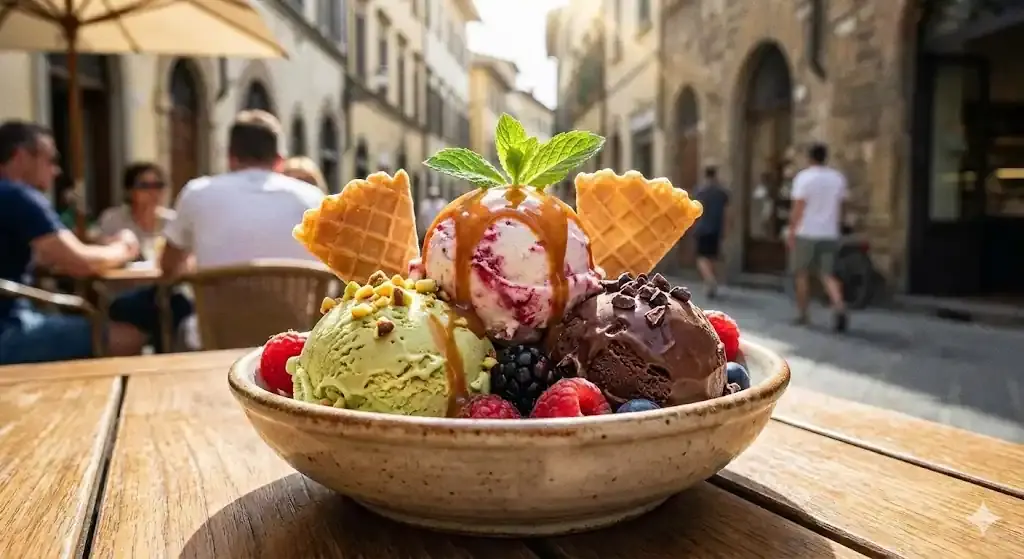
If you’re searching ice cream in chinese, you probably want more than a single translation. You want the word your child can actually say at a shop, plus the flavors they’ll spot on menus (and in Asian grocery freezers), without you doing mental gymnastics mid-line.
This listicle gives you:
The quickest way to say ice cream in chinese
A 24-flavor cheat sheet with Chinese + pinyin (tone marks)
Short, kid-friendly ordering lines you can reuse all summer
A small cultural sidebar (yes, including the John Cena “Bing Chilling” moment)
The quickest answer for ice cream in chinese (copy/paste)
The standard, most widely understood translation is:
冰淇淋(bīng qí lín) = ice cream
You may also see:
冰激凌(bīng jī líng) (a common alternative spelling/usage in some contexts)
雪糕(xuě gāo) (often used for ice-cream bars/popsicles; in real life people mix terms)
If you only teach one phrase to a child, teach 冰淇淋(bīng qí lín) first. It’s the safest default for ice cream in chinese in everyday Mandarin.
If your child loves food words but freezes up when speaking, the fastest way to turn vocabulary into confidence is role-play: one person is the cashier, one is the customer, and you repeat the same “order ice cream” routine until it feels automatic. If you’d rather not be the practice partner every time, a kid-friendly speaking class (LingoAce is one option) can guide that kind of real-life dialogue practice in short, structured bursts—so your child actually uses 冰淇淋(bīng qí lín) and flavor words out loud.

Ice cream flavors in Chinese: the 24-flavor cheat sheet (with easy pinyin)
Below is a quick table you can bookmark. Every Chinese term appears as 汉字(pinyin with tone marks).Parent shortcut: If your child is young, start with the “starter six” (vanilla, chocolate, strawberry, mango, milk, matcha). Everything else is extra credit.
24 flavors table (English → Chinese + pinyin + quick notes)
Flavor (EN) | Chinese | Pinyin | Color cue | Taste vibe | Kid sentence (Chinese + pinyin) |
Vanilla | 香草(xiāng cǎo) | xiāng cǎo | creamy white | classic, mild | 我要香草(wǒ yào xiāng cǎo)冰淇淋(bīng qí lín)。(wǒ yào xiāng cǎo bīng qí lín) |
Chocolate | 巧克力(qiǎo kè lì) | qiǎo kè lì | brown | rich, sweet | 我要巧克力(wǒ yào qiǎo kè lì)冰淇淋(bīng qí lín)。(wǒ yào qiǎo kè lì bīng qí lín) |
Strawberry | 草莓(cǎo méi) | cǎo méi | pink/red | fruity, sweet | 我要草莓(wǒ yào cǎo méi)冰淇淋(bīng qí lín)。(wǒ yào cǎo méi bīng qí lín) |
Mango | 芒果(máng guǒ) | máng guǒ | bright yellow | tropical, juicy | 我要芒果(wǒ yào máng guǒ)冰淇淋(bīng qí lín)。(wǒ yào máng guǒ bīng qí lín) |
Milk | 牛奶(niú nǎi) | niú nǎi | white | milky, gentle | 我要牛奶(wǒ yào niú nǎi)味(wèi)冰淇淋(bīng qí lín)。(wǒ yào niú nǎi wèi bīng qí lín) |
Matcha | 抹茶(mǒ chá) | mǒ chá | green | tea-like, slightly bitter | 我要抹茶(wǒ yào mǒ chá)冰淇淋(bīng qí lín)。(wǒ yào mǒ chá bīng qí lín) |
Red bean | 红豆(hóng dòu) | hóng dòu | reddish-brown | sweet, “bean” dessert | 我要红豆(wǒ yào hóng dòu)冰淇淋(bīng qí lín)。(wǒ yào hóng dòu bīng qí lín) |
Black sesame | 黑芝麻(hēi zhī ma) | hēi zhī ma | gray/black | nutty, deep | 我要黑芝麻(wǒ yào hēi zhī ma)冰淇淋(bīng qí lín)。(wǒ yào hēi zhī ma bīng qí lín) |
Taro | 芋头(yù tóu) | yù tóu | light purple | sweet, earthy | 我要芋头(wǒ yào yù tóu)冰淇淋(bīng qí lín)。(wǒ yào yù tóu bīng qí lín) |
Coconut | 椰子(yē zi) | yē zi | white | creamy, tropical | 我要椰子(wǒ yào yē zi)冰淇淋(bīng qí lín)。(wǒ yào yē zi bīng qí lín) |
Coffee | 咖啡(kā fēi) | kā fēi | tan/brown | bold, roasted | 我要咖啡(wǒ yào kā fēi)冰淇淋(bīng qí lín)。(wǒ yào kā fēi bīng qí lín) |
Mint | 薄荷(bò hé) | bò hé | pale green | cool, fresh | 我要薄荷(wǒ yào bò hé)冰淇淋(bīng qí lín)。(wǒ yào bò hé bīng qí lín) |
Lemon | 柠檬(níng méng) | níng méng | yellow | tart, bright | 我要柠檬(wǒ yào níng méng)味(wèi)冰淇淋(bīng qí lín)。(wǒ yào níng méng wèi bīng qí lín) |
Peach | 桃子(táo zi) | táo zi | soft pink | sweet, fragrant | 我要桃子(wǒ yào táo zi)冰淇淋(bīng qí lín)。(wǒ yào táo zi bīng qí lín) |
Grape | 葡萄(pú táo) | pú táo | purple | fruity | 我要葡萄(wǒ yào pú táo)冰淇淋(bīng qí lín)。(wǒ yào pú táo bīng qí lín) |
Lychee | 荔枝(lì zhī) | lì zhī | white | floral, juicy | 我要荔枝(wǒ yào lì zhī)冰淇淋(bīng qí lín)。(wǒ yào lì zhī bīng qí lín) |
Pineapple | 菠萝(bō luó) | bō luó | yellow | sweet-tart | 我要菠萝(wǒ yào bō luó)冰淇淋(bīng qí lín)。(wǒ yào bō luó bīng qí lín) |
Yogurt | 酸奶(suān nǎi) | suān nǎi | white | tangy, creamy | 我要酸奶(wǒ yào suān nǎi)冰淇淋(bīng qí lín)。(wǒ yào suān nǎi bīng qí lín) |
Milk tea | 奶茶(nǎi chá) | nǎi chá | tan | sweet tea | 我要奶茶(wǒ yào nǎi chá)冰淇淋(bīng qí lín)。(wǒ yào nǎi chá bīng qí lín) |
Corn | 玉米(yù mǐ) | yù mǐ | pale yellow | sweet, cozy | 我要玉米(wǒ yào yù mǐ)味(wèi)冰淇淋(bīng qí lín)。(wǒ yào yù mǐ wèi bīng qí lín) |
Pistachio | 开心果(kāi xīn guǒ) | kāi xīn guǒ | green | nutty, rich | 我要开心果(wǒ yào kāi xīn guǒ)冰淇淋(bīng qí lín)。(wǒ yào kāi xīn guǒ bīng qí lín) |
Peanut | 花生(huā shēng) | huā shēng | beige | nutty, sweet | 我要花生(wǒ yào huā shēng)冰淇淋(bīng qí lín)。(wǒ yào huā shēng bīng qí lín) |
Cheese | 芝士(zhī shì) | zhī shì | pale yellow | creamy, salty-sweet | 我要芝士(wǒ yào zhī shì)冰淇淋(bīng qí lín)。(wǒ yào zhī shì bīng qí lín) |

Flavor notes that help kids remember (red bean to matcha, in plain English)
When parents ask for “taste + color,” they usually want quick, sticky descriptions. Here are a few that work well in conversation:
红豆(hóng dòu): sweet, dessert-like—think “mild bean sweetness,” not savory beans.
抹茶(mǒ chá): green and tea-like; sometimes slightly bitter in a good way.
黑芝麻(hēi zhī ma): darker gray/black, nutty and deep—kids often call it “cookie-like” even when it isn’t.
芋头(yù tóu): light purple, gentle sweetness, a little “sweet potato-ish.”
If you’re writing this as a family memory instead of a vocab list, these tiny descriptions keep people reading—and they make ice cream in chinese feel like a real-life topic, not a worksheet.
Kid-friendly ordering lines (easy to reuse)
Here are short scripts you can practice at home. (And yes—every Chinese phrase includes pinyin.)
1 The “I want…” pattern (simple, works everywhere)
我要(wǒ yào)冰淇淋(bīng qí lín)。 (wǒ yào bīng qí lín)
我要(wǒ yào)抹茶(mǒ chá)冰淇淋(bīng qí lín)。 (wǒ yào mǒ chá bīng qí lín)
2 Cone or cup (helpful at shops)
蛋筒(dàn tǒng)还是(háishi)杯子(bēi zi)? (dàn tǒng háishi bēi zi) — “Cone or cup?”
我要(wǒ yào)蛋筒(dàn tǒng)。 (wǒ yào dàn tǒng)
我要(wǒ yào)杯子(bēi zi)。 (wǒ yào bēi zi)
3 Two scoops (older kids love this one)
我要(wǒ yào)两(liǎng)球(qiú)。 (wǒ yào liǎng qiú) — “I want two scoops.”
一个(yí gè)抹茶(mǒ chá),一个(yí gè)红豆(hóng dòu)。 (yí gè mǒ chá, yí gè hóng dòu)
Small cultural sidebar: “Bing Chilling” (冰淇淋 bīng qí lín) + John Cena
If your kid has ever repeated “Bing Chilling,” they’re basically saying 冰淇淋(bīng qí lín)—ice cream. It’s become a pop-culture memory hook that makes pronunciation practice feel like a joke, not homework.
Parent trick: treat it like a 30-second warm-up. Say 冰淇淋(bīng qí lín) once, your child echoes it once, and then you immediately use it in a real line: 我要(wǒ yào)冰淇淋(bīng qí lín)。 That’s enough repetition for the day.
Common mistakes (quick fixes)
Mistake 1: Using the flavor word without “ice cream”
Kids sometimes learn 草莓(cǎo méi) and then freeze at the counter.
Fix: teach the chunk 草莓(cǎo méi)冰淇淋(bīng qí lín) as one unit. The goal is speed, not grammar explanations.
Mistake 2: Overthinking 雪糕(xuě gāo)
You’ll hear 雪糕(xuě gāo) in real life, but you don’t need to make it lesson one.
Fix: default to 冰淇淋(bīng qí lín) for ice cream in chinese and introduce 雪糕(xuě gāo) later as “ice-cream bar/popsicle-style.”

FAQ (questions must include your exact long-tail phrases)
1 ice cream in chinese pronunciation — How do you pronounce 冰淇淋(bīng qí lín) clearly?
Say it in three beats: bīng / qí / lín. If tones feel hard, aim for clear syllables first. Then add tones once your child can say the whole chunk smoothly: 冰淇淋(bīng qí lín).
2 ice cream in chinese translation — Is “ice cream” always 冰淇淋(bīng qí lín)?
Most of the time, yes—冰淇淋(bīng qí lín) is the standard translation for “ice cream.” You may also see 冰激凌(bīng jī líng) and 雪糕(xuě gāo) depending on region or whether it’s a bar/popsicle style, but 冰淇淋(bīng qí lín) is the safest default.
3 ice cream in chinese pinyin — What’s the pinyin for common flavors like strawberry and chocolate?
Strawberry is 草莓(cǎo méi)
Chocolate is 巧克力(qiǎo kè lì) Put them together with ice cream like this: 草莓(cǎo méi)冰淇淋(bīng qí lín), 巧克力(qiǎo kè lì)冰淇淋(bīng qí lín).
Wrap-up: the fastest way to make this stick
If you only remember one line for ice cream in chinese, remember 冰淇淋(bīng qí lín)—and then let your child “collect flavors” like a game. Pick one flavor per week (say, 抹茶(mǒ chá) and 红豆(hóng dòu) first to match this article), and use it in one real message or pretend order.
If you’d like your child to move from “I can read it” to “I can say it in a real shop,” consider a short trial Chinese lesson that uses everyday scenarios (ordering food, snacks, greetings) as speaking practice. LingoAce is one option families use for that kind of guided role-play—so words like 冰淇淋(bīng qí lín) and 抹茶(mǒ chá) become part of your child’s natural speech, not just a vocabulary list.