The night we decided to “get serious” about AMC 8 tests, I did what most parents do: I printed a real test, set a kitchen timer, and said, “Just try your best.”
Ten minutes in, my kid was still on a problem that looked “easy.” Not because it was impossible—because the clock made everything feel louder. By question 12, the pencil tapping started. By question 18, the guesswork started. When the timer beeped at 40 minutes, the score wasn’t the main issue.The main issue was this: we didn’t have a system. We had materials.
With the AMC 8 running January 22–28, 2026, we didn’t need more resources. We needed a plan that would make practice feel calmer—and make test day feel familiar.
What finally worked for us was a simple split:
AoPS for building real problem-solving muscles
Past AMC 8 tests for learning pacing, patterns, and test sense
Mock AMC 8 tests for stamina and confidence under a timer
Below is the story of how we found that balance—and a copyable routine you can adapt to your own child.
The reality check we wish we’d done earlier
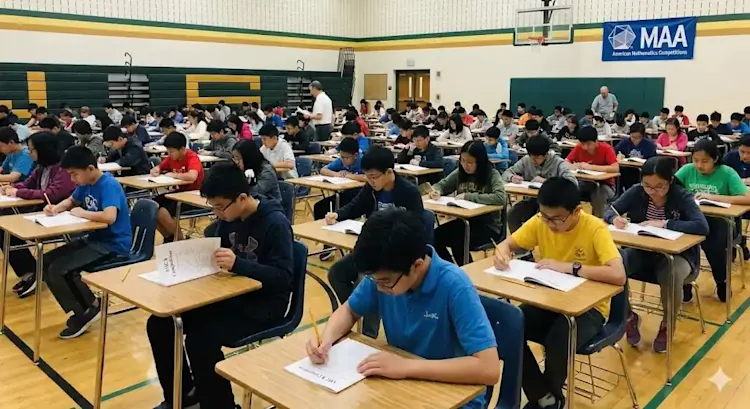
Before any plan works, your child needs to understand what they’re training for:
25 questions
40 minutes
Multiple choice
No calculators or electronic devices (and only limited tools like scratch paper, pencils, ruler, eraser)
That’s not just “math practice.” It’s decision-making under time pressure.Once we framed it that way, a lot of our frustration made sense. My kid wasn’t “bad at math.” My kid was bad at math under a clock.
Where we went wrong: the two classic traps
Trap 1: AoPS-only practice (skill goes up, scores don’t)
AoPS problems can be fantastic. The solutions teach clean thinking, and the difficulty can stretch strong students. But when we used AoPS as the entire plan, something weird happened:
My kid got better at deep thinking…
…and worse at moving on.
They would spend 8 minutes polishing one hard idea, because that’s how you learn from AoPS. On AMC 8, that habit is expensive.
AoPS was still part of our plan. We just stopped letting it run the whole show. The archive of AMC problems and solutions on AoPS also became our “past papers” hub.
Trap 2: Past-test volume without a review loop
Then we swung the other direction: more past AMC 8 tests, more grading, more “Let’s do another one.”
The score barely moved.
Because the same misses kept repeating:
Misread conditions
Rushed arithmetic
A clever shortcut we didn’t recognize
A geometry diagram we didn’t redraw
The turning point was when we started treating each test as data, not a grade.
The turning point: one “baseline test” that changed the plan
We picked one official-style past paper and did a baseline run. Not a perfect simulation. Just honest.Here were the two numbers that mattered:
Attempt rate: how many questions did my kid actually attempt?
Accuracy by zone: how did they do on early / middle / late questions?
We didn’t say “You got X wrong.” We said, “Interesting—questions 1–10 went fast, 11–20 slowed down, and 21–25 barely got touched.”
That made the next step obvious: we didn’t need more tests yet. We needed:
one pacing habit
one targeted weakness fix
one repeatable review routine
And that’s where AoPS + past papers finally clicked together.

The system we used: AoPS + Past Papers + Mock Tests
Step 1: AoPS as the “skills gym” (short, timed sets)
We used AoPS in a very specific way:
2–3 problems per session
a timer per problem (even a loose one)
solutions reviewed after an attempt, not before
Goal: sharpen thinking without training “get stuck forever.”
AoPS also provides an organized AMC 8 problems-and-solutions archive, which makes it easier to pull real contest-style problems when you want them.
Step 2: Past papers as “game film” (test sense + pacing)
Twice a week, we pulled a short timed section from past AMC 8 tests:
10–12 questions
16–20 minutes
no pausing
Then we reviewed immediately, the same day.If you want a clean, phone-friendly archive with printable PDFs, the LIVE archive curated by Po-Shen Loh is very convenient (and it notes official permission).
Step 3: The review loop (the part most families skip)
This was the real score-mover. We kept a tiny “error log” with only three labels:
Read: Did I misunderstand the question?
Set-up: Did I choose the wrong approach?
Finish: Did I make a careless mistake after the right idea?
That’s it. No 20-category spreadsheet. Just enough to spot patterns.After two weeks, we noticed something: the misses weren’t random. They clustered. And once you see the cluster, you can fix it.
A calm weekly routine (built for real family schedules)
Here’s the rhythm that kept us consistent without burning out:
Day 1 (20–30 min): AoPS skill set
2–3 problems, timed per problem
quick solution review
Day 2 (20–30 min): Past-paper mini-timed set
10–12 contest-style questions
immediate review + error log labels
Day 3 (off or light): Fix one weakness
If “Read” errors dominate: practice rewriting problem conditions
If “Finish” errors dominate: slower arithmetic checks, estimate first
If “Set-up” errors dominate: learn one new strategy pattern
Day 4 (20–30 min): Past-paper mini-timed set
again, short and timed
review immediately
Weekend (40 min): Mock AMC 8 test
full 40-minute run under simple rules
then 20–30 minutes of selective review (not everything)
This routine is built around the fact that AMC 8 is 25 questions in 40 minutes and is designed to be solved without calculators.
If you’re reading this and thinking, “I can do the plan… but I can’t be the one running mocks + review every week,” that’s a normal parent bottleneck. A structured math class that includes timed practice + solution discussion + mistake review can take that load off your plate. LingoAce is one option families use for guided routines like this—especially if your child needs consistency and calm feedback more than another stack of worksheets.
The one pacing habit that mattered most
We taught a simple rule:If you’re not making progress in ~60–90 seconds, circle it and move.
Not because the problem is too hard—because AMC 8 rewards smart question selection.
At first, my kid hated this rule. It felt like “giving up.” Then we watched what happened:
more questions attempted
fewer panic guesses at the end
less time pressure overall
The funny part: once pressure dropped, my kid actually solved more of the harder ones on the second pass.
What changed as test week got closer
As we got into the AMC 8 competition window (January 22–28, 2026), we shifted from “learn” to “stabilize.”
That meant:
fewer new strategies
more repetition of the routine
more confidence-building mocks
earlier bedtimes (seriously)
The best moment wasn’t a score jump. It was the night before a mock when my kid said:“Can we do a short timed set first? Just to warm up.”That’s what you want: a child who treats AMC 8 tests as something manageable.
FAQ (with your required long-tail keywords in the questions)
1) amc 8 tests aops — Are AoPS resources enough for AMC 8 preparation?
AoPS is excellent for building problem-solving depth, but AoPS alone can train students to linger too long on a single problem. For AMC 8, pair AoPS practice with past-paper timed sets and regular mocks to build pacing and stamina.
2) amc 8 tests pdf — Where can I get AMC 8 tests in PDF form?
Two reliable places to start are the AoPS AMC archive and the LIVE (Po-Shen Loh) past contests archive, which includes printable PDFs and solutions. Build one folder for PDFs and use them for weekly mock simulations.
3) past amc 8 tests — Which past AMC 8 tests should we start with, and why?
Start with one full past test as a baseline, then rotate through others for timed mini-sets. The best starting point is whichever test format feels closest to what your child will face now: 25 questions, 40 minutes, no calculator.
4) mock amc 8 tests — How many full mock AMC 8 tests should we do before 2026?
Many students do well with 4–8 full mocks, spaced weekly or every other week. More mocks only help if you keep a review loop: categorize mistakes, fix one weakness, then reattempt similar questions.
5) practice amc 8 tests — What’s a weekly schedule to practice AMC 8 tests without burnout?
A balanced schedule is: two short timed sets + one AoPS skill session + one full mock, with one “fix-a-weakness” day. This matches how AMC 8 is actually scored: steady accuracy plus pacing across 25 questions in 40 minutes.
Closing: the simplest way to win with AMC 8 tests
If you take one thing from our experience, let it be this:AoPS builds thinking. Past papers build test sense. Mocks build confidence.The score moves when those three work together—and when you review mistakes like clues, not flaws.And since AMC 8 runs January 22–28, 2026, a steady routine now beats a frantic cram later.
If you want your child to practice AMC 8 tests with a calmer structure—timed sets, mock runs, and guided review—consider starting with a trial class that mirrors real contest routines. LingoAce is one option families use when they want consistent coaching and a clear plan, without turning every evening into a negotiation.