
Math is a fundamental skill that children begin to develop from a young age. While some kids may find math daunting, incorporating fun and interactive activities can make learning enjoyable and engaging. Here are over 15 math activities for kids that you can do at home.
Counting with Blocks

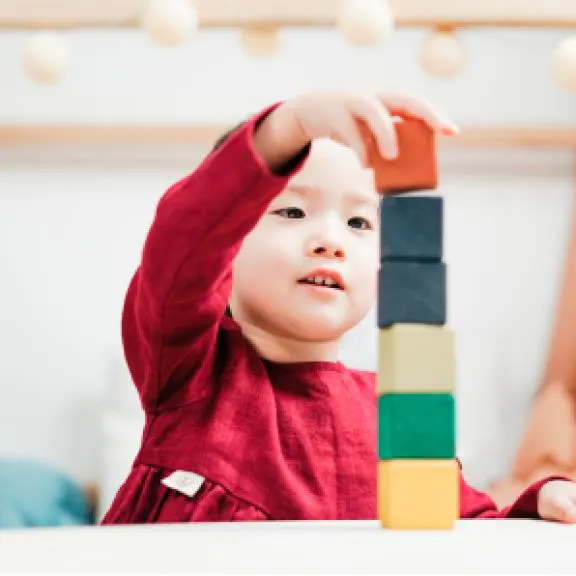
To play counting with blocks, give your kids a set of blocks of assorted colors or shapes. Ask them to count each block as they stack them on top of each other, practicing one-to-one correspondence. The activity helps develop counting, spatial awareness, and fine motor skills in children ages 3 to 5.
Required Tools: Building blocks.
Number Bingo
Give each kid a bingo card with numbers on it. Then randomly call out numbers aloud. As you call out each number, your kids will mark the called numbers on their cards. The first kid to complete a row, column, or diagonal on their card yells "Bingo!" and wins. Number Bingo reinforces number recognition and essential addition and subtraction skills, making it ideal for children aged 4-6.
Required Tools: Bingo cards with numbers, counters, or markers.
Shape Sorting
Give your kids a set of shapes cut out of paper or plastic and a sorting tray with compartments to sort shapes. Then ask them to match each shape to its corresponding slot in the tray based on its shape. This activity helps kids develop shape recognition and spatial reasoning skills. It can also be extended to include discussions about the properties of each shape, such as the number of sides or corners. Shape sorting is a hands-on and interactive way for children to learn about shapes and their attributes, and it is suitable for children aged 2-4 years old.
Required Tools: Shapes cut out of paper or plastic, sorting tray.
Pattern Play
To do pattern play, give your kids blocks or cards with a pattern sequence on it. Ask them to follow the pattern and extend it by placing the next shape or color in the sequence. This activity helps develop pattern recognition and critical thinking skills in children aged 3-5.
Required Tools: Pattern blocks and cards with pattern sequences.
Math-Based Board Games
Playing board games is a fantastic way to make learning math fun and interactive. For example, in Monopoly, players use money, dice, and strategy to buy and develop properties, reinforcing addition, subtraction, and basic financial skills. In Yahtzee, players roll dice to score points based on various combinations, teaching probability, and basic addition. In Chutes and Ladders, players climb ladders and slide down chutes based on dice rolls, reinforcing counting and number recognition. Many math-based board games are suitable for children ages 5-10 years old.
Required Tools: Board games.

Measurement Scavenger Hunt
Have your kids go on a scavenger hunt to measure and compare objects, reinforcing measurement concepts in a fun and active way. To play, create a list of items or objects for your kids to measure. Include a variety of items with different lengths, widths, and heights. Provide each kid with a measuring tape or ruler. The goal of the game is to find the items on the list, measure them, and write down the measurement. The first kid or team to complete the scavenger hunt and record all measurements accurately wins the game. This works for children aged 5-8 years old.
Required Tools: Measuring tape or ruler, list of items to measure.
Cooking and Baking
Cooking and baking are fun, hands-on ways to teach math concepts to kids ages 4-8. The lesson starts when you ask your kids to follow a recipe that involve reading and understanding numbers and measurements. When they use measuring cups and spoons, it helps them learn about fractions and units of measurement.
Required Tools: Measuring cups, utensils, and ingredients.
Math Art Projects
Create art using mathematical concepts like symmetry and patterns. This activity combines creativity with learning. It can be an engaging activity for children ages 5-10.
Required Tools: Paper, markers, colored pencils, ruler.
Money Math
Create different scenarios where your kids must use money, such as buying groceries or paying for a toy. First, show kids different coins and bills, explaining their values. Then, create a pretend store with items for sale and price tags. Give each kid a set amount of play money to spend. Have your kids "shop" in the store, selecting items to buy and paying for them with their play money. If a child buys something that costs less than a whole bill or coin, help them calculate the change they should receive. This is an excellent game for teaching kids ages 6-10 years old basic money skills and the concepts of addition and subtraction.
Required Tools: Play money or real coins and bills.
Fraction Pizza
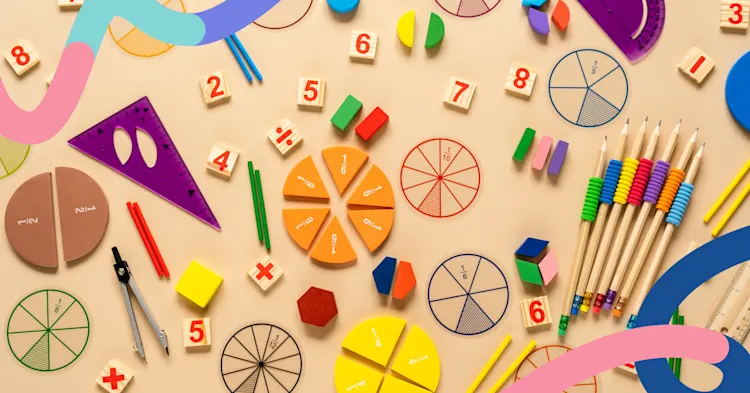
To play Fraction Pizza, start drawing or creating a plate of pizza divided into slices. Each slice represents a fraction of the whole pizza. For example, if the pizza is split into 8 slices, each represents 1/8 of the pizza. Next, have your kids choose toppings for their pizza slices, such as drawing pepperoni, mushrooms, or olives. As they add toppings to each slice, they can discuss and write down the fraction of the toppings on each slice. For instance, if they add pepperoni to 2 slices out of 8, they can write down that 2/8 or 1/4 of the pizza has pepperoni. This activity helps kids understand fractions in a visual and hands-on way, and it's suitable for children aged 6-10 years old.
Required Tools: Paper plate, construction paper, scissors, markers.
Graphing with Toys
To graph with toys, gather a collection of toys or objects with different attributes, such as color, size, or type. Next, create a graph with categories representing these attributes. For example, if you're graphing toy cars, categories could include red, blue, and green colors. Then, have your kids sort the toys into the appropriate categories and count how many are in each category. They can then create a bar graph or pictograph to represent the data, using one bar or picture for each category. This activity helps children practice sorting, counting, and graphing skills in a fun and hands-on way, and it's suitable for children aged 4-7 years old.
Required Tools: Toys or objects, graph paper.
Geometry Construction
Geometry construction involves using tools like a compass, ruler, and protractor to create geometric shapes and understand their properties. Your kids can use a ruler to draw straight lines and a protractor to measure angles. They can then use a compass to draw circles or arcs of specific radii. By following instructions or exploring independently, kids can construct shapes like triangles, quadrilaterals, and polygons, learning about side lengths, angles, and symmetrical properties. This hands-on approach helps children visualize geometric concepts and develop spatial reasoning skills. Geometry construction activities are suitable for children aged 7-12 and can be a fun and engaging way to explore geometry.
Required Tools: Compass, ruler, protractor, construction paper.
Math Storybooks
Incorporating math into storybooks can be a fun and effective way to teach mathematical concepts to kids ages 4-8. Parents and educators can engage children in math learning while enjoying story books that feature counting, shapes, patterns, measurement, time, and problem-solving; for example, reading "The Very Hungry Caterpillar" by Eric Carle can introduce counting and days of the week, while books like "The Berenstain Bears' Big Book of Science and Nature" can involve activities that include measurement. By discussing these concepts as they read, you can your kids develop a deeper understanding of math in a relatable and enjoyable context.
Required Tools: Math storybooks.
Math War
In this game, players each draw a card from a deck of math flashcards and solve the math problem on their cards. The player with the higher (or correct) answer wins both cards. This game helps reinforce math facts and encourages quick mental math skills. It can be adapted for different skill levels using different flashcards for addition, subtraction, multiplication, or division. It is suitable for kids ages 6 and up, depending on the complexity of the problem.
Required Tools: Math flashcards
Math Bingo
This popular game combines math practice with the excitement of bingo. First, give your kids bingo cards with numbers, and a caller draws and announces math problems. Then have them solve the issues and mark the corresponding answers on their cards. The first player to complete a row, column, or diagonal yells "Bingo!" and wins. Math Bingo is a fun way to reinforce math skills and can be tailored to different difficulty levels. It is suitable for kids ages 5 and up.
Required Tools: bingo cards with numbers and corresponding math problems.
These math activities are designed to be educational and enjoyable, helping children develop essential math skills while having fun. Whether through games, puzzles, or hands-on activities, there are plenty of ways to make math engaging and accessible for kids of all ages.
Looking for more fun ways to help your kid improve their math skills? LingoAce now offers classes to learn math online for kids. Our courses are taught by professional math teachers with experience teaching in American and Canadian classrooms. Give us a try for free.