For decades, Singaporean students have consistently ranked highest on the PISA test, an international study of the different education systems that evaluates the knowledge of 15-year-old students in participating countries. As a result, the math curriculum taught in Singapore has become well-regarded worldwide as one of the best methods for teaching math to children. In fact, some parents outside of Singapore send their children to special after-school programs that specialize in teaching “Singapore Math” to students. But what is this teaching method, and what makes it so effective?
What is Singapore Math?
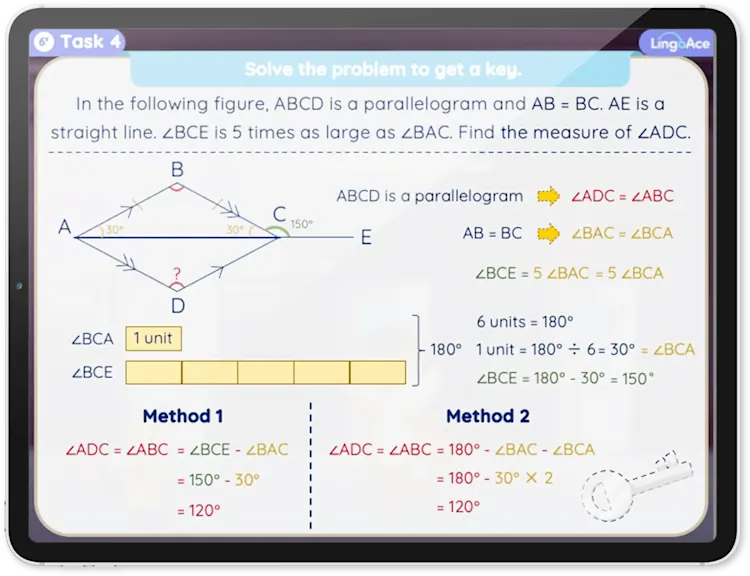
Singapore Math is an approach to teaching mathematics that originated in Singapore and is known for its focus on problem-solving and critical thinking. It emphasizes a deep understanding of mathematical concepts through a three-step learning process: concrete, pictorial, and abstract. This teaching method focuses on introducing students to new concepts using physical objects, also known as manipulatives, to model problems. This is the "concrete" approach. Next, students transition to visual representations, such as drawings or diagrams, known as the "pictorial" approach. Finally, students move to the abstract approach using mathematical symbols and numbers to represent problems.
How Effective is Singapore Math?
Singapore Math is widely praised for its effectiveness in teaching mathematical concepts. It has improved students' problem-solving skills and overall mathematical proficiency. Many educators and parents find that it provides a strong foundation in mathematics and prepares students for more advanced topics. Here’s what some parents are saying on Reddit (edited for length and grammar):
Pros and Cons of Singapore Math
@elizalemon says: “I like it because it teaches and builds on multiple arithmetic strategies. The basic steps of every lesson are hands-on, pictorial, and abstract. I mostly enjoy that one-on-one conversation with my kid, where I model and share my methods and thinking when I solve and teach concepts. Now, he can do the same, which is building his ability to defend, explain, and show evidence for his solution. All of that builds a much deeper understanding of math. Of course, that is not exclusive to Singapore math, but it’s a skill commonly practiced in other countries and encouraged more in this curriculum.”
@mjolnir76 says: “Former math teacher here...Singapore math has a solid Concrete, Pictorial, Abstract approach which works well. Yes, there are LOTS of practice problems (more so if you get the Extra Practice workbooks), but as your child's teacher, you can only have them do the problems they need for mastery. Regardless of how well you know math, I would highly recommend getting the Home Instructor's guide. I have a B.A. in mathematics and have taught for eight years, and there are still some novel approaches to problem-solving that I wasn't familiar with. I will often teach my girls "my way," in addition to the book's approach, to give them options. There are many ways to approach math, so I want them to see that. Singapore tends to run advanced, so you should try and find a placement guide before purchasing.”
CautiousPack8584 says, “My daughter does Singapore math - she goes to a private school. I feel like I need a parent’s guide to help her with her homework. She’s been doing Singapore math since K and is in 4th. I think the method is solid in learning and foundations, but it’s tough for a person unfamiliar with it to support it, let alone teach it. So, if you want to do this in a homeschool, you would want to get familiar with it.”
Common Core vs. Singapore Math: Which One is Better?
The Common Core State Standards (CCSS) approach used in the United States to teach mathematics emphasizes a deeper understanding of concepts and problem-solving skills, similar to Singapore Math. The Common Core provides a set of standards that emphasize understanding, procedural skills, and real-world application, allowing flexibility in teaching methods. Singapore Math, on the other hand, offers a structured curriculum with a strong focus on problem-solving and conceptual understanding through the Concrete-Pictorial-Abstract (CPA) approach. Both approaches have strengths and weaknesses, and their choice often depends on individual preferences and educational goals.
FAQ
Is Saxon or Singapore Math Better?
Saxon Math and Singapore Math are highly regarded math curricula but have different approaches. Saxon Math is known for its incremental approach and continual review, while Singapore Math emphasizes problem-solving and critical thinking. The choice between them depends on your child's learning style and educational goals.
Is Singapore Math on Grade Level?
Singapore Math is designed to be on par with international standards and is used in many countries worldwide. However, checking with your child's school or teacher is always a good idea to ensure they learn at the appropriate level.
Which Version of Singapore Math is Best?
Several versions of Singapore Math are available, including Primary Mathematics, Math in Focus, and Dimensions Math. The best version for your child depends on factors such as their grade level, learning style, and educational goals.
Primary Mathematics is the original Singapore Math series used in Singaporean schools. It focuses on a systematic and logical approach to math concepts, emphasizing problem-solving and deep understanding through the Concrete-Pictorial-Abstract (CPA) approach. It is best for self-motivated learners who are strong in abstract thinking and are comfortable with traditional teaching methods (aka textbooks and workbooks).
Math in Focus is the U.S. edition of the Singapore Math curriculum, designed to align with Common Core State Standards. It offers more visual and engaging materials, additional resources, and support for teachers and students. This curriculum is best for visual and hands-on learners who need a more gradual introduction to abstract concepts and can benefit from diverse instructional approaches.
Dimensions Mathis is a newer Singapore Math series, developed by the same team behind Primary Mathematics. It aims to provide a more comprehensive and engaging approach, with a balance of conceptual understanding, procedural skills, and application. It is best suited for students who need a balance between conceptual understanding and procedural practices. It offers flexibility and a variety of instructional methods, making it adaptable to different learning styles and teaching preferences.