Many people think there is only one way to learn math – usually based on how they were taught growing up. But truth be told, there are many ways to teach numbers and how to solve problems. Singapore Math and Saxon Math are two different teaching methods developed in the 1980s that gained popularity in the following decades.
What is Singapore Math?
Singapore Math is a teaching method developed by the Ministry of Education in Singapore. In the 1970s and 1980s, Singaporean students' performance in mathematics was very poor, so the government and educators designed a new teaching method for math to ensure students could compete globally.
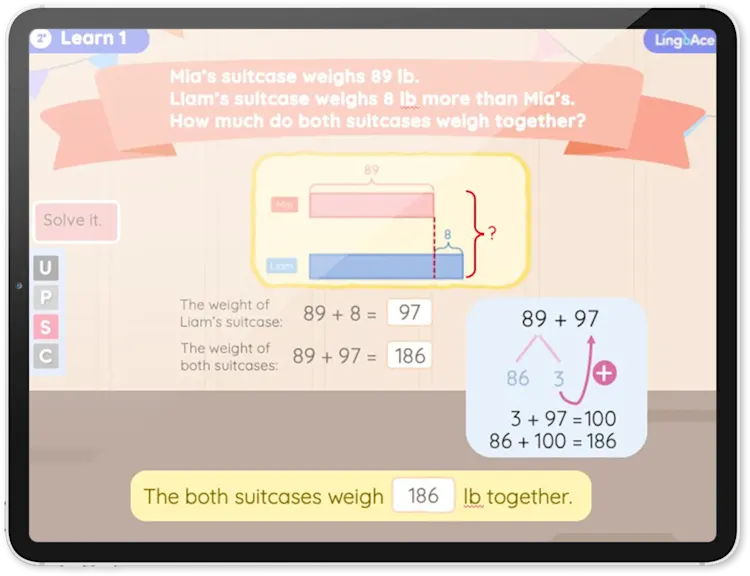
This teaching method emphasized problem-solving, critical thinking, and a deep understanding of mathematical concepts through a unique approach called Concrete-Pictorial-Abstract (CPA) progression. This approach begins with concrete experiences using physical objects, transitions to pictorial representations, and finally moves to abstract symbols and equations. This progression helps students grasp complex concepts more effectively.
What is Saxon Math?
Saxon Math aims to build a solid mathematical foundation through repetition and consistent practice, helping students retain and apply mathematical concepts effectively.
It was created by John Saxon, an engineer and a retired Air Force officer who turned to teaching after his military career. He was dismayed by his students' poor algebra performance and decided to create a better way to teach mathematics. His teaching method teaches incrementally, introducing new concepts in small, digestible increments. Each lesson is followed with continual review in regular, spaced practice. The review covers both recently taught and previously learned concepts to ensure retention. Saxon Math is widely used by various educational institutions, homeschooling families, and private tutoring programs in English-speaking countries.
Pros and Cons of Singapore Math vs. Saxon Math
Singapore Math:
Pros: The Concrete-Pictorial-Abstract (CPA) approach in Singapore Math fosters a deep understanding of mathematical concepts. The curriculum's emphasis on problem-solving helps develop critical thinking and analytical skills. Concepts are taught in a logical sequence, building on prior knowledge. This helps with retention and progression.
Cons: Singapore Math requires teachers to be well-trained in the CPA approach. Many parents outside of Singapore did not grow up learning math this way, making it challenging to teach at home independently. While Singapore Math will help students in the long run by developing their critical thinking and analytical skills, the curriculum may require adjustments to fit different educational contexts and student needs. For instance, American students may see similarities between Singapore Math and Common Core standards, but they are different and may only apply to some tests and assignments.
Saxon Math:
Pros: Mathematical concepts are introduced gradually in Saxon Math, making them easier to understand. The continual review helps reinforce learning and ensures retention. Also, the curriculum is very flexible, allowing it to be adapted to different learning paces and styles.
Cons: Compared to Singapore Math, Saxon Math emphasizes problem-solving and critical thinking less. The repetitive nature of the Saxon Math curriculum may lead to boredom for some students. This highly structured approach may only suit some learners, particularly those who prefer a more exploratory or conceptual approach. How to Select the Right Math Courses for Your Kids Selecting the right math curriculum for your child depends on several factors:
Learning Style: Consider whether your child thrives with incremental learning and repetition (Saxon Math) or benefits more from a deep, conceptual understanding (Singapore Math).
Teacher/Parent Involvement: Evaluate the level of training and involvement required from teachers and parents. Singapore Math may require more preparation and familiarity with the CPA approach.
Curriculum Goals: Identify your educational goals. Singapore Math might be the better choice if you prioritize problem-solving and critical thinking. Saxon Math could be more suitable if you value consistent practice and review.
Student Engagement: Consider your child's engagement with the material. A curriculum that aligns with their interests and motivates them will be more effective in the long run.
Assessment Results: Use placement tests and assessments to determine your child's current mathematical level and areas of strength and weakness. This can guide you in choosing the appropriate curriculum.
Benefits of LingoAce Math Course
Looking for more fun ways to help your kid improve their math skills? LingoAce offers a comprehensive math course that combines the strengths of both Singapore and Saxon Math. Learners will learn the CPA approach from Singapore Math with the incremental and cumulative review methods of Saxon Math, offering a well-rounded learning experience. Taught in a small group, the course is tailored to each student's needs, ensuring that they progress at their own pace and receive support in areas where they need improvement.
LingoAce now offers small group classes for children ages 5-13 to learn math online (在线数学课). Our courses are taught by professional math teachers with experience teaching in American and Canadian classrooms who are well-versed in both Singapore Math and Saxon Math. Give us a try for free.