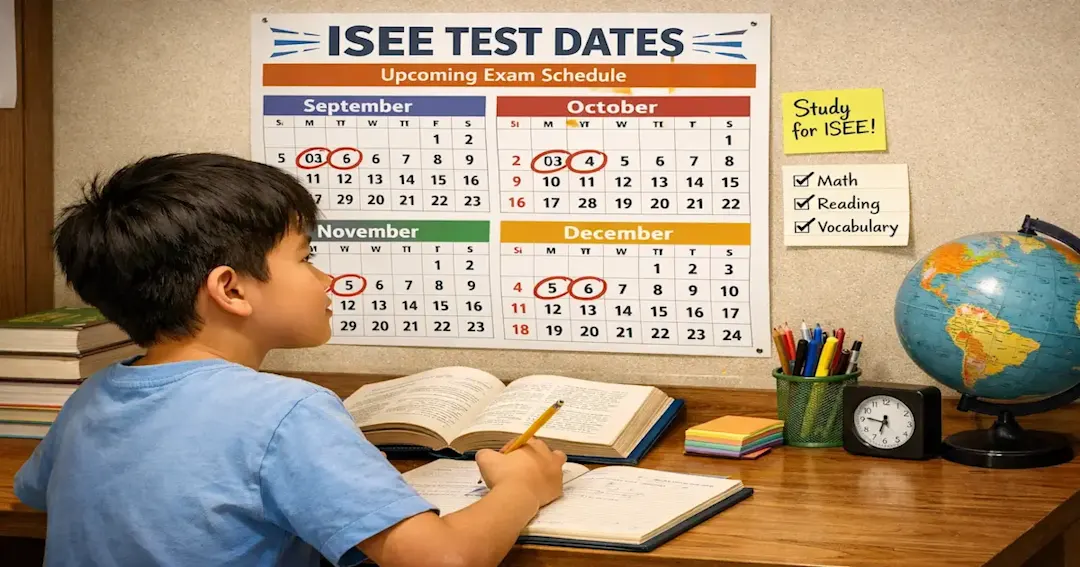
For more and more schools, big assessments don’t happen on paper anymore. They open in a browser tab on Riverside Online Test, Riverside Insights’ platform for delivering exams like CogAT®, Iowa Assessments™, Logramos®, and IowaFlex™.If your child is taking a gifted screening or a large district test through Riverside, two things matter:
They understand the question formats and interface, and
They’ve had enough practice with similar item types (especially non-verbal and multi-step reasoning tasks).
You can think of it a bit like switching into a new language at test time: if a student has the ability but isn’t used to the format or the way questions are written, performance drops. Platforms like LingoAce work on that deeper language and reasoning foundation; targeted Riverside practice then sits on top of that foundation.This guide focuses on 2026-relevant practice options:
what Riverside itself provides,
which third-party sites are actually worth your time,
and how to combine them into a simple prep plan.
1. Quick refresher: what is the Riverside Online Test?
Riverside Online Test is the secure testing site students use to take many Riverside Insights assessments. Schools often link to it from their “Student Resources” page alongside tools like MAP, IXL, or Google Classroom.Key points:
Students typically log in at riversideonlinetest.com with a session code and basic ID info.
Schools can run tests in person or remotely, with an optional “Pre-Check” tool to test the device, internet, microphone, and camera.
Behind the scenes, educators use Riverside DataManager to schedule exams, access reports, and locate official practice tests.
Common assessments delivered on this platform include:
CogAT® (Cognitive Abilities Test) – widely used for gifted identification
Iowa Assessments™ / IowaFlex™ – achievement tests in reading, math, and other subjects
Logramos® – Spanish-language achievement test
Selected clinical or diagnostic tools when used remotely
In other words, “Riverside Online Test” is the hub; what your child actually sees depends on which assessment the school has chosen.

2. What students actually need to practice
Before listing platforms, it helps to be clear about what matters for a Riverside-hosted test:
2.1 Item types
Standard multiple-choice
Picture-based / non-verbal items (especially on CogAT)
Analogy, classification, number series, figure matrices, and similar reasoning questions
2.2 Cognitive and academic skills
Verbal, quantitative, and non-verbal reasoning
Pattern recognition and spatial thinking
Reading, vocabulary, and core math skills (for Iowa / Logramos / achievement tests)
2.3 Tech comfort
Clicking the right option under time pressure
Drag-and-drop or figure selection tasks
Staying focused through a full online session
A good practice platform should hit at least two of these areas: realistic questions + workable interface; ideally, all three.
3. Official Riverside practice options (start here if you can)
3.1 DataManager practice tests (via school access)
Riverside’s DataManager platform includes practice materials for many assessments. Typically, educators can:
Log in to DataManager
Open the Resources or Support section
Choose the assessment (e.g., CogAT, Iowa Assessments)
Access practice tests, sample items, and classroom activities
These practice tests:
Use official item styles,
let students experience the flow and timing of the test,
and can be used either in a whole-class setting or individually.
How to use it as a parent You usually won’t have direct DataManager access, but you can ask:
“Could my child’s class do a short Riverside practice session using the official sample tests before the real exam?”
Many schools are already planning this and will appreciate that you’re asking about practice, not pressuring them about scores.
3.2 Riverside Online Test Pre-Check
The Pre-Check tool on riversideonlinetest.com is built for remote testing. It doesn’t give academic practice, but it will:
Confirm that the device, browser, audio, and camera are compatible
Show a basic navigation preview (moving between items, checking buttons, etc.)
Best use: If your child is taking the exam from home, run the Pre-Check on the same device a few days before the real test. It removes a layer of tech-day stress.
3.3 Riverside blog, webinars, and CogAT resources
Riverside Insights maintains a blog and webinar hub with:
Parent-friendly explanations of CogAT and ability testing
Webinars on test logistics and score reports
Articles on why districts use these assessments and how they support placement decisions
You won’t find giant practice banks there, but you will get:
Clear language for explaining the test to your child
A better understanding of how schools use Riverside results
Some high-level tips on helping kids feel ready
Best use: Choose one short blog post or webinar as a quick “anchor” so you’re not guessing what the test is for. Then move on to more hands-on practice platforms.
4. Third-party practice platforms: what’s actually useful?
Because Riverside Online Test itself is just the delivery platform, most third-party practice focuses on CogAT and similar cognitive or achievement tests that run on Riverside.Below are common 2026 options, grouped by type.
4.1 Large practice libraries (big question banks, lots of grades)
a) TestingMom.com – broad CogAT coverage
What it offers
Practice for CogAT across multiple levels
Printable PDFs and online question sets
Additional materials for other gifted and achievement tests
Strengths
Very large question bank; good for students who need a lot of exposure
Covers all three CogAT batteries: Verbal, Quantitative, Non-verbal
Things to watch
The interface is not identical to Riverside; treat it as content practice, not a perfect simulator.
Without a plan, it’s easy to overdo it—set a time limit for each session.
b) Specialty CogAT prep sites (e.g., structured online courses)
Many smaller platforms now offer level-based CogAT courses with:
Short video lessons or explanations
Timed practice sets
Progress tracking by battery and skill type
Strengths
More structured “course” feel, which helps families who don’t want to design a plan from scratch
Often updated carefully to reflect test changes
Things to watch
Subscription models can get expensive; most students don’t need months and months of access.
Focus on using them for 4–8 focused weeks, not forever.
4.2 Full-length test simulations (building stamina and pacing)
c) Mercer Publishing – full-length CogAT practice tests
What it offers
Printable and downloadable CogAT practice tests
Each test mimics the structure and number of questions on the real exam
Answer keys and explanations
Strengths
Excellent for “dress rehearsals” a week or two before the test
Explanations help students build a library of strategies for each question type
Things to watch
Paper format means you’ll want to add your own timer and maybe have your child bubble answers on a separate sheet to simulate test conditions.
d) Free online CogAT practice tests
Some websites host free online CogAT-style tests with instant scoring and breakdowns by category.Strengths
Easy way to get a quick snapshot of strengths and weaknesses
Online interface gives at least a partial sense of the time pressure and pacing
Things to watch
One free test is not a complete prep program. Use it as a diagnostic at the start or a check-in near the end.
4.3 App-based and targeted non-verbal practice
e) Mobile CogAT practice apps
Several mobile apps focus on non-verbal and visual reasoning, with:
Thousands of figure classification, matrix, and pattern questions
Short timed sets
Simple progress charts
Strengths
Great for short daily sessions (10–15 minutes)
Very helpful for students whose reasoning is stronger than their language skills, because non-verbal items depend less on vocabulary
Things to watch
Small screens can make complex figures harder to see; use a tablet if possible.
Don’t rely on apps alone—mix them with at least one full-length practice test.
4.4 Quick comparison: platforms at a glance
Platform / Type | Best for… | Match to Riverside feel | Cost level | Good starting use case |
DataManager practice | Official item style, teacher-led practice | ★★★★☆ | School-provided | Ask school for one practice session |
TestingMom-style library | Big variety of CogAT-type questions | ★★☆☆☆ | $$ | Extra exposure across all three batteries |
Structured CogAT course | Families who want a guided, step-by-step program | ★★☆☆☆ | $$–$$$ | 4–8 weeks of focused prep |
Mercer-style full tests | Realistic length and timing | ★★☆☆☆ | $$ | Weekend mock test and strategy review |
Free online test | Quick diagnostic or warm-up | ★★☆☆☆ | Free | Early baseline or final check-in |
Mobile apps | Daily non-verbal and visual reasoning practice | ★★☆☆☆ | $–$$ | Short, frequent sessions on specific skills |
The “match to Riverside feel” column is relative. Only official Riverside practice will look and feel exactly like the real platform; everything else should be seen as support, not a clone.

5. How to choose the right mix for your child
Instead of chasing the “one best platform,” it’s more useful to think in terms of combinations that fit your child.
5.1 Start with your child’s situation
Ask yourself:
Have they never taken this kind of online test before?
Are they strong in reasoning but slower with reading in English?
Do they do fine on small sets of questions but struggle with timing or stamina on a full test?
Your answers point to different practice choices.
5.2 Three example combinations
Combo A: Light prep with school support
1× official practice session through DataManager at school
1× free online CogAT practice test at home
A few short sets from a big library (e.g., TestingMom) or a free trial
Best for: families who just want the child to see the format once or twice and feel less surprised on test day.
Combo B: 4–6 weeks of structured preparation
Twice a week: 20–30 minutes on a structured CogAT course or large practice site
Once a week: a section from a full-length practice test (rotate verbal, quantitative, and non-verbal)
1–2 weeks before test: one full practice test under timed conditions
Best for: districts where CogAT or Iowa results strongly influence placement and you want to give your child a calm but serious run-up.
Combo C: For bilingual students or kids with weaker language skills
3–4 short sessions per week on a non-verbal-heavy app or question bank
2 short sessions per week on verbal and reading-based items
At the same time, some systematic language work—reading, explaining steps out loud, practicing academic vocabulary
This is where something like LingoAce can be surprisingly helpful. Even though it isn’t a “test prep” site, any program that trains kids to understand complex instructions, explain their thinking, and switch comfortably between languages will make Riverside-style tests feel more manageable.
6. A simple 3-week practice plan you can adapt
You can easily stretch this to 4–6 weeks; think of it as a starting template.
Week 1 – Understand the test and get a baseline
Read a short parent-facing overview of the specific assessment your child will take (e.g., CogAT or Iowa).
Have your child do one free online practice test or a small mixed set.
Note which question types feel hardest: analogies, figure patterns, multi-step math, and so on.
Keep sessions to 20–30 minutes, three days this week.
Week 2 – Targeted practice by battery
Choose 1–2 platforms (for example, a structured CogAT site + a mobile app).
Assign short sets around specific batteries:
Verbal (analogies, sentence relationships)
Quantitative (number series, equation puzzles)
Non-verbal (figure matrices, paper-folding, classification)
After each session, review only 2–3 tricky questions and talk through the solution.
The goal this week isn’t volume—it’s building pattern recognition.
Week 3 – Simulate and refine
Schedule one full-length practice test (or two half-length sessions) using a Mercer-style or similar resource.
Time it realistically, with minimal interruptions.
Spend at least as long reviewing as you spent testing:
Identify careless errors vs genuine misunderstandings
Notice which sections your child rushed or got stuck on
Decide which types of problems to practice once more in the days before the real test
If possible, ask the school to run an official Riverside practice session this week, so your child sees the exact interface before test day.
7. Putting it all together
By 2026, “Riverside Online Test” is part of the background of school life in many districts. It’s not just a website; it’s where important decisions about placement, enrichment, and support often begin.The good news is that effective prep doesn’t have to mean endless worksheets or a stack of random test prep books. A smart approach looks like this:
Use official Riverside practice when it’s available
Add targeted third-party platforms for question type exposure
Practice in short, regular blocks instead of cramming
Pay attention to language and comprehension, not just right answers
If practice keeps revealing the same pattern—your child understands the ideas but struggles to read quickly, follow complex instructions, or explain their thinking clearly—then the real issue isn’t just test-taking. It’s language and reasoning.
That’s where a structured learning environment like LingoAce can help: live teachers, interactive practice, and steady work on comprehension and expression. Once those foundations are stronger, Riverside Online Tests and similar assessments stop feeling like mysterious obstacles and start feeling like a natural way to show what your child already knows.