When people start learning Mandarin Chinese as a second language, one of the most common questions they ask is: Does Chinese have an alphabet? Unlike Latin-based languages such as English, French, or Spanish, Mandarin doesn't rely on an alphabet of letters to form words.
Instead, it uses thousands of unique characters—each representing a word, concept, or syllable. Native speakers grow up memorizing these characters, beginning with recognition in early schooling and later progressing to writing. For learners coming from alphabet-based languages, this character-based system can initially feel intimidating.
That's where Pinyin (拼音, literally "spelled sounds") comes in. It is a romanization system that uses the Latin alphabet to represent Mandarin sounds. It was designed not only to help Chinese children learn pronunciation in school but also to give global learners an accessible entry point into the language. Today, Pinyin is the most widely used system for teaching Mandarin worldwide, and it has even become the default input method for typing Chinese on phones and computers.
Still, Pinyin is often misunderstood. Many people assume it's the "Chinese alphabet," but it's much more than that. It's a gateway to Mandarin's unique sound system—its initials, finals, and tones.
By understanding how Pinyin works, learners can build accurate pronunciation, avoid common mistakes, and gain confidence in speaking. Just as importantly, Pinyin helps learners bridge the gap between spoken Mandarin and the written character system, making it an indispensable tool for reading, writing, and communication in the modern digital age.
What Is the Mandarin Alphabet?
Strictly speaking, Mandarin doesn't have an alphabet in the way English does. In alphabet-based languages like English, French, or Spanish, letters combine to form words. Mandarin, however, uses thousands of characters—each representing a word, concept, or syllable. A single character like 水 (shuǐ) means "water," while 火 (huǒ) means "fire." Put them together (水火, shuǐhuǒ), and you get "conflict" or "opposites." This system is both rich and complex, but it can feel overwhelming for beginners who are accustomed to using an alphabet.

So where does the idea of a "Mandarin alphabet" come in? The answer lies in Pinyin.
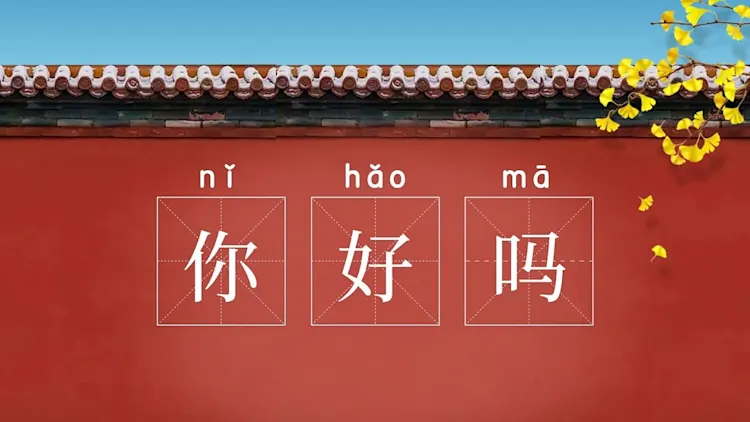
Pinyin (拼音, literally "spelled sounds") was developed and standardized in the 1950s in the People's Republic of China. It is not an alphabet for Chinese itself, but rather a romanization system—a way of representing Mandarin sounds using the Latin alphabet. For example, the character 你 is written as nǐ in Pinyin, showing both its consonant (n), vowel (i), and tone mark (ˇ). Pinyin was designed to help Chinese children learn pronunciation, make literacy more accessible, and create a bridge for foreign learners. Today, it is also the default system used for typing Chinese on computers and smartphones.
Before Pinyin, however, other systems tried to do the same job. The most widely known was Wade–Giles, created in the 19th century and commonly used in English-speaking countries. This is why older maps and texts use spellings like Peking for Beijing and Chungking for Chongqing. Other systems included the Yale Romanization, developed during World War II to aid U.S. soldiers in learning Mandarin quickly, and the EFEO system, created by French linguists. In China itself, reformers experimented with Gwoyeu Romatzyh, a unique system that indicated tones through spelling changes rather than diacritics.
Ultimately, Pinyin replaced all of these alternatives because it was simpler, more consistent, and officially backed by the Chinese government. Its adoption by the United Nations and global education systems cemented its role as the international standard. While Mandarin itself doesn't have an alphabet, Pinyin serves as the closest equivalent—a powerful tool that opens the door to mastering pronunciation, tones, and eventually, Chinese characters.
How Does Pinyin Work as a Mandarin Alphabet?
To understand Mandarin pronunciation and begin speaking the language confidently, it's essential to grasp Pinyin, the romanization system that serves as the foundation for beginners. While Mandarin itself does not have an alphabet like English, Pinyin acts as a phonetic guide, using the familiar Latin letters to represent the sounds of the language. By mastering its components, learners can accurately pronounce words, understand tones, and gradually bridge the gap to Chinese characters.
Initials (Consonant Sounds)
The first building block of Pinyin is the initial, which is the consonant sound that begins a syllable. Some initials, such as m or b, are familiar to English speakers, making them relatively easy to pronounce. Others, however, differ significantly and require dedicated practice. For instance, the Pinyin "q" is pronounced like the "ch" in "cheese," but with the tongue positioned closer to the teeth, producing a softer, more forward sound. Similarly, x sounds like a soft "sh" in sheep, while zh resembles the "j" in judge, with the tongue slightly curled back. Mastering initials is essential because every Mandarin syllable begins with one, and errors at this stage can make words difficult to understand.
Finals (Vowel Sounds)
Finals complete the syllable and often determine its overall tone and sound. Finals can be simple, like a, i, and u, or compound, like iao, uei, or uang. For example, the Pinyin ai sounds like the English word eye, while ou resembles the "o" in go. Combining initials and finals allows learners to pronounce the vast majority of Mandarin syllables. Paying attention to subtle vowel distinctions is crucial, as mispronouncing finals can alter the meaning of a word entirely.
Tones Mandarin is a tonal language, meaning that the pitch or contour of a syllable changes its meaning. There are four primary tones and a neutral tone:
First tone (high-level): mā (妈) – mother
Second tone (rising): má (麻) – hemp
Third tone (falling-rising): mǎ (马) – horse
Fourth tone (falling): mà (骂) – scold
Neutral tone: light, quick, and unstressed Tone marks in Pinyin clearly indicate which pitch to use, allowing learners to distinguish words that otherwise share the same initials and finals. Mastery of tones is essential: pronouncing a word with the wrong tone can completely change its meaning. Spelling Conventions Pinyin spelling often differs from English expectations, which can be confusing for beginners. For example, x sounds like "sh" rather than "ks," and zh is closer to a "j" sound. By learning these conventions and practicing regularly, learners can combine initials, finals, and tones to pronounce virtually every Mandarin word correctly. Regular listening and repetition, ideally with native speakers or audio resources, reinforce these spelling-to-sound correspondences.
Why Is Pinyin Necessary? It's important to remember that Pinyin is not a replacement for Chinese characters. Instead, it functions like training wheels—an essential tool for early learners to acquire pronunciation, literacy, and fluency. Pinyin serves three primary purposes: Learning pronunciation: It provides beginners with a reliable method to read and pronounce words correctly before they are familiar with the characters. Typing Chinese: Modern computers and phones rely on Pinyin input to produce Chinese characters efficiently. Teaching globally: Schools around the world use Pinyin as the standard introduction to Mandarin, providing a consistent framework for learners.
By understanding how Pinyin works—initials, finals, tones, and spelling conventions—learners gain a powerful toolkit to tackle Mandarin confidently. It allows them to speak, listen, type, and eventually read characters, bridging the gap between romanized sounds and the rich, intricate world of written Chinese. Beginner Roadmap: How to Learn Mandarin with Pinyin Learning Mandarin can feel overwhelming at first, particularly for beginners who are unfamiliar with tonal languages and character-based writing systems. Unlike English, where letters correspond to individual sounds and words are formed through simple combinations, Mandarin relies on thousands of characters, each representing a word, concept, or syllable.
For many learners, this system can seem intimidating. Fortunately, Pinyin provides a practical starting point. By representing Mandarin sounds using the familiar Latin alphabet, Pinyin allows learners to focus on pronunciation and tones before diving into the more complex world of Chinese characters. With a structured roadmap, beginners can build confidence and establish a strong foundation for further study, setting themselves up for long-term success.

Learn Initials and Finals First
The first step in learning Mandarin is mastering the building blocks of pronunciation: initials (consonants) and finals (vowels or vowel combinations). Think of them as the "letters" of Pinyin, even though they function differently from English letters. Initials define the beginning sound of a syllable, while finals provide the main vowel sound that follows. Together, they form every syllable in Mandarin.
Begin by practicing these core sounds using audio examples from language apps or courses. Listen carefully to the correct pronunciation and repeat each sound out loud, paying close attention to subtle differences that may not exist in English. Interactive apps like Duolingo, HelloChinese, and LingoDeer provide structured drills with instant feedback, making it easier for beginners to internalize sounds. At this stage, don't worry about reading or writing characters—focus on speaking clearly, as correct pronunciation is the foundation for all future learning.
Master the Tones
One of the biggest challenges in Mandarin is its tonal system. Mandarin has four main tones, plus a neutral tone, and the pitch or contour of a syllable determines its meaning. For example, ma can mean "mother" (mā), "hemp" (má), "horse" (mǎ), or "scold" (mà), depending entirely on the tone. Many beginners make the mistake of postponing tone practice; however, establishing correct tonal habits early is crucial for clear communication.
Use recordings of native speakers to shadow each word, listening closely and repeating simultaneously. Initially, exaggerate the tones to engrain the pitch patterns in your memory, and gradually adjust to natural pronunciation. Practicing tones from the beginning saves learners from frustration later and ensures that basic words are pronounced correctly from the outset.
Practice Simple Words
Once you feel confident with initials, finals, and tones, start combining them into high-frequency words and phrases. Standard greetings like nǐ hǎo (hello), xièxiè (thank you), and zàijiàn (goodbye) provide immediate relevance and allow you to connect pronunciation with practical communication. Repeat these phrases in context, and try forming simple sentences to reinforce word order and basic grammar. Integrating vocabulary in real-life situations helps learners retain sounds and meanings more effectively than isolated drills.
Use Typing as Practice
Typing in Pinyin is a practical way to reinforce sound-to-character connections. Install a Pinyin keyboard on your phone or computer and practice typing daily phrases or short messages. Many Pinyin input methods suggest Chinese characters as you type, allowing learners to associate sounds with written forms gradually. Daily typing practice also helps learners internalize syllable structures and tones, making Mandarin feel functional and applicable to everyday communication.
Avoid Overreliance on Pinyin
Finally, it's important to remember that Pinyin is a tool, not the end goal. While it helps you read and pronounce words correctly, long-term fluency requires learning to read and write Chinese characters. Once you are comfortable with basic Pinyin, start pairing it with characters in books, flashcards, or apps. This ensures you develop not only speaking skills but also reading and writing abilities, creating a well-rounded foundation for continued study.
By following this roadmap—mastering initials and finals, practicing tones, learning common words, typing in Pinyin, and gradually integrating characters—beginners can progress confidently from understanding sounds to communicating meaningfully in Mandarin.
Moving Beyond Pinyin Basics
After mastering the fundamentals of Mandarin—initials, finals, and tones—it's time to level up your skills and move beyond basic pronunciation. While Pinyin provides an essential foundation, achieving fluency requires more immersive, active practice that bridges the gap between sounds and meaningful communication.
Shadow Conversations
One of the most effective ways to improve your pronunciation, rhythm, and fluency is through shadowing. This technique involves listening to native speakers in podcasts, YouTube videos, or language-learning apps and repeating what they say simultaneously. The goal is not only to mimic individual sounds but also to capture the natural flow, intonation, and cadence of Mandarin speech.
Drop Pinyin Gradually
As your comfort with pronunciation improves, it's essential to begin reading Chinese characters alongside Pinyin, rather than relying solely on Pinyin. This gradual transition builds literacy, allowing you to associate sounds with written forms. Begin with simple texts or children's books that include both characters and Pinyin, and slowly reduce your dependence on the romanization. This step prepares you to read Chinese independently.
Engage with Media
Immersion through Mandarin media is both enjoyable and educational. Listening to Mandarin songs, watching TV shows, or practicing tongue twisters helps reinforce pronunciation and tone patterns in a fun, memorable way. Engaging with media regularly also introduces cultural context, idiomatic expressions, and conversational phrases that textbooks alone cannot provide.
Leverage Native Feedback
Even with dedicated self-study, subtle pronunciation or tonal errors can persist. Working with native speakers, language partners, tutors, or teachers provides the critical feedback needed to correct mistakes early. A skilled teacher can help you refine tones, adjust your rhythm, and ensure that your speech is both accurate and culturally authentic.
Putting It All Together
By following this roadmap, learners can confidently progress from recognizing sounds in Pinyin to forming words and sentences, eventually gaining the ability to read and write Chinese characters. The key to success lies in consistent practice, structured progression, and immersion.
Alternative Ways to Learn Chinese Without Pinyin
While Pinyin is a handy tool for beginners, it is not the only way to learn Mandarin. Some learners choose to bypass Pinyin entirely and focus directly on characters, visual cues, and immersive methods, which can lead to deeper literacy and a more authentic understanding of the language.
One approach is to start with character-based learning. Instead of relying on Pinyin for pronunciation, learners focus on recognizing and writing Chinese characters. Tools like Skritter or Hanping teach stroke order, radicals, and the meaning of characters, helping learners internalize vocabulary visually. By associating each character with its meaning and sound, learners gradually develop the ability to read and write fluently without depending on romanization. This method mirrors how native Chinese children learn and can ultimately accelerate character literacy.
Flashcards and spaced repetition systems (SRS) can also be used without Pinyin. Learners can pair Chinese characters directly with images, translations, or example sentences to reinforce their recognition and understanding of meaning. Over time, this method trains the brain to recall characters instantly, bypassing the need for romanization.
New ways to learn Pinyin in 2025
One of the most exciting innovations is AI-powered tone correction. Platforms like Speechling use artificial intelligence to analyze your pronunciation and provide precise feedback on pitch and tone. This allows learners to identify mistakes they might not notice on their own, ensuring that tones—which are critical in Mandarin—are mastered early. With real-time feedback, learners can adjust their pronunciation immediately, thereby accelerating their path to fluency.
AR and VR technologies are also transforming the way Mandarin is learned. Immersive environments let learners explore virtual Chinese streets, shops, and classrooms, with live Pinyin guidance on signs, menus, and objects. This contextual practice helps learners connect sounds to real-world situations, reinforcing both pronunciation and vocabulary in a memorable, hands-on way.
Interactive bilingual storybooks enable parents and children to read, listen, and play together, practicing sounds and tones along the way. Games, quizzes, and reward systems motivate learners to practice consistently, turning study sessions into enjoyable, shared experiences.
Common challenges of using Pinyin
Pinyin borrows the letters of the English alphabet but assigns them new sounds. This is where many beginners stumble, because Pinyin letters often don't sound the same as their English equivalents. Some overlap exists (like m or t), but several consonants and vowels are unique. Here's a clear breakdown:
Pinyin consonants that differ from English
q → sounds like "ch" in cheese, but with the tongue positioned closer to the teeth.
x → sounds like "sh" in sheep, but softer and more forward on the tongue.
zh → like "j" in judge, but with the tongue curled slightly back.
ch → similar to English "ch" but retroflex (tongue curled).
sh → like "sh" in shoe, but retroflex (deeper in the mouth).
r → not like English "r"; closer to the French j or the "s" in measure.
c → sounds like "ts" in cats.
z → like "ds" in reads.
j → similar to English "j," but softer, tongue closer to the teeth.
Pinyin vowels that differ from English
a → "ah" as in father.
e → a mid, muffled vowel, something between "uh" and "er."
i → usually "ee" as in see, but after zh, ch, sh, r, z, c, s it becomes a buzzing syllabic sound, almost like a prolonged "r" or "z."
u → like "oo" in food.
ü → does not exist in English; it's like the French u or German ü (say "ee" while rounding your lips as if to say "oo").
Tone marks make another difference. Even if the Pinyin spelling looks familiar, changing the tone completely changes the meaning:
mā (mother), má (hemp), mǎ (horse), mà (scold).
FAQs About Pinyin and the Mandarin Alphabet
Do I need to learn Pinyin to start learning Chinese?
While it is technically possible to start learning Chinese characters directly, Pinyin is highly recommended for beginners. It provides a phonetic guide to pronunciation and tones, making it much easier to speak and understand words correctly. Without Pinyin, beginners often struggle to connect sounds to characters, slowing down both reading and speaking skills.
How long does it take to master Pinyin?
The timeline varies depending on practice frequency and learning methods, but most learners can master the basics of initials, finals, and tones in 2–4 weeks of consistent daily practice. Becoming entirely comfortable—able to read, type, and pronounce words fluently—may take a few months. Using audio tools, apps, and shadowing exercises can accelerate this process.
Can I learn Chinese online without a teacher?
Yes. Many online resources, apps, and platforms allow self-paced learning, including interactive pronunciation exercises, character practice, and vocabulary drills. However, working with a tutor or language partner can help correct subtle pronunciation and tone mistakes that self-study often misses, ensuring more accurate and natural speech.
Are tones really that important?
Absolutely. Mandarin is a tonal language, and a single change in pitch can completely alter a word's meaning. For example, mā (妈) means "mother," while mǎ (马) means "horse." Ignoring tones can lead to misunderstandings, so early practice with audio recordings, tone drills, and shadowing is crucial for building accurate pronunciation habits.
Can I learn characters without Pinyin?
Yes, some learners focus entirely on characters using visual learning, flashcards, and stroke-order practice. This approach mirrors how native children learn and can accelerate literacy. However, it is generally more challenging for beginners because you must simultaneously memorize pronunciation, tone, and meaning without a phonetic guide.
How can I practice speaking and listening online?
Engaging with podcasts, YouTube channels, apps, and language partners is essential. Techniques like shadowing, repeating after native speakers, and recording yourself for comparison can help improve pronunciation and listening skills. Immersive media, such as TV shows, songs, and interactive stories, also reinforce tone recognition and natural speech patterns.
Are online courses practical for long-term fluency?
Online courses can be highly effective when paired with consistent practice, immersion, and real-world application. The key is to combine structured lessons with exercises that incorporate speaking, listening, reading, and writing. Using apps, tutors, and interactive tools can accelerate progress, especially when transitioning from Pinyin to integrating characters and conversational skills.
Next steps: How to get started with Pinyin
With the right tools and mindset, Pinyin can transform from a seemingly confusing code into a robust foundation for lifelong Mandarin learning. Modern resources make it easier than ever to master this essential system, helping learners develop correct pronunciation, tonal accuracy, and the ability to type and read Chinese efficiently. Start by dedicating about one week to mastering initials and finals. These are the consonants and vowels that form the building blocks of every Mandarin syllable.
Next, practice tones daily. Mandarin has four main tones plus a neutral tone, and the pitch you use can completely change a word's meaning. Tone-training apps or AI-powered pronunciation tools can provide instant feedback, helping you internalize correct tonal patterns quickly and effectively. Shadowing native speakers is another effective way to embed tones naturally into your speech.
Finally, begin typing in Pinyin. Using a Pinyin keyboard on your phone or computer reinforces the connection between sounds and characters, thereby strengthening your understanding of the language. By following these steps consistently, learners in 2025 can turn Pinyin into a practical, confidence-boosting tool, paving the way to fluent speaking, reading, and writing in Mandarin.

Looking for an online Chinese class for your kids to learn Mandarin and Chinese culture? LingoAce is one of the best ways for kids to learn Chinese online. Each one-on-one lesson is the product of nearly 200 hours of curriculum development, teacher training, and quality control. LingoAce classes are tailored to meet your child's learning needs.
Experience a redefined Chinese learning experience and book a free trial class with us today.