You just saw four letters—maybe on a teen’s bio, maybe in a parent chat—and now you’re wondering what you’re supposed to do with it. That’s fair.
This guide explains MBTI letters meaning in plain English: what each letter pair points to, what it doesn’t, and how to decode a type without turning your child (or yourself) into a label. I’ll also show how these preferences can quietly affect things parents care about every day: homework battles, speaking confidence, routines, and motivation.
MBTI Letters Meaning in 2026: The 30-Second Explanation
MBTI uses four letter pairs to describe preferences—how someone tends to recharge, notice information, decide, and organize life.
E / I: where you tend to get energy (outer world vs inner world)
S / N: how you tend to notice information (concrete details vs patterns/ideas)
T / F: how you tend to decide (logic principles vs people/values)
J / P: how you tend to live day-to-day (structure/closure vs flexibility/optionality)
A gentle but important line: MBTI letters meaning is about “usually,” not “always.” Kids change with context (new school, new language, new teacher, puberty… you know). And even adults can look different on a Monday morning than on vacation.
If you only remember one thing: MBTI can be a useful vocabulary for preferences. It is not a diagnosis.
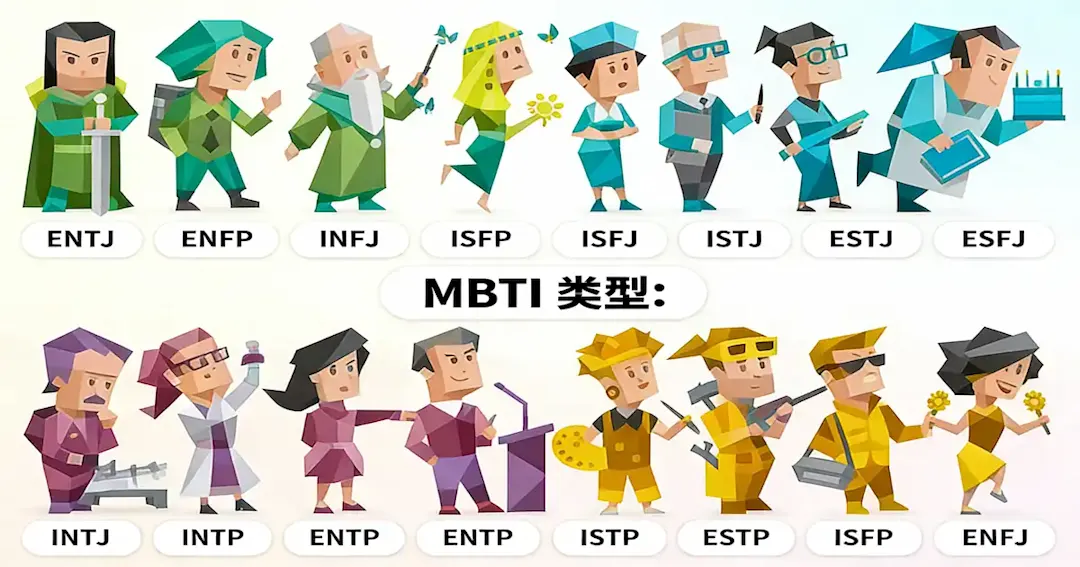
Quick Intro to the 16 MBTI Personality Types
MBTI Type | Simple description (plain English) | Often learns best when… |
ISTJ | Steady, detail-focused, likes clear rules | instructions are step-by-step and expectations are clear |
ISFJ | Caring, practical, wants to do things “the right way” | learning feels supportive and progress is visible |
INFJ | Thoughtful, future-focused, likes meaning | lessons connect to real-life purpose and big ideas |
INTJ | Independent, strategic, likes efficient systems | there’s a clear goal and a smarter “why” behind tasks |
ISTP | Hands-on, calm, learns by trying | they can practice quickly and learn through doing |
ISFP | Gentle, creative, sensitive to tone | the environment feels safe, kind, and low-pressure |
INFP | Imaginative, values-driven, reflective | content feels personal, meaningful, and choice-based |
INTP | Curious, analytical, loves figuring things out | they can explore patterns, logic, and “how it works” |
ESTP | Energetic, action-first, social learner | practice is interactive and feedback is immediate |
ESFP | Expressive, playful, motivated by fun | learning includes games, movement, and positive vibes |
ENFP | Enthusiastic, idea-driven, easily inspired | lessons are varied, creative, and connected to interests |
ENTP | Debate-y, inventive, loves possibilities | they can question, experiment, and compare options |
ESTJ | Organized, direct, likes structure | there’s a plan, a timeline, and clear accountability |
ESFJ | People-focused, cooperative, likes belonging | learning includes encouragement and social connection |
ENFJ | Warm leader type, motivating, big on growth | they feel seen, guided, and challenged in a positive way |
ENTJ | Confident, goal-driven, likes results | goals are measurable and progress is trackable |

E vs I (Extraversion vs Introversion) in Real Life
What E and I actually describe (and what they don’t)
E (Extraversion) doesn’t mean “loud” and I (Introversion) doesn’t mean “quiet.” It’s more about where energy comes from and how you process.
E-leaning kids often process out loud. They may talk their way into an answer.
I-leaning kids often process internally. They may need a beat before speaking.
A kid can be social and still be I-leaning. A kid can be calm and still be E-leaning. The MBTI letters meaning here is “recharge style,” not “social skill level.”
S vs N (Sensing vs Intuition) — How Kids Absorb Information
Concrete-first vs concept-first learning
This is the letter pair that shows up _hard_ in studying.
S (Sensing) tends to like what is concrete: examples, steps, practice, facts you can point to.
N (Intuition) tends to like what is meaningful: patterns, themes, “why does this matter,” connections.
MBTI letters meaning here is how your child’s brain prefers to take in information, especially when they’re tired or stressed.
What it looks like in homework and reading
S-leaning kids often ask:
“What exactly do I do?”
“Can you show me one example?”
“How many questions is it?”
N-leaning kids often ask:
“Why are we learning this?”
“Is there another way to do it?”
“What’s the point of this story?”
Neither is better. They’re different starting points.
T vs F (Thinking vs Feeling) — Decisions, Feedback, and Motivation
What T and F actually describe
This pair is about decision-making emphasis.
T (Thinking) tends to prioritize logic, consistency, fairness, “does this make sense?”
F (Feeling) tends to prioritize values, relationships, “how does this affect people?”
This does not mean T kids don’t have feelings. (They do. Sometimes they just don’t want to talk about them on your schedule.) And it does not mean F kids can’t think logically.
How it shows up when you correct mistakes
This is where parents accidentally step on the emotional landmine.
T-leaning child may respond well to:
clear reasons
“Here’s the rule”
“This is how we fix it”
F-leaning child may respond better to:
encouragement before critique
“I see you tried”
reassurance that mistakes are safe
Same correction, different packaging.
J vs P (Judging vs Perceiving) — Routines, Deadlines, and “Why Are Mornings So Hard?”
What J and P actually describe
This pair causes the most household friction because it touches routines.
J (Judging) often prefers structure, decisions, closure, finishing.
P (Perceiving) often prefers flexibility, options, adapting, keeping things open.
MBTI letters meaning here is not “organized vs messy.” It’s “how you handle time and closure.”
What it looks like in real homes
J-leaning child
likes to know what’s coming
may feel anxious without a plan
often starts earlier because uncertainty bothers them
P-leaning child
may start late but sprint fast
may resist rigid schedules (not because they’re defiant, because the schedule feels like a trap)
may do best with short bursts and visible progress
If your child is learning Chinese (or you want them to), a structured class can take the pressure off you as the “home teacher.” Some families like trying a trial lesson with LingoAce because it’s live, interactive, and can be paced to the child—more speaking practice for the talk-first kids, more prep and scaffolding for the think-first kids. You’re not committing to anything; you’re just seeing what fits your child’s style.

How to Decode Your 4-Letter Type
A lot of people get stuck because they want a perfect answer. (Ironically, that’s sometimes a J thing.) Let’s keep it practical.
Step 1: Start with E/I using energy clues
After a busy day, do you recharge by talking/doing with people (E) or by quiet time (I)?
When you’re stuck, do you prefer to talk it out (E) or think it through first (I)?
Step 2: Check S/N using learning clues
Do you prefer clear instructions and examples (S) or the big idea and meaning (N)?
When learning something new, do you want a method (S) or a framework (N)?
Step 3: Check T/F using feedback clues
When someone corrects you, do you want the reason and logic (T) or encouragement and tone (F)?
In arguments, do you focus on what’s fair/true (T) or what’s kind/works for people (F)?
Step 4: Confirm J/P using deadline clues
Do deadlines make you feel safe (J) or trapped (P)?
Do you prefer to finish and move on (J) or keep options open (P)?
If you’re torn between letters…
That’s normal. Instead of forcing it, ask: “What happens when I’m stressed?” Stress often reveals your default preference.
FAQ
1) What do E I S N T F J P mean in MBTI?
They’re four preference pairs: E/I (energy), S/N (information), T/F (decisions), J/P (structure). The MBTI letters meaning is about typical tendencies, not fixed identity.
2) Can MBTI letters meaning change over time?
Yes—especially how it shows up. A child may look more introverted in a loud classroom and more extroverted at home. Preferences can also shift as kids gain skills and confidence.
3) Is MBTI accurate for kids?
It can be useful as a gentle language for preferences, but kids are still developing. If you use MBTI letters meaning with children, treat it as “helpful clues,” not “who you are forever.”
4) What if I’m “in between” two letters?
That’s common. Try focusing on what happens when you’re stressed or under time pressure. Also look at patterns across weeks, not one day. The goal is better choices, not perfect labeling.
5) How do I use MBTI letters meaning to improve study habits at home?
Use it to adjust format: more structure vs more choice, more examples vs more meaning, more encouragement vs more logic. Start with one change (not ten). Watch if resistance goes down.
6) Is “J” the same as being neat, and is “P” the same as procrastinating?
No. J/P is more about comfort with closure vs options. Plenty of P-leaning kids are messy _and_ brilliant, and plenty of J-leaning kids are organized but still anxious. MBTI letters meaning isn’t a character grade.
7) What’s the safest way to talk about MBTI with my child?
Use “maybe” language: “You might prefer…” and invite them to disagree. The moment your child feels labeled, they’ll either resist or shrink into the label.
Conclusion: MBTI Letters Meaning, Without the Box
In 2026, MBTI is everywhere—and honestly, the letters can be useful if you keep them in their place. MBTI letters meaning is simple: preferences for energy (E/I), information (S/N), decisions (T/F), and structure (J/P).
And if Chinese learning is part of your family’s plan—especially speaking confidence and consistent practice—you can try a LingoAce trial class as a low-pressure way to see what teaching style fits your child. Sometimes the right structure (or the right flexibility) is the difference between “we should be practicing” and “hey, that felt doable.”