If you’ve ever filled out a school form, planned summer travel, or tried to help your child say “in May” without freezing, you’ve already bumped into the same question: month in Chinese sounds simple… until you need it in real life.
This guide is built for parents and learners who want a clear, low-stress system you can actually use. You’ll learn:
the one pattern that makes every month easy (it’s simpler than you think),
the 12 months with characters + pinyin,
how Chinese dates work (so you can read schedules and write birthdays),
and what people mean when they ask about “month in Chinese zodiac”—without getting pulled into confusing (or unverifiable) astrology claims.
Throughout the article, every Chinese phrase includes pinyin right after the characters.

Month in Chinese: the one pattern that makes months easy
The simplest “aha” about month in Chinese is this:
Months are made by adding 月 (yuè) to a number. So “January” is literally “one month,” “February” is “two month,” and so on.
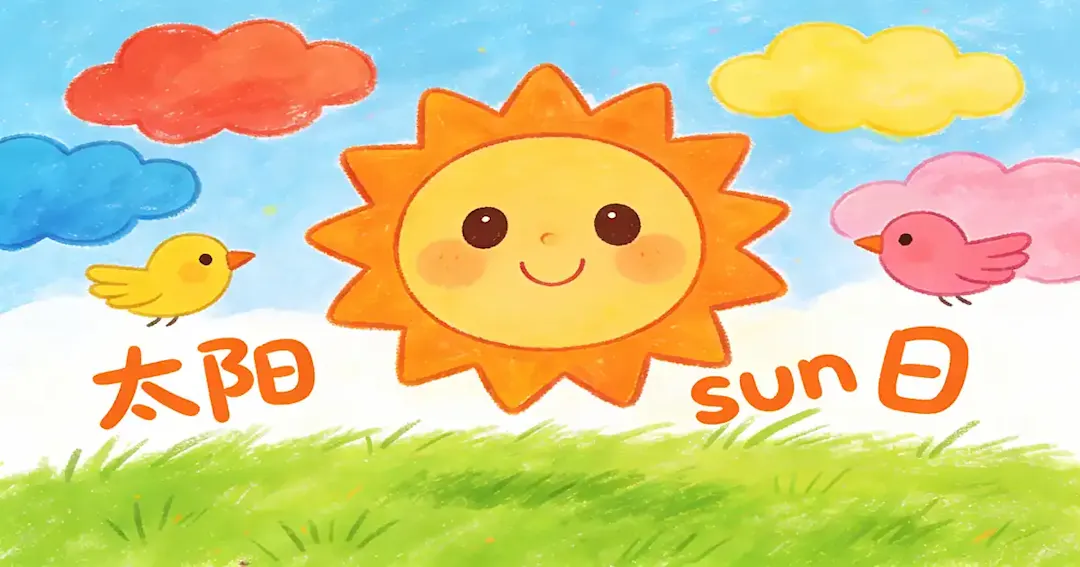
月 (yuè) = “month” (and also “moon,” which makes it easier to remember)
一月 (yī yuè) = January (literally “Month 1”)
十二月 (shí’èr yuè) = December (literally “Month 12”)
If your child can count to 12, they can learn all 12 months. That’s why months are one of the most confidence-building wins in beginner Mandarin.
A quick “teach it in 60 seconds” mini-script
Try this out loud (even if your accent isn’t perfect at first):
这是(一月)(zhè shì yī yuè)— This is January.
这是(五月)(zhè shì wǔ yuè)— This is May.
这是(十二月)(zhè shì shí’èr yuè)— This is December.
Then switch to the sentence families actually use:
我们(五月)去旅行。(wǒmen wǔ yuè qù lǚxíng)— We travel in May.
我(下个月)很忙。(wǒ xià ge yuè hěn máng)— I’m busy next month.
Month in Chinese: months 1–12 (characters + pinyin + “in ___” examples)
Here’s the clean list most families need for school calendars, birthday invites, and everyday planning. This table alone answers a big chunk of month in Chinese searches.
Month | Chinese | Pinyin | “In ___” example |
January | 一月 | yī yuè | 在(一月)(zài yī yuè)— in January |
February | 二月 | èr yuè | 在(二月)(zài èr yuè)— in February |
March | 三月 | sān yuè | 在(三月)(zài sān yuè)— in March |
April | 四月 | sì yuè | 在(四月)(zài sì yuè)— in April |
May | 五月 | wǔ yuè | 在(五月)(zài wǔ yuè)— in May |
June | 六月 | liù yuè | 在(六月)(zài liù yuè)— in June |
July | 七月 | qī yuè | 在(七月)(zài qī yuè)— in July |
August | 八月 | bā yuè | 在(八月)(zài bā yuè)— in August |
September | 九月 | jiǔ yuè | 在(九月)(zài jiǔ yuè)— in September |
October | 十月 | shí yuè | 在(十月)(zài shí yuè)— in October |
November | 十一月 | shíyī yuè | 在(十一月)(zài shíyī yuè)— in November |
December | 十二月 | shí’èr yuè | 在(十二月)(zài shí’èr yuè)— in December |
Two tiny tips that save mistakes
Don’t add an extra word for “month.” 一月 (yī yuè) already includes “month.”
十一月 (shíyī yuè) is “ten-one month” (11th month). 十二月 (shí’èr yuè) is “ten-two month” (12th month).
Month in Chinese: how to talk about dates like real people
If you want to truly use month in Chinese, you need the date format. The good news: it’s super logical.
The standard Chinese date order
Chinese typically goes: Year + 年 (nián) → Month + 月 (yuè) → Day + 日 (rì) / 号 (hào)
Example:
2026年5月12日(èr líng èr liù nián wǔ yuè shí’èr rì)— May 12, 2026
And the most parent-useful pieces are “month phrases” like this month/next month/last month.
Everyday month phrases (the ones families actually say)
Meaning | Chinese | Pinyin | When you’d use it |
this month | 这个月 | zhè ge yuè | “This month we have tests.” |
next month | 下个月 | xià ge yuè | “Next month we travel.” |
last month | 上个月 | shàng ge yuè | “Last month we were sick.” |
every month | 每个月 | měi ge yuè | “Every month we visit grandma.” |
each month | 每月 | měi yuè | more written/formal (schedules) |
month | 月 | yuè | “Month” as a unit |
monthly | 每月一次 | měi yuè yí cì | “Once a month” |
Now put them into kid-friendly sentences:
我(这个月)要考试。(wǒ zhè ge yuè yào kǎoshì)— I have a test this month.
我们(下个月)去看外婆。(wǒmen xià ge yuè qù kàn wàipó)— We’ll visit grandma next month.
你(上个月)去哪儿了?(nǐ shàng ge yuè qù nǎr le)— Where did you go last month?
“What month is it?” (very common)
现在是几月?(xiànzài shì jǐ yuè)— What month is it now?
现在是五月。(xiànzài shì wǔ yuè)— It’s May.
Month in Chinese: the character 月 (yuè) and why kids remember it fast
If you’re teaching month in Chinese to kids, the character 月 (yuè) is your best friend because it carries meaning and shows up everywhere.
月 (yuè) can mean moon and month.
That’s not random: many calendars historically follow the moon, and lunar months are literally moon cycles.
Age-friendly strategy: recognize first, write later
A lot of families accidentally turn Chinese into “handwriting homework,” and motivation drops fast. For months, you can keep it light:
Ages 3–6: recognize 月 (yuè) and say months out loud (no pressure to write).
Ages 7–10: begin writing the month numbers you use most (birthday month, school-start month).
Ages 11–15: expand writing if you need it for class credit, reading, or more formal literacy goals.
A simple rule: if your child can say it smoothly and recognize it reliably, you’ve already won something valuable.

Month in Chinese calendar: Gregorian months vs lunar months (and why 正月 shows up)
This is where many “month in Chinese” questions split into two different meanings.
1) The months you use on school forms (Gregorian months)
That’s the table you already learned: 一月 (yī yuè) through 十二月 (shí’èr yuè). This is what you’ll see in modern schedules, emails, and most daily life.
2) “Chinese calendar months” (lunar months)
When people say month in Chinese calendar, they often mean lunar months used in traditional holiday timing (especially around Lunar New Year).
You might see:
正月(zhēng yuè)— “first lunar month”
腊月(là yuè)— a traditional name often associated with the last lunar month in some contexts
You don’t need to memorize a long list to be functional. The practical takeaway for families is:
一月 (yī yuè) is “January” on the modern calendar.
正月 (zhēng yuè) is “the first month” in a lunar calendar context, often mentioned around Lunar New Year discussions.
A simple “when you’ll see this” table
You’ll see | Pinyin | What it usually refers to | Where it appears |
一月 | yī yuè | January (Gregorian) | school calendars, schedules |
正月 | zhēng yuè | 1st lunar month | holiday talk, cultural posts |
这个月 | zhè ge yuè | this month | everyday speech |
每月 | měi yuè | per month / monthly | notices, written schedules |
Month in Chinese zodiac: what people mean (and the correct explanation)
Let’s handle the title promise directly.
When people ask about month in Chinese zodiac, they’re usually mixing up three ideas:
Chinese zodiac animals are most commonly discussed by year, not by month.
Some traditional systems (calendrical or astrology-related) do associate months with recurring labels (like Earthly Branches).
Most learners do not need “zodiac months” to speak Mandarin or read everyday dates.
So here’s the “correct explanation” without overreaching:
If your goal is daily language and literacy, focus on months as numbers + 月 (yuè) and date phrases.
If your goal is cultural curiosity, you can learn that some traditions attach cyclical labels to months—but it’s not required for everyday Chinese communication, and interpretations vary by context.
A safe mini-table (to reduce confusion)
What someone says | What they usually mean | What you should learn first |
“What’s my zodiac month?” | astrology-style month labels | months 1–12 + date phrases |
“Chinese zodiac by month” | mixing zodiac year animals with month ideas | zodiac is usually by year; months are numbered |
“Chinese calendar month names” | lunar month names like 正月 (zhēng yuè) | learn Gregorian months first |
If you want a family-friendly line you can remember:
“Zodiac is usually talked about by year; months in Chinese are simply numbers + 月 (yuè).”
That one sentence keeps month in Chinese practical and prevents a lot of online confusion.
Many kids can memorize a month list and still freeze when they need to say, “We travel in July” or “My birthday is next month.” If you want your child to use month in Chinese in real sentences—with gentle correction and a routine that actually sticks—guided speaking practice helps.
If you’re exploring options, LingoAce can be a practical choice: teachers help kids practice dates, schedules, and everyday calendar talk in conversation (not just drills). You can start with a trial lesson and see if your child clicks with the style before committing.

Month in Chinese Mandarin: the “family schedule” starter pack
If you only teach one set of lines, make it these. They’re the phrases families repeat constantly, so they build confidence fast. This section is the “use it this week” part of month in Chinese.
Situation | English | Chinese | Pinyin |
Birthday | My birthday is in May. | 我的生日在五月。 | wǒ de shēngrì zài wǔ yuè |
School | School starts in September. | 学校九月开学。 | xuéxiào jiǔ yuè kāixué |
Travel | We travel in July. | 我们七月去旅行。 | wǒmen qī yuè qù lǚxíng |
Plans | I’m busy next month. | 我下个月很忙。 | wǒ xià ge yuè hěn máng |
Routine | We practice once a month. | 我们每个月练一次。 | wǒmen měi ge yuè liàn yí cì |
Question | What month is it? | 现在是几月? | xiànzài shì jǐ yuè |
Answer | It’s October. | 现在是十月。 | xiànzài shì shí yuè |
Reminder | See you next month. | 下个月见。 | xià ge yuè jiàn |
Past | Last month was busy. | 上个月很忙。 | shàng ge yuè hěn máng |
Make it “swap-friendly” (parents love this)
Once your child can say “我们(五月)去旅行 (wǒmen wǔ yuè qù lǚxíng),” you can swap the month:
我们六月去旅行。(wǒmen liù yuè qù lǚxíng)— We travel in June.
我们八月去旅行。(wǒmen bā yuè qù lǚxíng)— We travel in August.
That’s real progress: one sentence pattern → many real-life uses.
Month in Chinese pinyin: pronunciation traps (fast fixes)
Most families don’t struggle with the idea of months. They struggle with pronunciation—especially 月 (yuè).
1) 月 (yuè) is one syllable
It’s not “yoo-eh.” It’s closer to “yweh,” with a clear falling tone.
Try this micro-drill:
月(yuè)
五月(wǔ yuè)
十月(shí yuè)
2) Watch the “shí’èr” in 十二月 (shí’èr yuè)
The apostrophe marks a clean separation so you don’t blur sounds.
Practice:
十二月(shí’èr yuè)— December
十二(shí’èr)— twelve
3) Gentle correction works better than constant stopping
If your child says 月 (yuè) a bit off, keep the conversation going, then repeat it correctly once:
Child: “wǔ yue…”
Parent: “五月(wǔ yuè),对,五月(wǔ yuè)。” (duì = “right”)
Consistency beats perfection.

Month in Chinese: common mistakes (and quick fixes)
Here are the patterns that trip learners up when they try to use month in Chinese outside a memorized list.
Mistake | Why it happens | Quick fix |
Saying “May month” (double month) | translating too literally | 五月 (wǔ yuè) already includes month |
Mixing day words with month words | date vocab overlaps | day is 日 (rì) / 号 (hào); month is 月 (yuè) |
Over-focusing on writing too soon | handwriting feels hard | prioritize speaking + recognition first |
Forgetting 11/12 | “ten-one/ten-two” feels odd | drill 十一月 (shíyī yuè) and 十二月 (shí’èr yuè) in one go |
Using lunar month names as everyday months | cultural posts can confuse | use 一月–十二月 for daily life; learn 正月 (zhēng yuè) as a cultural extra |
FAQ
1) month in chinese character
If you’re searching month in chinese character, the key character is 月 (yuè). It means “month,” and it’s also used for “moon.” Months are formed as number + 月 (yuè), like 五月 (wǔ yuè) for May and 十二月 (shí’èr yuè) for December.
2) month in chinese calendar
For month in chinese calendar, people usually mean one of two things: the modern Gregorian months (一月 (yī yuè) to 十二月 (shí’èr yuè)) or lunar calendar month terms you see in cultural contexts, such as 正月 (zhēng yuè) for the first lunar month. For school forms and everyday schedules, stick with the numbered months.
3) month in chinese mandarin
If you mean month in chinese mandarin, the spoken word is 月 (yuè), and the month names are the number + 月 pattern. In conversation, learners also use 这个月 (zhè ge yuè) “this month,” 下个月 (xià ge yuè) “next month,” and 上个月 (shàng ge yuè) “last month” constantly—those are worth learning early.
4) month in chinese pinyin
For month in chinese pinyin, “month” is yuè (for 月). A common beginner goal is to say months smoothly: 五月 (wǔ yuè), 六月 (liù yuè), 十一月 (shíyī yuè). If your child struggles with yuè, keep practice short and frequent rather than drilling for long sessions.
5) month in chinese zodiac
When people ask month in chinese zodiac, they’re often mixing two ideas: zodiac animals are most commonly discussed by year, while some traditional systems do attach cyclical labels to months. For everyday Mandarin, you don’t need “zodiac months.” Focus on the practical month system—numbers + 月 (yuè)—and treat zodiac-month talk as optional cultural curiosity.
Conclusion:
If you want your child to actually use month in Chinese (not just recite it), keep it simple:
Learn the pattern: number + 月 (yuè)
Practice 5 real sentences (birthday, school start, travel, this month, next month)
Add date order later: 年 (nián) + 月 (yuè) + 日 (rì) / 号 (hào)
Treat “Chinese calendar month names” and “zodiac month” as extras, not essentials
If you want support turning month phrases into natural conversation—especially for kids who know the words but hesitate to speak—try a LingoAce trial lesson. A good teacher can turn month-and-date vocabulary into confident, repeatable speech routines that fit into real family life.