If you’ve ever typed rice in Chinese into a search bar, you’re probably not looking for a “dictionary answer.” You want to know what to actually say—especially when your child is learning Chinese and you’re trying to keep the practice going without turning dinner into a grammar lecture.
Here’s the truth: Chinese has more than one common word that English speakers translate as “rice.” The right choice depends on what you mean (raw rice? cooked rice? a whole meal?), and that’s exactly why learners get stuck.
Rice in Chinese: The 20-second answer
When people ask “rice in Chinese,” they’re usually asking about these three:
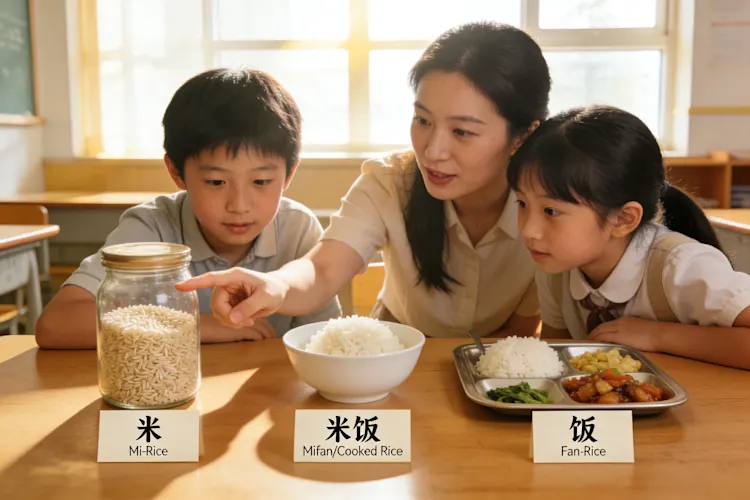
米 (mǐ) = rice as a grain/ingredient (often raw or uncooked, or “rice” as a category of food)
饭 (fàn) = cooked rice and also a meal (breakfast/lunch/dinner), depending on context
米饭 (mǐfàn) = cooked rice (the bowl of plain rice you eat with dishes)
some sentence you can learn
我买了米。Wǒ mǎi le mǐ. (I bought rice.)
我们吃饭吧。Wǒmen chī fàn ba. (Let’s eat.)
我想要一碗米饭。Wǒ xiǎng yào yì wǎn mǐfàn. (I want a bowl of rice.)
你吃早饭了吗?Nǐ chī zǎofàn le ma? (Did you eat breakfast?)
That’s the core. Everything else in this guide is about making it feel natural.
Rice in Chinese: What 米, 饭, and 米饭 really mean
米 (mǐ): rice as a grain or ingredient
Think: grocery bag, pantry staple, the “rice” you cook.It’s also a building block in many food words:
米粉 (rice noodles)
糯米 (sticky rice)
小米 (millet; also “small rice” literally)
饭 (fàn): cooked rice and “meal”
This is the one that surprises people. 饭 can point to cooked rice, but it also shows up in the words for meals:
早饭 (breakfast)
午饭 (lunch)
晚饭 (dinner)
So when you see 饭, don’t lock your brain into “rice.” Often it’s closer to “meal.”
米饭 (mǐfàn): cooked rice in the bowl
This is the safest, most direct way to say “cooked rice” in everyday speech—especially when ordering or describing what’s on the plate.
Rice in Chinese: When to say 米 (raw rice, ingredients, “rice as a thing”)
Use 米 when you mean rice as a grain, ingredient, or category.
Common places you’ll use 米(mǐ)
Shopping / kitchen
我们家没有米了。Wǒmen jiā méiyǒu mǐ le. (We’re out of rice.)
你要买什么米?Nǐ yào mǎi shénme mǐ? (What kind of rice do you want to buy?)
Talking about types of rice
大米 (regular rice; “big rice”)
小米 (millet)
糯米 (sticky/glutinous rice)
Foods made from rice
米粉 (rice noodles)
米饼 (rice cakes)
米浆 (rice milk/slurry, depending on context)
A tiny “dinner-table” practice
If your child is 3–10, keep it simple:
Point to uncooked rice (or a rice bag). Say: 这是米。Zhè shì mǐ.
Point to the cooked rice in the bowl. Say: 这是米饭。Zhè shì mǐfàn.
Let them repeat once. Then move on. No quiz. No pressure.
If you want more structured speaking support, this is also where a guided class helps: kids get consistent, friendly correction without the parent becoming the “language police.” Many families use a program like LingoAce Chinese for that steady speaking practice alongside home routines.

When to say 饭 (cooked rice, meals, and daily life)
饭 is everywhere because it’s tied to daily life. Use it when you mean:
a meal (breakfast/lunch/dinner)
eating as an everyday activity
sometimes cooked rice (but context matters)
The big phrase: 吃饭 (chī fàn)
Literally it looks like “eat rice,” but in real usage it often means “to eat” or “to have a meal.”
我们去吃饭吧。Wǒmen qù chīfàn ba. (Let’s go eat.)
你吃饭了吗?Nǐ chīfàn le ma? (Have you eaten?)
This is a classic moment where parents think, “Wait—are we saying rice is the only food?” Not exactly. It’s more like rice represents the everyday meal in many contexts. The phrase stuck, and now it’s a normal way to say “eat.”
Meal words that use 饭
These are high-frequency and worth teaching early:
English | Chinese | Pinyin |
breakfast | 早饭 | zǎofàn |
lunch | 午饭 | wǔfàn |
dinner | 晚饭 | wǎnfàn |
to have a meal | 吃饭 | chīfàn |
Kid-friendly sentence patterns:
我吃早饭。Wǒ chī zǎofàn. (I eat breakfast.)
我们吃晚饭。Wǒmen chī wǎnfàn. (We eat dinner.)
When to say 米饭 (the bowl of plain rice you order)
Use 米饭 when you mean cooked rice as a food item—the thing you eat with dishes.
Safe, useful sentences
我想要一碗米饭。Wǒ xiǎng yào yì wǎn mǐfàn. (I want a bowl of rice.)
可以加点米饭吗?Kěyǐ jiā diǎn mǐfàn ma? (Can we add some rice?)
这个菜配米饭很好。Zhège cài pèi mǐfàn hěn hǎo. (This dish goes well with rice.)
米饭 vs 白饭 (what’s the difference?)
You’ll see 白饭 often in restaurants. In many contexts, it means plain white rice.
If you’re ordering and you’re not sure which term the restaurant uses, either is usually understood.
If your goal is clarity for a learner, 米饭 is straightforward and beginner-safe.
Rice in Chinese: What you’ll actually see on menus (with a cheat sheet)
Menu language is where “rice in Chinese” becomes real. Here are the words that show up constantly.
The must-know rice items
Menu item | Chinese | Pinyin | What it usually means |
plain rice | 米饭 / 白饭 | mǐfàn / báifàn | a bowl of plain cooked rice |
fried rice | 炒饭 | chǎofàn | fried rice |
rice bowl (topped) | 盖饭 | gàifàn | rice with toppings (meat/veg) |
curry rice | 咖喱饭 | gālífàn | curry + rice |
sticky rice (dish) | 糯米饭 | nuòmǐfàn | sticky rice preparation |
Five phrases that save families in restaurants
要一碗米饭。 Yào yì wǎn mǐfàn. (One bowl of rice, please.)
不要米饭。 Bú yào mǐfàn. (No rice.)
可以再来一碗吗? Kěyǐ zài lái yì wǎn ma? (Can we get another bowl?)
这个是炒饭还是白饭? Zhège shì chǎofàn háishì báifàn? (Is this fried rice or plain rice?)
孩子可以吃不辣的吗? Háizi kěyǐ chī bú là de ma? (Can my child have a non-spicy one?)
Rice in Chinese: Quick pronunciation can trust
You don’t need to be a tone expert to help your child. You just need a couple of anchors.
米 (mǐ): third tone (often dips)
饭 (fàn): fourth tone (falls sharply)
米饭 (mǐfàn): third + fourth together
A simple parent trick:
Make 米 sound like a curious “mii?” (gentle dip)
Make 饭 sound like a firm “fan!” (strong drop)
FAQs:
1) Is 米 cooked rice or uncooked rice in Chinese?
Most often, 米 refers to rice as a grain/ingredient (often uncooked). If you mean the cooked bowl of rice, 米饭 is clearer.
2) What’s the difference between 饭 and 米饭?
米饭 is specifically cooked rice. 饭 can mean cooked rice in some contexts, but it very often means a meal (like 早饭, 午饭, 晚饭) or “eating” (吃饭).
3) Does 吃饭 literally mean “eat rice”?
Literally, yes. In real everyday use, it usually means “to eat / to have a meal.” That’s why it’s such a common phrase in family life.
4) How do you say “white rice” in Chinese—白饭 or 米饭?
Both appear. 白饭 often means “plain white rice,” especially on menus. 米饭 is a safe, general way to say cooked rice.
5) What’s the difference between 炒饭 and 盖饭?
炒饭 is fried rice (rice cooked with ingredients).
盖饭 is a rice bowl where toppings are placed over rice.
Conclusion
Parents don’t need perfect explanations. Kids need repeated, friendly exposure—especially in real contexts like dinner, grocery shopping, and ordering food.
If you’d like your child to use these naturally in speech (instead of only recognizing them), consider adding a bit of guided speaking time each week. A structured online lesson—such as a LingoAce Chinese trial class—can give your child the repetition, pronunciation coaching, and confidence-building conversation that’s hard to recreate at home.