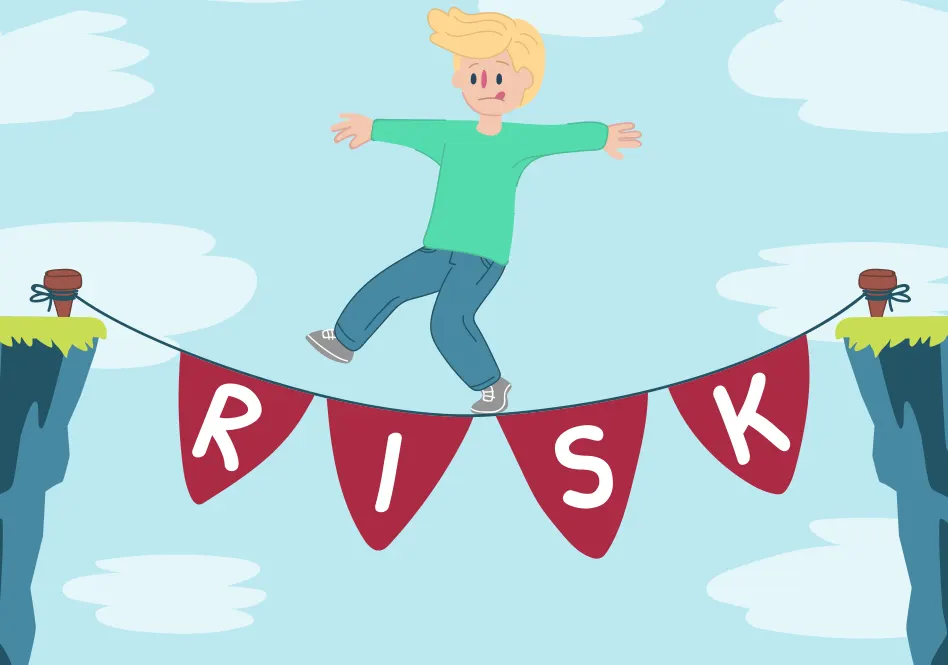
After a period of quiet absorption and structured repetition, many language learners enter a new stage. Their sentences grow longer, ideas become more complex, and almost immediately, their mistakes increase. For teachers, this shift can feel confusing. A student who previously answered clearly may now produce awkward sentences, incorrect verb forms, or unusual word order. At first glance, it may seem like the learner has taken a step backward, but this moment often signals the opposite. The learner has entered what we can call the risk phase of language development, which is the stage where students begin actively testing the boundaries of what they know. In this phase, students move from repeating language to constructing it. Errors increase, but so does genuine progress.
1. What the Risk Phase Looks Like
The risk phase often begins when students become comfortable enough with the language to attempt ideas they have never said before. Instead of relying entirely on familiar patterns, they start combining vocabulary, structures, and expressions in new ways. Teachers may notice students:
Attempting longer or more complex sentences
Experimenting with unfamiliar grammar structures
Mixing vocabulary from different lessons
Correcting themselves mid-sentence
Speaking more spontaneously, even when unsure
These attempts are signs that the learner is moving beyond imitation and beginning to build language independently.
👍🏼 Mistakes for Good: More mistakes can mean more experimentation.
2. Why Errors Increase During Growth
Second language acquisition research describes this stage through the concept of interlanguage, a temporary linguistic system that learners create while moving toward full proficiency. In interlanguage, students are actively forming hypotheses about how the language works. They test these hypotheses through speaking and writing. Some attempts succeed while others produce errors. Regardless, this is a normal developmental process. Learners may, for example:
Apply a grammar rule too broadly
Combine structures that normally appear separately
Translate ideas directly from their first language
These “mistakes” reflect the learner actively reorganizing their internal understanding of the language.
❌ Language Acquisition Reminder: Errors often reveal learning in progress.
3. The Role of Productive Struggle
Educational research shows that productive struggle plays a key role in developing complex skills. When learners push beyond what feels safe, they engage deeper cognitive processes that strengthen learning. During the risk phase, students must manage multiple tasks simultaneously:
Selecting vocabulary
Organizing sentence structure
Monitoring grammar
Maintaining meaning
This mental effort increases the likelihood of mistakes, but it also accelerates development. Over time, the brain refines these attempts, gradually turning effortful construction into smoother expression. Students who avoid risk may appear more accurate in the short term, but they often progress more slowly overall.
📈 Learning Insight: Struggle often signals growth.
4. Why Teachers Sometimes See This as Regression
Because error rates increase during the risk phase, it can sometimes appear that students are regressing. Teachers may feel the learner has forgotten previously mastered material or become careless. In reality, what’s happening is a shift from controlled accuracy to exploratory complexity, and those two rarely look clean at the same time. A helpful way to understand this is to separate what teachers see from what’s actually happening cognitively:
What It Looks Like in Class | What’s Actually Happening |
More grammar mistakes | Student is applying rules beyond memorized contexts |
Longer but messier sentences | Student is constructing original ideas |
Hesitation mid-sentence | Real-time language processing is increasing |
Mixing structures | Student is testing how patterns connect |
Inconsistent accuracy | Brain is reorganizing language systems |
As students move into more complex expression, accuracy often becomes temporarily unstable. This is a well-documented pattern in language development where increased complexity places greater demands on working memory, which can reduce precision in the short term. Understanding this shift helps teachers reframe what looks like regression as expansion. The learner is not losing control of the language; they are increasing the range of what they are trying to control.
🖼️ Reframing "Regression": Complexity often arrives before accuracy.
5. How the Risk Phase Leads to Fluency
The risk phase plays a crucial role in the transition from controlled language use to flexible communication. By experimenting with new structures, students gradually discover which combinations work and which need adjustment. Over time, this process leads to:
More natural sentence construction
Improved grammatical accuracy
Increased confidence in spontaneous speaking
Greater flexibility in expressing ideas
The mistakes that appear during this stage are part of the learning process that eventually produces fluency.
🗣️ Developing Fluency: Fluency grows from experimentation.
Final Thoughts
The risk phase represents a turning point in language development. When students begin testing the limits of their knowledge, their errors may increase, but so does their ability to express ideas independently. At LingoAce, we recognize that mistakes often signal meaningful progress. When teachers understand the phases of language growth, they can view experimentation not as regression, but as an essential step toward confident communication.
LingoAce offers qualified teachers smooth onboarding for an online ESL job. With tools and resources tailored to TESOL/TEFL-certified teachers, you’ll have everything you need to teach English remotely to children and thrive in this exciting career!