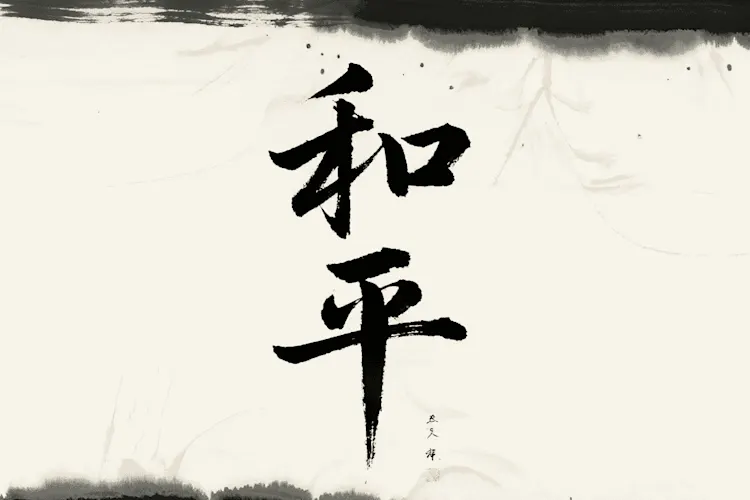
The word “peace” is a concept valued in almost every culture. In the Chinese language, it is most commonly expressed as 和平 (hé píng). This is the most straightforward one-to-one translation. The character 和 (hé) represents harmony, balance, and unity, while 平 (píng) means level, even, or calm. Together, 和平 (hé píng) conveys the idea of a calm and harmonious state in society, relationships, or one’s mind.
But there are actually many ways to express the concept of peace in Chinese. These include words and four-character idioms called (成语 chéngyǔ) like 安居乐业 (ānjū lèyè), and spiritual practices like meditation; the concept of peace is deeply embedded in Chinese culture.
Basic Ways to Say “Peace” in Chinese
和平 (hé píng) – Peace; commonly used in contexts like international peace or social harmony.
Example: 世界和平是人类的共同愿望。 Shìjiè hé píng shì rénlèi de gòngtóng yuànwàng. “World peace is humanity’s common wish.”
安宁 (ān níng) – Peaceful and quiet; often used to describe personal or domestic tranquility.
Example: 祝你心灵安宁。 Zhù nǐ xīnlíng ānníng. “Wishing your mind peace and tranquility.”
平静 (píng jìng) – Calm, quiet, or peaceful; used for both emotions and surroundings.
Example: 湖面平静如镜。 Hú miàn píngjìng rú jìng. “The lake is as calm as a mirror.”
宁静 (níng jìng) – Serenity or quietness; often used for nature or personal mental state.
Example: 我喜欢在宁静的夜晚读书。 Wǒ xǐhuān zài níngjìng de yèwǎn dúshū. “I like reading in the peaceful night.”
Peace in Chinese Idioms
Chinese has many idiomatic expressions related to peace and harmony in Chinese thought both at home and in society. These are often used in writing, speeches, and greetings:
天下太平 (tiānxià tàipíng) – “Peace under heaven”; describes a peaceful world.
安居乐业 (ānjū lèyè) – “Live in peace and work happily”; used to describe a stable, peaceful life.
风平浪静 (fēng píng làng jìng) – “Calm winds and waves”; a metaphor for a peaceful situation.
和气生财 (héqì shēng cái) – “Harmony brings wealth”; emphasizes peaceful relationships leading to prosperity.
家和万事兴 (jiā hé wàn shì xīng) – “A harmonious family prospers in everything”; peace in the family ensures success.
平安是福 (píng’ān shì fú) – Peace is a blessing
和为贵 (hé wéi guì) – Harmony is most precious
心平气和 (xīn píng qì hé) – Calm and even-tempered
万事太平 (wàn shì tàipíng) – Everything is peaceful
安国富民 (ānguó fùmín) – A peaceful country makes the people prosperous
Peace in Everyday Conversation
When speaking about peace in daily life, Chinese people often use the word 和平 (hé píng) in formal discussions and 安宁 (ān níng) or 宁静 (níng jìng) in informal contexts. Here are some practical examples:
祝你平安!(Zhù nǐ píng’ān!) – Wishing you safety and peace!
希望大家心中都有和平。 (Xīwàng dàjiā xīnzhōng dōu yǒu hé píng.) – Hope everyone has peace in their hearts.
这个地方非常宁静。 (Zhège dìfāng fēicháng níngjìng.) – This place is very peaceful.
愿你心安 (yuàn nǐ xīn’ān) – May you have peace of mind
和平常在 (hé píng cháng zài) – May peace always be with you
祝你一生安宁 (zhù nǐ yīshēng ānníng) – Wishing you a lifetime of peace
平平安安 (píng píng ān ān) – Safe and sound (common blessing)
岁岁平安 (suì suì píng’ān) – Peace year after year
一路平安 (yīlù píng’ān) – Safe travels
四季平安 (sìjì píng’ān) – Peace throughout the four seasons
家庭和睦 (jiātíng hémù) – Harmony and peace in the family
国泰民安 (guótài mín’ān) – The country prospers, and the people are at peace
Peace in Cultural and Historical
Context The concept of peace in Chinese culture goes beyond personal calmness. In Confucianism (儒家 Rújiā), peace is tied to harmony (和 hé) in society and moral order. Daoism (道教 Dàojiào) emphasizes inner peace and balance (内心平静 nèixīn píngjìng) as a path to a good life.
Historically, leaders and poets have often praised peace as a sign of a prosperous nation. For example, “国泰民安 (guótài mín’ān)” means “The country prospers, and the people are at peace.” Even modern Chinese speeches often begin or end with wishes for 和平 (hé píng), showing the timeless value of this concept.
Peace in Religion and Philosophy
In Chinese Buddhism, peace is often expressed as 平和 (pínghé) or 心安 (xīn’ān), referring to inner peace and spiritual calm. Meditation (打坐 dǎzuò) and mindfulness (正念 zhèngniàn) are practices that help cultivate this mental state.
In Taoism, harmony with nature (顺应自然 shùnyìng zìrán) is a way to achieve 宁静 (níngjìng). The Chinese idiom 清静无为 (qīng jìng wú wéi), meaning “serene and non-interfering,” reflects the Taoist view that peace comes from simplicity and harmony.
Peace in Writing and Art
The word 和平 (hé píng) often appears in calligraphy (书法 shūfǎ), poetry (诗歌 shīgē), and paintings (画 huà). Many artists paint peaceful landscapes (宁静的山水 níngjìng de shānshuǐ) to convey serenity.
For example, a calligraphy scroll may simply have 和平 (hé píng) written in bold strokes to symbolize the wish for world peace. In poetry, lines like “月下清风,心境和平” (Yuè xià qīng fēng, xīnjìng hé píng) – “Under the moon and gentle breeze, the mind is at peace” – combine natural imagery with inner tranquility.
Looking for an online Chinese class for your kids to learn Mandarin and Chinese culture? LingoAce is one of the best ways for kids to learn Chinese online. Each one-on-one lesson is the product of nearly 200 hours of curriculum development, teacher training, and quality control. LingoAce classes are tailored to meet your child's learning needs.
Experience a redefined Chinese learning experience and book a free trial class with us today.