
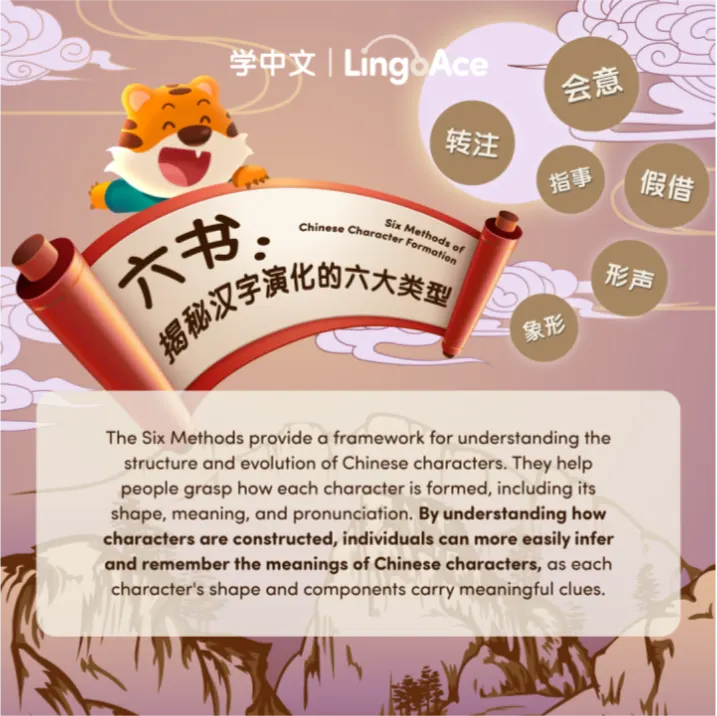
The Six Books, were the basic methods for ancient Chinese literati to learn and apply Chinese characters. It is a method of classifying and summarizing Chinese characters, which helps people better understand and apply Chinese characters by distinguishing the different characteristics of their shapes and meanings.
The methods of the Six Books help people understand and remember Chinese characters, and express their meanings more accurately in writing and reading. By studying the Six Books, one can gain a deeper understanding of the evolution and context of Chinese characters, and appreciate the charm of Chinese characters as an important component of traditional Chinese culture.
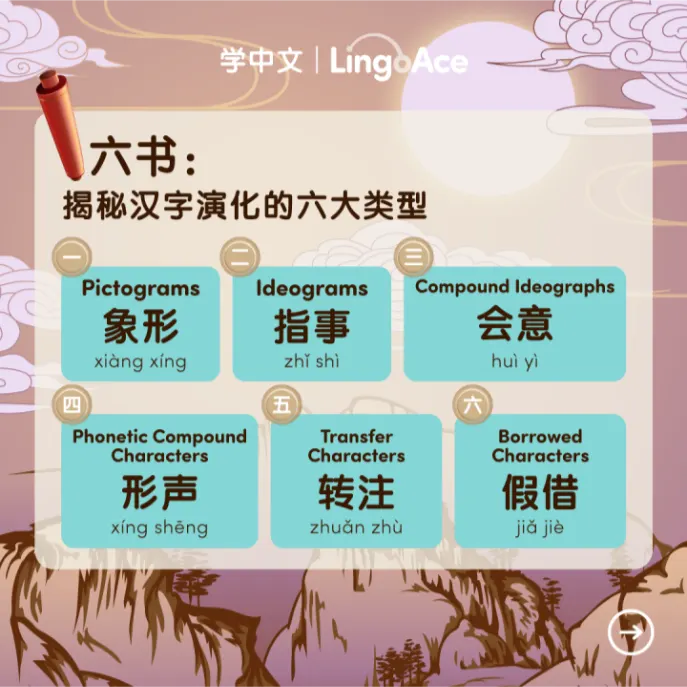
The six books are: pictographic, referential, understanding, phonetic, phonetic, and borrowed.
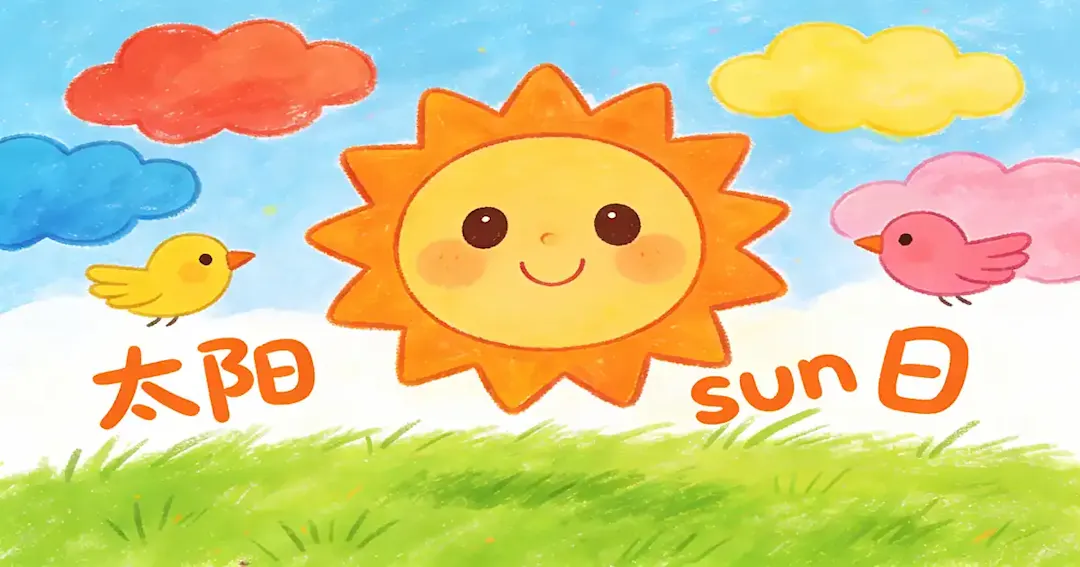
Pictography: The structural shape of this character directly depicts the represented thing or object, such as the character "sun" representing the sun, and the character "mountain" representing mountains. This type of character first appeared in oracle bone inscriptions and bronze inscriptions.
Zhi Shi: This type of character expresses things or meanings through specific gestures or indications, with specific directionality and symbolic significance. For example, the word "up" indicates an upward direction, and the word "down" indicates a downward direction.
Understanding: This type of character is composed of two or more pictographic or referential characters, representing a comprehensive meaning or abstract concept. Expressing new meanings by combining different shapes and meanings. For example, the word "rest" consists of "person" and "wood", indicating that a person is resting under a tree. Phonetic: This type of character is composed of a similar part in form and meaning and a phonetic part. The semantic part provides the meaning of the character, while the phonetic part provides the sound of the character. Most Chinese characters belong to phonetic characters. For example, the "female" part of the word "good" represents beauty, the "son" part represents sound, and when combined together, it means "good".
Transliteration: This type of character is transformed by changing the original form or pronunciation to create new meanings. The derivation and deformation of Zhuanzhu characters are quite complex and commonly found in ancient literature. For example, the character "zi" had a writing style of "from oneself" in ancient times, which later evolved into its current form.
Fake borrowing: This type of character expands its meaning by borrowing existing forms or sounds. Some rare words or foreign vocabulary are often expressed through borrowing. For example, the word "machine" originally referred to a weaving machine, but later extended to refer to machinery and equipment.

Pictography is a classification method in the Six Books, which refers to the direct depiction of the things or objects represented by the structural shapes of some Chinese characters. The shape of this character has a certain similarity to the actual thing it refers to, and represents concepts through visual associations.


For example, in "Shuowen Jiezi", the character "sun" is interpreted as the image of the sun, with points and lines in the shape resembling the light emitted by the sun; The character "mountain" is represented by the shape of a mountain range; The character "(moon)" resembles the shape of a curved bright moon, the character "(turtle)" resembles the side shape of a turtle, "(fish)" is a swimming fish with a fish head, body, and tail, and the character "(door)" is the shape of two doors on the left and right.. These words are visually expressed through their shapes, making it easier for people to associate and understand.
Common pictographic characters include hand, tooth, elephant, eye, ear, ox, sheep, feather, dragon, horse, grass, bamboo, door, sword, bow, book, mountain, water, river, sun, moon, person, mouth, cloud, well, fire, field, and rain. The emergence of pictographs can be traced back to the period of oracle bone inscriptions and bronze inscriptions, when people used these specific forms of characters to record and express things.


Over time, these pictographs have gradually evolved into the familiar shapes we are familiar with today. Although the proportion of pictograms in modern Chinese characters is not high, they are still an important part of Chinese character learning. By understanding and mastering pictographs, we can gain a deeper understanding of the origin and development of Chinese characters, and better apply and understand their meanings in writing and reading.
I believe that by studying the pictographs in the Six Books, you will be able to use these characters more accurately and enhance your appreciation and understanding of the beauty of Chinese characters.
Want your child to learn Chinese? LingoAce is one of the best ways to learn Chinese for kids. Each one-on-one lesson is the product of nearly 200 hours of curriculum development, teacher training, and quality control. Our classes are tailored to meet your child’s learning needs.
Experience a redefined Chinese learning experience first-hand and book a free trial class with us today.