Chinese characters are not only the carriers of an ancient civilization but also a bridge connecting overseas Chinese with their cultural heritage. Among the vast sea of Chinese characters, the character "wai" (外), with its unique form and rich connotations, has become a fascinating topic. This article aims to delve into the historical evolution and cultural significance of the character "wai," guiding overseas Chinese closer to this symbol of traditional Chinese culture that is full of educational value.

The Origin and Evolution of the Chinese Character "Wai"
The Original Form and Meaning of the Chinese Character "Wai" in Ancient Times The character "wai" originally appeared in oracle bone script, where its pictographic meaning referred to the space outside a house. Throughout the development of ancient Chinese characters, "wai" underwent transformations from bronze inscriptions to small seal script, and then to clerical and regular script. Each transformation witnessed the changes of the times and the evolution of writing habits. For instance, in bronze inscriptions, the character "wai" resembled two people back to back, symbolizing the relationship between humans and the external world. Explanation of the Character "Wai" in "Shuowen Jiezi" "Shuowen Jiezi" is the earliest dictionary in China, compiled by Xu Shen during the Eastern Han Dynasty. In this lexicon, the character "wai" is explained as "to exit, with the components 'xi' (夕) and 'bu' (卜)." Here, "xi" represents the moon, and "bu" symbolizes the oracle bones used for divination, collectively reflecting the ancient association of "wai" with external spaces and unknown entities. This explanation not only reveals the original meaning of "wai" but also showcases the ancient way of perceiving the world. The Evolution of the Form of the Character "Wai" Over Time From oracle bone script to modern simplified characters, the form of "wai" has undergone simplification and standardization. Despite the simplification in form, the basic structure and meaning have remained consistent. The standard modern writing of the character "wai" has become a fundamental part of Chinese character education for elementary students. Moreover, the use of "wai" in modern Chinese has expanded beyond indicating direction to encompass many new fields and expressions. The Standard Writing and Use of the Character "Wai" in Contemporary Chinese In contemporary Chinese, the standard writing of the character "wai" has been established, becoming one of the basic characters for elementary students to learn. Additionally, the use of "wai" in modern Chinese has become more extensive, not limited to indicating direction but also extending to many new areas and ways of expression. For example, the term "diplomacy" not only retains its traditional meaning but also plays a significant role in modern international relations.
The Status of the Character "Wai" in Chinese Culture
The Symbolic Meaning of the Character "Wai" in Traditional Chinese Culture
In traditional Chinese culture, the character "wai" is often contrasted with "nei" (内), representing a series of cultural concepts such as inside and outside, host and guest, and China and foreign countries. These concepts occupy an important position in Chinese philosophical thought, literary works, and daily life. For instance, in Confucian thought, the phrase "inner sageliness and outer kingliness" conveys the idea of self-cultivation and governance, where "wai" represents external governance and expansion. The Application of the Character "Wai" in Chinese Idioms and Proverbs The character "wai" is widely used in the Chinese language, with many idioms and provers containing "wai," such as "internal worries and external threats" and "a deserted doorstep." These idioms and proverbs reflect the profound impact of "wai" on Chinese culture. Taking "internal worries and external threats" as an example, it vividly describes a situation where a country faces difficulties both internally and externally, demonstrating the important role of "wai" in expressing complex situations.b The New Meanings and Uses of the Character "Wai" in Modern Chinese With societal development, "wai" has also derived new meanings and uses in modern Chinese. Terms such as "takeout," "diplomacy," and "foreign investment" are new applications of "wai" in contemporary society. These new terms not only enrich the expression of the Chinese language but also reflect the new trends of social development and cultural exchange.
Learning Methods and Techniques for the Chinese Character "Wai"
Basic Steps for Elementary Students to Learn the Character "Wai"
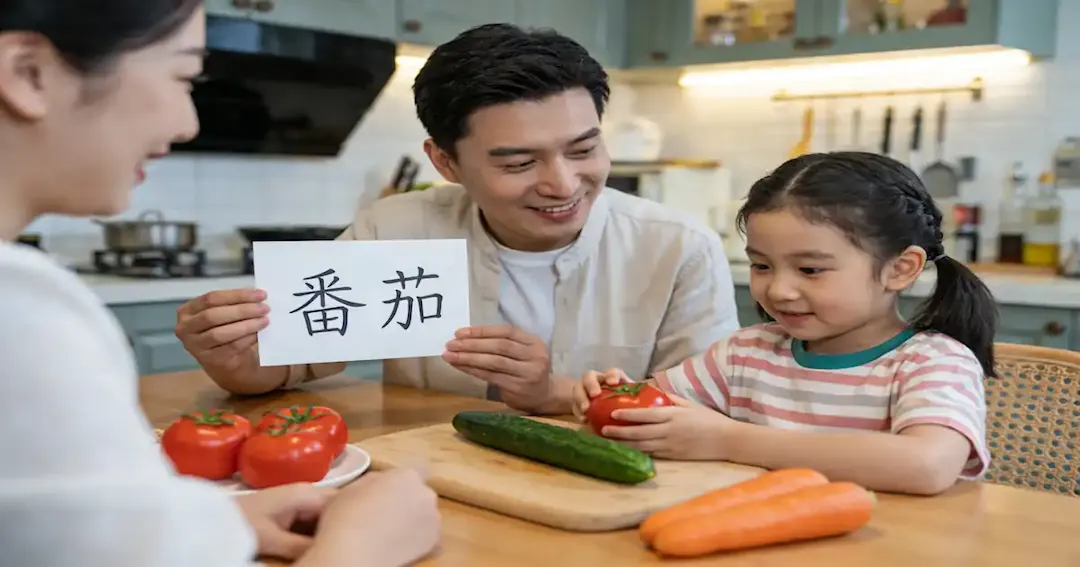
Learning Chinese characters is an essential journey for every elementary student, and the character "wai" is particularly important as a commonly used character. The basic steps include recognizing the character's shape, understanding its meaning, practicing with tracing books, writing exercises, and applying it in sentences. Through these steps, students can master not only the writing of "wai" but also its usage in different contexts. For example, teachers might guide students to associate the structure of "wai" with scenes outside the home, thereby enhancing memory. How Overseas Chinese Can Effectively Learn and Remember the Character "Wai" For overseas Chinese, learning Chinese characters may present additional challenges. Effective methods include combining visual memory with associative techniques, such as linking the image of "wai" with actual objects; using Chinese character learning software for repeated practice; and participating in Chinese learning groups to exchange experiences with others. Additionally, parents can stimulate children's interest in characters by telling stories related to "wai," such as ancient poems about venturing beyond the frontier. Using Technological Tools to Assist in Learning the Character "Wai" Advancements in technology have provided new avenues for learning Chinese characters. Various character learning apps and online resources, such as character recognition software, online courses, and interactive games, can help overseas Chinese learn "wai" more conveniently and efficiently. For instance, some apps use gamification to help users memorize strokes and pronunciation while completing tasks, making the learning process more engaging, especially for young people.

Fun Facts and Stories About the Character "Wai"
Historical Anecdotes Related to the Character "Wai" The character "wai" has a rich history of stories in China. For example, ancient "diplomacy" originally referred to visits and ceremonial exchanges between neighboring feudal states, which has evolved into formal diplomatic activities between nations today. These stories are not only entertaining but also help readers better understand the historical evolution of "wai." Additionally, the famous line "To see a thousand miles, go up another floor" from Wang Zhihuan's poem "Ascending Stork Tower" also embodies the concept of "wai," suggesting that elevating one's perspective can broaden one's horizon and mind. Interesting Interpretations of the Character "Wai" in Different Contexts The character "wai" can have different interpretations in various contexts. For example, "strong on the outside but hollow on the inside" describes someone who appears strong but lacks substance, while "layman" is used to describe someone unfamiliar with a particular field. These interesting interpretations not only add fun to learning but also deepen the understanding of the diverse uses of "wai." Through these vivid examples, readers can more intuitively feel the flexibility and richness of "wai" in language. Interesting Experiences of Overseas Chinese with the Character "Wai" Overseas Chinese often have interesting experiences when learning and using the character "wai." Sharing these stories can enhance communication within the Chinese community and inspire more people to take an interest in learning Chinese characters. For instance, a young Chinese person who grew up abroad discovered that the structure of "wai" was similar to a character in their name, prompting deep reflection on family origins and cultural identity.
Conclusion
Summarizing the Cultural Value and Learning Significance of the Character "Wai" The character "wai" is more than a symbol; it carries a wealth of cultural value and historical information. For overseas Chinese, learning and understanding "wai" is a bridge connecting Chinese culture with the world and an important way to pass on cultural identity. By delving into the evolution and application of "wai," we can better appreciate the depth and breadth of Chinese culture. Encouraging Overseas Chinese to Continue Exploring and Inheriting Chinese Character Culture In conclusion, we encourage all overseas Chinese to continue exploring the mysteries of Chinese characters and to carry forward the essence of Chinese culture. Whether through learning "wai" or other means, everyone can become a promoter and witness of Chinese culture. Let us work together to let the beauty and wisdom of Chinese characters shine around the world.