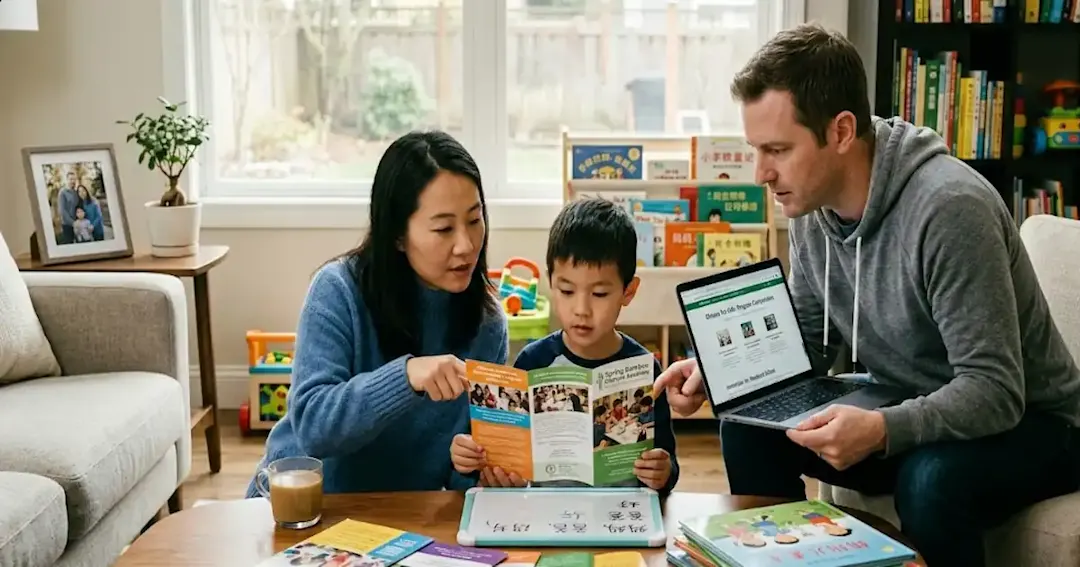
By 2026, it feels like almost everyone has heard of MBTI. Some people use it casually, some take it seriously, and many parents quietly wonder: Can MBTI actually help me understand my child better?
The short answer is: it can be a helpful tool—if we use it the right way.
The Myers & Briggs Foundation describes the MBTI framework as a way to better understand how people tend to take in information and make decisions. In other words, it is a tool for understanding preferences and patterns—not a tool for putting children into fixed boxes.
That distinction matters in parenting. When used thoughtfully, MBTI ideas can help parents improve communication, reduce unnecessary conflict, and support children in ways that feel more natural to them. The Myers & Briggs Foundation also notes that understanding type preferences in children can support family relationships and even help with school-related communication.
This guide is about exactly that: how to use MBTI to understand and guide children, not label them.

Why MBTI Is Still Popular in 2026—and Why Parents Are Interested
MBTI remains popular because it gives people language for something they already notice in daily life:
Some children think out loud.
Some need time before speaking.
Some love structure.
Some resist structure but thrive in exploration.
Some make decisions through logic first.
Some process through feelings and relationships first.
Parents often feel these differences long before they know how to describe them. MBTI gives a simple framework to start that conversation.
But here is the important reminder: a framework is not a diagnosis, and a preference is not a limit.
A child may show a pattern today and grow in new ways tomorrow. Parenting works best when we use personality ideas as a starting point for support, not a final answer.
What MBTI Can Help Parents Do—and What It Can’t
What MBTI can help with
Used carefully, MBTI ideas can help parents:
notice a child’s communication preferences
reduce “Why are they like this?” frustration
adjust how they teach, guide, and encourage
support confidence in a way that fits the child
better understand differences between siblings (without comparison)
What MBTI can’t do
MBTI should not be used to:
predict a child’s future
excuse behavior (“That’s just their type”)
limit opportunities (“You’re not the kind of child who can do this”)
replace observation, communication, and parenting judgment
This is the most important mindset shift for families:
Use MBTI to ask better questions, not to make rigid conclusions.
A Better Way to Think About the “16 Types” at Home
Many MBTI articles list all 16 types in detail. That can be interesting—but for parents, it is often more useful to focus on the four preference pairs and how they show up in everyday family life.
The Myers-Briggs overview explains these preference pairs (E–I, S–N, T–F, J–P) as part of the framework.
Below is a family-friendly way to use them.
1) Extraversion (E) and Introversion (I)
How children may differ
Some children recharge by talking and interacting. Others recharge by having space and quiet.
Parenting mistakes to avoid
Assuming a quiet child lacks confidence
Assuming a talkative child is not thoughtful
Better guidance
For more introverted children: give thinking time before expecting an answer
For more extraverted children: allow discussion and verbal processing, then help organize their ideas
What growth can look like
Introverted children can build public speaking confidence
Extraverted children can build listening and reflection skills
2) Sensing (S) and Intuition (N)
How children may differ
Some children prefer concrete details, clear instructions, and real examples. Others enjoy patterns, imagination, “what if” ideas, and possibilities.
Parenting mistakes to avoid
Calling a detail-focused child “too rigid”
Calling an imaginative child “unfocused” without support
Better guidance
For sensing-leaning children: use clear steps, examples, and routines
For intuition-leaning children: connect learning to ideas, meaning, and big-picture questions
What growth can look like
Sensing-leaning children can practice creative thinking
Intuition-leaning children can practice follow-through and detail awareness
3) Thinking (T) and Feeling (F)
How children may differ
Some children process decisions by asking, “What makes sense?” Others ask, “How will this affect people?”
Parenting mistakes to avoid
Calling a logic-first child “cold”
Calling a feeling-first child “too sensitive”
Better guidance
For thinking-leaning children: teach empathy language without shaming directness
For feeling-leaning children: teach boundaries and decision-making without dismissing emotion
What growth can look like
Thinking-leaning children can strengthen emotional expression
Feeling-leaning children can strengthen objective reasoning
4) Judging (J) and Perceiving (P)
How children may differ
Some children feel safer with plans, closure, and routines. Others feel more energized with flexibility, options, and open-ended exploration.
Parenting mistakes to avoid
Calling a routine-loving child “controlling”
Calling a flexible child “lazy” when they need a different structure
Better guidance
For judging-leaning children: use predictable routines and let them prepare
For perceiving-leaning children: use flexible structure (clear goals + choice in how to get there)
What growth can look like
Judging-leaning children can practice adaptability
Perceiving-leaning children can practice planning and completion

How Parents Can Grow Too (Not Just Kids)
One of the best uses of MBTI in parenting is not typing your child first—it is noticing your own parenting defaults.
For example:
Do you push for quick answers because you are uncomfortable with silence?
Do you over-structure because you feel anxious without a plan?
Do you avoid hard conversations because you want emotional harmony?
When parents understand their own preferences, they often become more flexible and less reactive. That creates a better environment for children to grow.
In other words, MBTI can be a mirror for parents before it becomes a lens for children.
How to Guide Children Without Labeling Them
Here are practical ways to use MBTI-style thinking without turning it into a label.
1) Describe behaviors, not identity sentences
Instead of:
“You are an introvert, so you don’t like speaking.”
Try:
“You seem to like time to think before speaking. Let’s give you a minute, then try.”
2) Focus on support strategies, not type categories
Instead of:
“You’re P-type, so planning isn’t your thing.”
Try:
“Let’s test a planning method that feels easier for you.”
3) Build strengths and stretch skills
Support what comes naturally and gently practice what does not.
A child can be:
naturally quiet and become a confident speaker
naturally emotional and become a strong problem-solver
naturally spontaneous and become more organized
4) Keep revisiting, not fixing the story too early
Children change. Their confidence changes. Their preferences may become clearer over time—or show up differently across home, school, and social settings.
What This Means for Learning and Communication at Home
This is where MBTI becomes truly useful for families: it helps parents adjust how they guide learning.
For example:
A child who needs processing time may need quieter speaking practice before group settings.
A child who loves talking may need help with structure and clarity, not more encouragement to speak.
A child who resists rigid routines may still do well with a short, repeatable pattern and clear choices.
A child who wants certainty may need previewing and step-by-step expectations before trying something new.
This is especially important in language learning. Many parents worry that a child is “not good at speaking,” when the real issue is often that the learning format does not match the child’s communication style yet.
For Chinese Learning
For bilingual and multilingual families, this matters even more.
Children do not all build speaking confidence in the same way:
Some speak early and make lots of mistakes (which is fine).
Some understand a lot before they speak.
Some need low-pressure practice first.
Some need structure, sentence frames, and feedback.
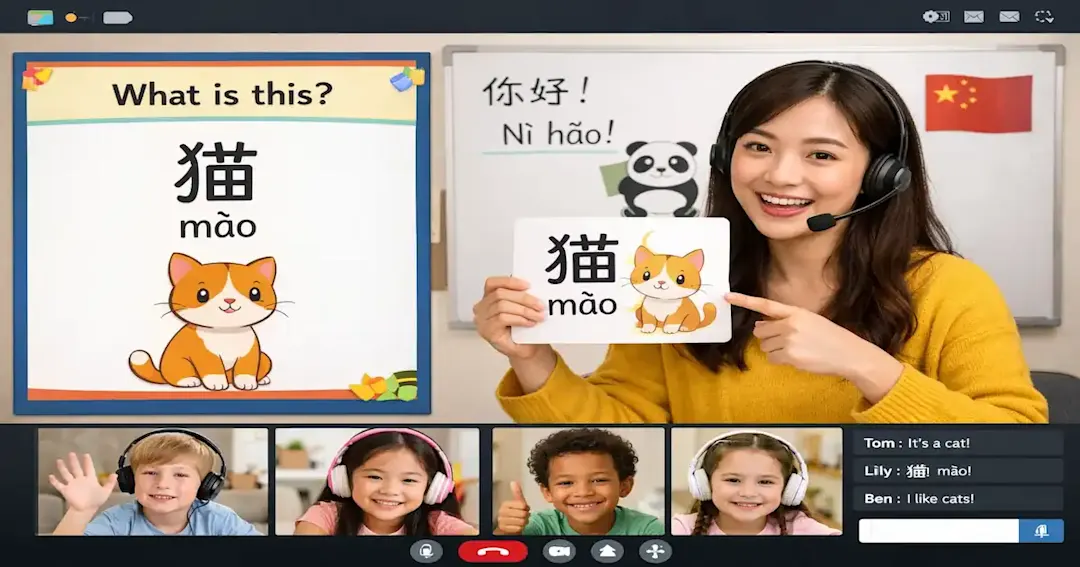
That is why supportive, structured Chinese learning can make such a difference. The goal is not to force every child into one communication style. The goal is to help each child build:
confidence,
consistency, and
real expression over time.
If your child is growing up between languages or cultures, personality-aware support plus consistent practice can be a powerful combination.
What Parents Can Try This Week (Simple, Low-Pressure)
1) One “observe, don’t label” moment
This week, notice one pattern in your child and describe it neutrally:
“You like to think before answering.”
“You get excited when you can explain your ideas.”
“You work better when you know what’s coming next.”
2) One communication adjustment
Change one thing in how you guide:
give more thinking time
add a visual example
break a task into steps
give two choices instead of one command
3) One confidence-building conversation
Ask a question your child can answer successfully:
“What was one good part of your day?”
“What do you think we should do first?”
“Can you explain your idea to me?”
Small wins build trust. Trust builds confidence.
If you’re trying to understand your child better—not just academically, but emotionally and communicatively—MBTI-style thinking can be a helpful starting point. And when it comes to language growth, that understanding becomes even more valuable.
At LingoAce, we believe children build confidence best when learning is structured, supportive, and responsive to different communication styles. If your child is learning Chinese in a bilingual or multicultural environment, a free trial class can help you explore a pace and style that fits them better.

FAQ
1) Can MBTI help parents understand children better?
It can be helpful as a framework for understanding communication and preference differences, especially when used flexibly and without labeling. The Myers & Briggs Foundation also discusses how type preferences can support family relationships and school-related understanding.
2) Should parents label children with an MBTI type?
It’s better to avoid rigid labels. Use MBTI ideas to observe patterns and improve support, not to define who a child “is.”
3) Is MBTI a diagnosis?
No. MBTI is a personality preference framework, not a clinical diagnosis. The Foundation describes it as a way to understand how people tend to take in information and make decisions.
4) What if my child doesn’t fit one clear type?
That’s common. Children are still developing, and behavior can vary by setting, stress, confidence, and age.
5) Can MBTI ideas help with learning habits?
Yes—especially by helping parents match support styles (structure, flexibility, processing time, discussion style) to the child’s needs.
6) How does this relate to Chinese learning?
Different children build speaking confidence differently. Understanding communication preferences can help parents choose more effective ways to support Chinese practice.
Conclusion
MBTI can be useful in family life—but only when we use it as a tool for understanding, not labeling.
The goal is not to put children into fixed categories. The goal is to become better at noticing:
how they communicate,
how they process,
what helps them feel safe enough to grow, and
how we, as parents, can guide them more effectively.
When we shift from labels to support, children get something much more valuable than a personality code: they get a better environment to build confidence, expression, and long-term growth.
If your child is growing up in a bilingual or multicultural family, Chinese learning can be a powerful space to build communication confidence—not just vocabulary. Explore LingoAce and book a free trial class to find a supportive learning style that matches your child’s pace and personality.