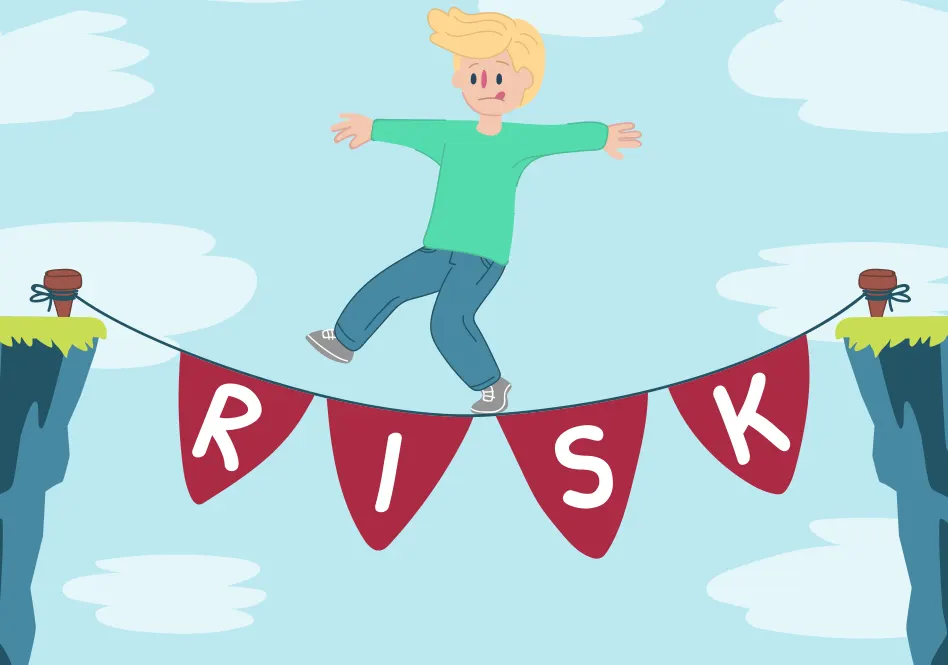
As a teacher, you plan your lessons around objectives whether they're vocabulary goals, grammar targets, pronunciation accuracy, or something else. Objectives are great, but they're only part of what students are learning. In education, the "invisible curriculum" refers to the implicit lessons students absorb not through content, but through experience. Examples include how they’re treated, what’s praised or ignored, or how mistakes are handled. In an online ESL setting, this invisible curriculum is often magnified because when a child is learning a new language, they're also learning what it means to try, to fail, to recover, and to be seen. They’re learning whether their voice matters, whether taking risks is safe, and whether they’re “good” at this or not. All of that relates to you. Let’s look closer at what else students are picking up and how to make sure the message serves their growth.
1. Your Tone Teaches Trust
The way you speak in class (tone, pacing, pauses, and reactions) sends a strong message about what kind of space class is. If your voice is calm, warm, and steady, students sense safety. They learn that it's a space where they can relax into the learning process, even when it’s hard. If your tone becomes rushed, clipped, or overly animated in response to mistakes or slow progress, they may start interpreting challenges as threats. For young learners especially, emotional tone is the primary language before spoken language kicks in. A student might not understand your words, but they’ll absolutely feel your tone. Once students associate your tone with safety, their learning brain switches on. If they associate it with pressure or tension, their learning brain checks out, even if your content is perfect.
🔊 Speaking Insight: Tone is about consistency. A quiet, steady teacher can create just as much safety as an upbeat, high-energy one, as long as students feel emotionally grounded in that space.
2. Mistakes Reveal Another Lesson
What happens the moment a student makes a mistake? That split-second response (a pause, a smile, a correction, a sigh) teaches your learner what mistakes mean. Are they a step forward, or a setback? A moment to explore, or something to rush past? The invisible curriculum around mistakes often comes down to subtle cues:
Do you pause awkwardly when a student gets something wrong?
Do you quickly correct and move on, or invite reflection?
Do you celebrate the attempt before correcting the error?
Students internalize these patterns fast. Over time, they learn whether this is a space where mistakes are part of the process or something to be ashamed of. A child who fears mistakes will take fewer risks. A child who feels supported when they make one will try again, and again, and that's where true language learning lives.
✅ Good Mistakes: Even a short phrase like “That’s a smart try — want to give it another go together?” signals that the mistake is part of learning,
3. How Praise Shapes Student Value
Praise is powerful. It tells students, “This matters.” But too often, praise defaults to surface-level comments: “Good job,” “Well done,” “Great reading!” These are fine, but vague praise teaches vague lessons. Instead, targeted praise can subtly teach students what to value in their own learning. Do you praise only correctness or also courage? Do you celebrate fluency or also effort? When a teacher consistently praises effort, improvement, and strategy (“You didn’t give up even when it was hard!”), the student learns to value growth, not just perfection. That mindset often sticks long after the lesson ends.
Praise also teaches identity. If you praise a student for being "smart," they may feel pressure to always get things right. If you praise them for being curious, persistent, or focused, you're helping shape how they see themselves as learners.
👏🏻 The Power of Praise: The way you praise teaches students how to define success. Make sure the definitions include progress, process, and presence rather than perfection.
4. Structure & Control
Many teachers don’t realize how much their lesson structure teaches about power, autonomy, and control. In highly rigid classrooms, students may learn that their role is to obey, not participate. In overly loose ones, they may feel unsure of what’s expected and that uncertainty can feel unsafe. The sweet spot is structure that empowers. When students know the flow of class, understand the purpose of each activity, and feel a sense of rhythm, they feel more in control and more ready to engage.
This is especially important for students who may feel disoriented by online learning or low language confidence. A clear structure tells the brain: you’re safe here, you know what’s coming, and you belong in this space. At the same time, moments of choice like, “Would you like to try it first, or listen again?” teach that student voice matters. You’re delivering content while inviting participation in their own learning process.
🗣️ Control: You don’t have to give students full control but even small choices help reinforce the invisible message: “You are trusted, and your input matters here.”
5. Expectations & Self-Image
Here’s one of the most powerful truths in teaching: students tend to rise or fall to meet the expectations they believe you hold for them. A lot of those expectations don’t have to be spoken because they're felt. If a student senses that you expect them to succeed (to understand, to speak, to grow) they begin to believe it, too. If they sense that you expect them to struggle, freeze, or fall behind, they’ll internalize that as well. This is where your micro-reactions come into play. It's how you respond when a student answers slowly… when they guess wrong… when they say “I don’t know.” Those reactions communicate everything about what you really expect from them.
Great teachers don’t fake positivity. Instead, they communicate belief. Belief that effort matters, that growth is always possible, and that every learner has the capacity to improve. When belief is embedded in every interaction, that’s when the invisible curriculum becomes a source of power.
🪞 Seeing & Feeling: Students may forget what you said, but they’ll remember how you looked at them after they tried. Often, that look becomes part of how they see themselves.
Final Thoughts
The invisible curriculum is always in play. Whether you’re conscious of it or not, your students are picking up cues about how learning works, what their role is, and who they are in your classroom. When you become aware of your own invisible curriculum, you gain the power to align your presence with your purpose. You’re teaching English, but equally as important, you’re teaching students how to learn, try, and trust themselves in the process. The next time you teach, ask yourself:
What am I teaching through my tone, timing, and reactions?
What do I want my student to believe about themselves when class ends?
LingoAce offers qualified teachers smooth onboarding for an online ESL job. With tools and resources tailored to TESOL/TEFL-certified teachers, you’ll have everything you need to teach English remotely to children and thrive in this exciting career!