Yin and yang (阴阳, yīn yáng) is one of the most recognizable ideas from Chinese culture—seen in the taijitu symbol, martial arts, design, films, and everyday talk about “balance.” But popularity has also led to oversimplifications like “yin is bad, yang is good,” “yin is female, yang is male,” or “you’re yin and I’m yang.”
This guide explains yin-yang in a clear, modern way (without turning it into a kids script): where it comes from, how to write and pronounce 阴阳, what the curve and dots in the taijitu mean, the most common misconceptions, its careful connection to Daoist context, and how “yin-yang balance” is used in real Chinese. You’ll also get a small set of practical vocabulary and natural sentence patterns to use it accurately.
Where the Yin and Yang Concept Comes From
From natural observation to a thought framework
“Yin” and “yang” didn’t begin as abstract philosophy terms. They grew out of direct observations of nature: the shaded side of a hill versus the sunny side, sunlight versus shadow, humidity and temperature differences, day and night, seasonal change. People noticed these patterns weren’t isolated; they frequently appeared in pairs and functioned as conditions for each other. Without sunlight, “shadow” doesn’t really mean much. Without daytime, nighttime isn’t fully defined.
Over time, this observation-based language became more systematic—almost like a mental tool for explaining change. You can think of yin-yang not as a religious belief you must “accept,” but as a traditional descriptive framework that helps people talk about transformation, balance, and connection.
Yin-yang and Daoist contexts
Yin-yang often appears in Daoist-related discussions because Daoist language emphasizes natural flow, ongoing change, and the idea that apparent opposites can generate or support each other. But it’s worth being careful here: yin-yang isn’t identical to Daoism, and it isn’t the invention of a single school. In broader Chinese tradition, it functions more like a shared vocabulary that shows up across philosophy, folk understanding, and artistic expression.
How to write and pronounce 阴阳
One practical way to keep yin-yang grounded is to anchor it to the actual Chinese word—characters and pronunciation—so you know what you’re talking about when you see it in Chinese materials.
1) The characters
Yin: 阴
Yang: 阳
Together: 阴阳
2) Pinyin and tones
yīn (first tone, high and level)
yáng(second tone, rising) Together: yīn yáng
If you’re not used to tones, you don’t have to become a phonetics expert. But tones are part of the word, not decoration. Many people flatten yīn yáng into an English-style rhythm, which makes it harder to recognize and remember. Saying it with the right tone contour often makes it feel more “real” and memorable.
3) A helpful but not universal mental picture
In quick explanations, yin is often associated with “shaded / in shadow,” and yang with “sunny / exposed to sunlight.” It’s not a perfect rule for everything, but as a first mental image it works well because it links yin-yang to observable dimensions like light, warmth, orientation, and inward/outward tendency.
If you want a more structured path that includes real interaction and cultural topics, a live class can reduce friction.LingoAce is one option some families choose because it blends speaking practice with cultural context in a guided format. If you’re curious, trying a single Lingoace trial lesson is an easy way to see whether that style fits your goals and schedule.

What the taijitu symbol is actually saying
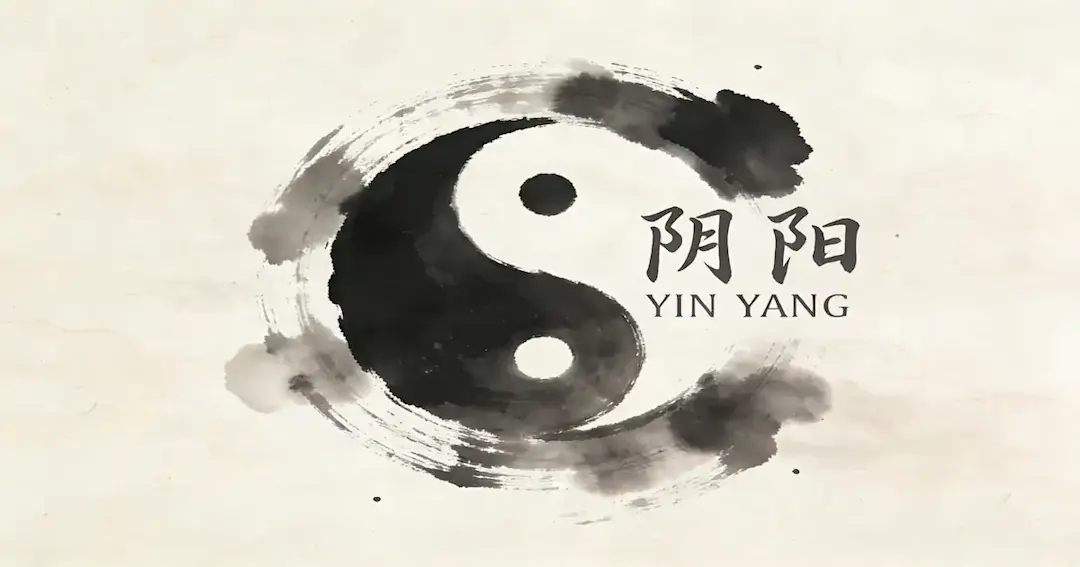
The taijitu is powerful because it expresses yin-yang with almost no words. It visually encodes three ideas: difference, flow, and mutual inclusion.
1) Two colors: acknowledging difference
Black and white don’t declare good vs. evil. They simply acknowledge difference—light/dark, active/resting, outward/inward. Yin-yang starts by allowing differences to exist, rather than forcing everything into sameness.
2) The S-shaped curve: change is gradual, not a hard cut
A straight line would suggest two sides that never mix. The curve suggests transition and movement. Most real changes aren’t switch-flips; they’re gradual, blending, and cyclical—like dusk, seasonal shifts, energy rising and dropping, attention tightening and loosening.
3) The dots: mutual inclusion and potential reversal
The dot in each side is often read as “each contains a seed of the other.” You don’t need to treat that as mysticism. It can be understood as lived observation: when one tendency reaches an extreme, conditions for a swing back often appear. Most importantly, the dots remind you that yin-yang isn’t a purity test—it’s a relationship structure.
If you remember one thing about yin and yang in Chinese symbol interpretation, remember the dots: they pull the idea away from rigid dualism and back toward mutual containment and change.
How to understand “yin-yang balance”
“Yin-yang balance” (阴阳平衡) is a very common Chinese phrase, especially in traditional cultural contexts. A careful, modern-friendly way to understand it:
It often points to “not going to extremes”: not too hot, not too cold, not always overworking, not always withdrawing.
It’s frequently an experience-based life expression, not a formula that maps neatly onto modern scientific measurements.
In some traditional systems, yin-yang may be discussed alongside concepts like the Five Phases (五行), but they’re not the same thing. Yin-yang focuses on paired tendencies and transformation; the Five Phases is a different categorization-and-relation framework.
A small, practical Chinese add-on
This section keeps the language part light and general—more like a reading-and-speaking support than a parent-child script.
1) Useful words
阴 (yīn): yin; shaded / inward-leaning tendency
阳 (yáng): yang; sunny / outward-leaning tendency
平衡 (pínghéng): balance
偏 (piān): to lean toward; relatively more
转化 (zhuǎnhuà): transform; shift
2) Common collocations
阴阳: yin-yang
阴阳平衡: yin-yang balance
偏阴 / 偏阳: leaning yin / leaning yang
阴阳转化: yin-yang transformation
3) Natural sentence patterns
这段时间整体更偏阳。 (Zhè duàn shíjiān zhěngtǐ gèng piān yáng.)
Overall, this period leans more yang.
需要一点偏阴的恢复。 (Xūyào yìdiǎn piān yīn de huīfù.)
We need a bit of yin-leaning recovery.
状态在阴阳之间来回变化。 (Zhuàngtài zài yīn yáng zhījiān láihuí biànhuà.)
The state shifts back and forth between yin and yang.
1) What does “yin and yang” mean in Chinese?
In Chinese, yin and yang is 阴阳 (yīn yáng). It describes paired, relative qualities (like cool/warm, still/moving, inward/outward) that depend on each other and can shift over time. It’s not a moral label or a fixed personality type.
2) How do you pronounce 阴阳 (yīn yáng)?
Yīn is first tone (high, level). Yáng is second tone (rising). Together: yīn yáng. Tones matter because they’re part of the word—saying them correctly makes the term easier to recognize and remember.
3) Is yin “bad” and yang “good”?
No. That’s one of the most common misconceptions. Yin-yang isn’t a good/evil framework. It’s a way to describe tendencies and relationships (like rest/activity), not a value judgment.
4) Which is yin and which is yang in the symbol?
In the taijitu (the yin-yang symbol), the dark side is commonly associated with yin and the light side with yang—but the deeper point is the curve and the dots, which show movement, balance, and mutual inclusion, not strict separation.
5) What do the dots in the yin-yang symbol mean?
The dots suggest that each side contains a seed of the other: even in a strongly “yin” phase, there’s some “yang” present, and vice versa. It’s a visual reminder that states aren’t pure or permanent—and that change is built in.
Conclusion
Seen this way, yin-yang stops being just a symbol and becomes a clearer way to describe rhythms, tendencies, and adjustment—without forcing everything into moral labels or stereotypes. It also becomes easier to spot when online content turns yin-yang into a slogan instead of a useful framework.
If your next step is turning cultural understanding into real Chinese expression—so you can read and speak about these ideas rather than just recognize the symbol—you can keep building with the vocabulary and sentence patterns above. Or, if you want a more systematic path, you can try a LingoAce trial lesson to see whether a guided, interactive approach (speaking + culture together) matches what you’re looking for.