Before you dive in, you might also like these related Chinese New Year reads on our blog:
Chinese New Year is one of those holidays that can feel “big” even if you’re celebrating far from where your family grew up. Schools and community centers might host events, relatives might call, and your kids may ask the kind of questions that sound simple until you try answering them: Why is everything red? What do I say to Grandma? What’s in the red envelope?
This guide is designed for families who want a celebration that’s warm, respectful, and doable. You’ll get the essentials (date, zodiac, key traditions), plus practical “what to do at home” ideas—without gate keeping, and without making it feel like homework.
Chinese New Year 2026 at a glance
Chinese New Year 2026 date: February 17, 2026.
Zodiac: Year of the Horse, often described as the Fire Horse in 2026.
How long it lasts: Commonly framed as a 15-day Spring Festival period that ends with the Lantern Festival.
What families typically focus on: a reset (cleaning), togetherness, symbolic foods, red decor, good-wish greetings, and (for many families) red envelopes.
What is Chinese New Year?
Chinese New Year (often called Spring Festival) marks the start of the new year on the traditional lunisolar calendar. For many families, it’s less about one single day and more about a season: preparing the home, reconnecting with family, sharing symbolic foods, and exchanging good wishes for the year ahead. (Encyclopedia Britannica)
You’ll also hear people say Lunar New Year. That term is broader: multiple cultures across Asia celebrate new year festivals that follow lunar or lunisolar calendars, but the traditions and names differ by country and community.
Chinese New Year vs Lunar New Year
“Chinese New Year” usually refers to traditions rooted in Chinese culture and the Spring Festival framework.
“Lunar New Year” can include celebrations in other countries too, each with their own customs.
If you’re celebrating with a mixed group, “Lunar New Year” is often a safe umbrella term. If you’re specifically talking about Chinese traditions (hongbao, certain greetings, specific foods), “Chinese New Year” can be more precise.
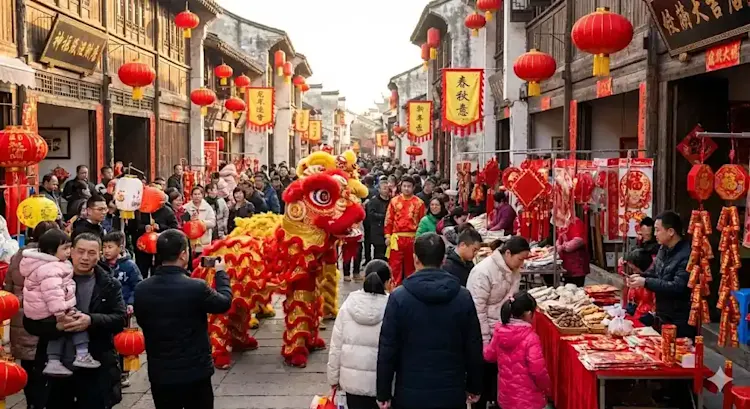
Chinese New Year traditions
Traditions vary by region and family, but these themes show up again and again: reset the home, welcome good fortune, gather with family, and start the year with “good words” and meaningful rituals.
1 Cleaning as a reset
A classic tradition is a thorough cleaning before the new year—often explained as sweeping away lingering bad luck and making space for a fresh start. Make it family-friendly:
Turn it into a 10-minute “reset sprint.”
Give kids a single zone (their backpack area, the shoe corner, the snack shelf).
End with something celebratory: fruit, tea, or a simple “we did it” toast with sparkling water.
2 Red is everywhere for a reason
Red is tied to good luck and protection in many Chinese New Year stories and practices. You’ll see it in lanterns, couplets, clothing, and envelopes. Parent tip: If you’re not decorating big, a small red moment still counts: a red table runner, red paper cutouts in the window, or your kids wearing red socks.
3 Family time (in whatever form fits your life)
In China, travel patterns around Lunar New Year are famously intense because family reunion matters so much. In North America, your “reunion” might be a video call, a potluck, or dinner with two families instead of twenty relatives. The spirit is the same: be together, share food, start the year with warmth.
Internal link slot (end of this section): “Related reading: Chinese New Year traditions” (link to your traditions blog)
Chinese New Year decorations
Decorations can be meaningful without being expensive. Think of them as cues that tell kids: this is a special season.
Fast, high-impact decoration ideas
Front door: a red sign, a paper lantern, or a “welcome” banner (kids can draw it).
Window: simple paper-cut shapes (circles, lantern silhouettes, zodiac animal outlines).
Table: a bowl of oranges/mandarins and one red element.
Kid corner: one craft that stays up all season (a lantern chain, a horse collage, a “good wishes” wall).
A note about symbols
You may see the character for good fortune placed on doors, sometimes oriented differently depending on custom. If that feels intimidating, skip the “rules.” A child-made sign that says “Good luck” in English and gets hung with care can be just as meaningful in a family setting.
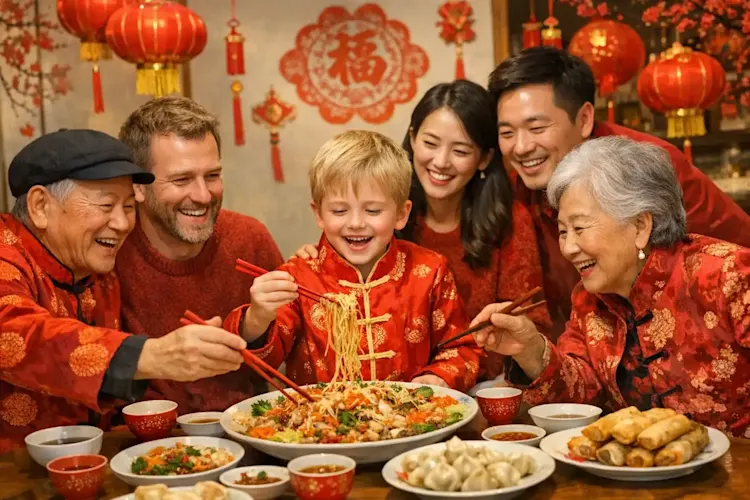
Chinese New Year food
Food is often the easiest way to make the holiday feel real, especially with kids who aren’t naturally into crafts or long explanations. Different regions have different favorites, but “lucky foods” are common across many Chinese New Year celebrations: dishes that symbolize prosperity, togetherness, and abundance.
Family-friendly approach: meaning + one bite
You don’t need to cook a banquet to teach the symbolism.
Pick one dish (dumplings, noodles, fish, rice cakes, tangyuan—whatever your family knows or can easily buy).
Add one sentence of meaning.
Let your kids do one job: stirring, plating, folding, setting out oranges, or writing name cards.
that still feel respectful
Frozen dumplings + a “dipping sauce bar” your kids assemble.
Noodles from a local restaurant, with a short “long-life” wish at the table.
A fruit tray with oranges/mandarins as a hosting ritual.
Chinese New Year greetings
Greetings are where kids often want help—because a greeting is social. It’s not like hanging a lantern where you can do it quietly.
A small set of useful greetings
Two of the most common greetings you’ll see are:
Xin Nian Kuai Le 新年快乐(Happy New Year)
Gong Xi Fa Cai / Kung Hei Fat Choi 恭喜发财(Wishing prosperity; Mandarin/Cantonese romanizations vary)
These are commonly explained as general New Year wishes vs prosperity-oriented wishes, and many families use both depending on context.
What to teach your child (without pressure)
One greeting they can say clearly (even if pronunciation isn’t perfect).
One “reply line” they can use when adults greet them back (even a simple “thank you” is fine).
One role-play: “Say it to me like you’re calling Grandma.”
If your child is a heritage learner who understands more than they can speak, this is often where confidence matters. Kids can feel embarrassed when they know they “should” be able to say something and can’t. Keeping it playful—and practicing a tiny script—helps.
If your child loves Chinese New Year—lanterns, lucky foods, family calls—but freezes when it’s time to actually say a greeting, you’re not alone. A little guided speaking practice can turn this season’s excitement into real confidence, especially for kids who understand more than they can express. LingoAce’s live online Chinese classes (ages 3–15) are one flexible option: kids practice useful phrases in context, build pronunciation gradually, and learn to respond naturally—so the next time relatives call, your child has more than a memorized line. If you’d like to see whether it fits your schedule,you can try a free trial lesson.

Chinese New Year red envelope
Red envelopes (hongbao / lai see) are one of the most recognizable traditions: elders or married adults often give money in red envelopes to younger family members as a symbol of luck and blessing.
Red envelope etiquette that works for modern families
There are different customs across regions, but these guidelines are widely used in family settings:
Give with two hands (or at least with intention and respect).
Encourage the child to say a greeting and “thank you.”
If you’re including money, choose an amount you’re comfortable with; the symbolism matters more than the number.
About amounts: Some guides suggest small, simple ranges (including examples in USD), especially for acquaintances’ children. And if you want the most honest parenting truth: many families treat this as “special money” for the child, but parents often help manage it depending on age—something parents discuss openly in community forums too.
A kid-friendly alternative if you don’t want to do cash
Put in a “kindness coupon” (choose a dessert, pick the movie, stay up 15 minutes later).
Put in a note with a specific wish for the child: “Be brave at school,” “Try something new,” “Keep your kind heart.”
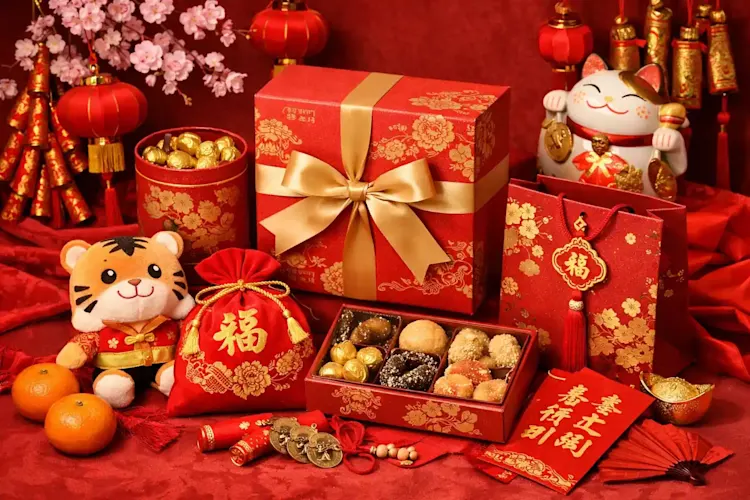
Chinese New Year gifts
Gift-giving varies by family and region. In many circles, the “gift” is food to share (fruit, sweets, tea), a hosting token, or a red envelope for kids.
Safe gift categories (easy wins)
Oranges/mandarins or a fruit basket
Tea, snacks, sweets
Small hosting items (if you know the family well)
Kids’ items with a “new year” theme (books, crafts)
What to avoid (the practical version)
Many gift “don’ts” are wordplay-based or symbolism-based (for example, some items are associated with separation or bad omens). Different sources list overlapping examples such as clocks, pears, umbrellas, and sharp objects. Parent framing: If you’re unsure, stick to fruit, sweets, or tea. It’s hard to go wrong with something shareable.
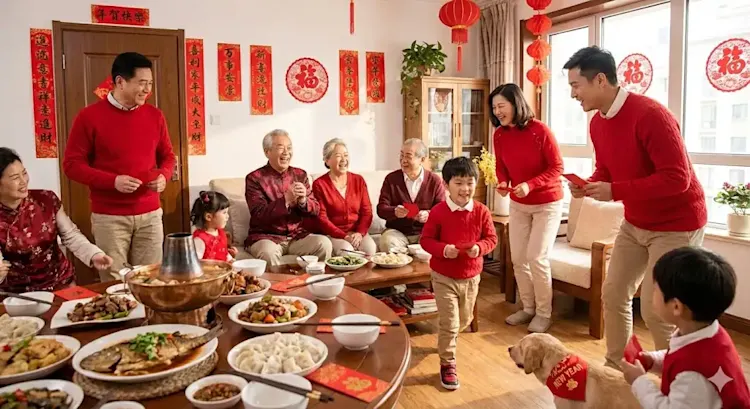
Chinese New Year celebration guide for families
Here are three celebration “levels” you can choose based on time and energy.
The 10-minute version (weeknight friendly)
Everyone wears red (or holds one red item).
One greeting role-play.
Oranges/mandarins on the table.
Quick “wish wall” sticky note: one hope for the year.
The weekend version (still manageable)
Do one decoration craft (paper lantern or window cutouts).
Eat one symbolic food (dumplings/noodles).
Watch a lion dance clip or attend a local community event.
Give a red envelope (cash or note) and take a photo to remember the season.
The hosting version (for relatives or friends)
Set a simple menu: one main, one lucky dish, one dessert.
Give kids a “host role”: greeting at the door, handing out oranges, or collecting wishes for the wish wall.
Keep it light: a celebration is not a performance.
School and classroom moments (without stress)
If your child’s school celebrates Chinese New Year/Lunar New Year:
Send something low-risk: red paper, stickers, a simple craft kit, or a short list of greetings the teacher can read aloud.
Help your child prepare one “show and tell” sentence: what your family does, what you eat, or what you say.
This is a great place to build confidence: kids don’t need a speech; they need one clear sentence they can deliver without freezing.
Social proof and credibility (light touch, parent-relevant)
Parent review signal: On Trustpilot, parents frequently highlight that live lessons can feel engaging and help kids stay consistent—especially when the format is interactive and one-to-one.
Professional reference: Britannica summarizes widely recognized Chinese New Year customs such as cleaning, special foods, and the Lantern Festival as a culminating event. (Encyclopedia Britannica)
Forum reality check: In community discussions, parents often emphasize that hongbao amounts are highly flexible and family-dependent, and many treat it more as a symbolic tradition than a strict “rule.” (Reddit)
FAQ
chinese new year 2026 date
Chinese New Year 2026 falls on February 17, 2026. Many guides describe the celebration period as lasting about 15 days, commonly culminating with the Lantern Festival.
chinese new year decorations
Start with one red anchor (front door or table), then add one kid-made item (lantern or window cutouts). If you’re hosting, focus on what guests will actually see: entryway, table, and a small “wish wall.”
chinese new year traditions
Common traditions include pre-new-year cleaning, family gatherings, symbolic foods, red decor, sharing good wishes, and (in many families) giving red envelopes to children. Traditions vary widely—if you keep the spirit (reset + togetherness + good wishes), you’re doing it right.
chinese new year food
Many families include “lucky foods” tied to prosperity, abundance, and togetherness. The easiest way to do this at home is to choose one dish (dumplings, noodles, fish, rice cakes) and attach one sentence of meaning—kids remember it because they tasted it.
chinese new year celebration
A simple celebration can be: wear red, say one greeting, share one symbolic food, and do one small tradition (a wish wall or a red envelope note). For kids, repetition matters more than doing a long list once.
chinese new year greetings
Two widely used greetings are Xin Nian Kuai Le (Happy New Year) and Gong Xi Fa Cai / Kung Hei Fat Choi (wishing prosperity). You can also text short wishes; it’s generally acceptable to send greetings from New Year’s Eve through the early days of the festival period.
chinese new year red envelope
A red envelope is a traditional New Year gift—often money—for children or younger relatives, symbolizing luck and blessing. If you don’t want to do cash, a wish note or “kindness coupon” keeps the meaning without the stress.
chinese new year gifts
Safe gifts are usually shareable and festive (fruit, tea, sweets). If you’re unsure about taboos, avoid “riskier” symbolic items and stick to food gifts—thoughtful and easy.
When is Chinese New Year 2026?
It’s February 17, 2026.
How long does Chinese New Year last?
It’s commonly described as a festival period of about 15 days, ending with the Lantern Festival.
What is the Chinese New Year zodiac animal for 2026?
2026 is the Year of the Horse, and many references describe it as the Fire Horse year.
Is Chinese New Year the same as Lunar New Year?
“Chinese New Year” is specific to Chinese Spring Festival traditions, while “Lunar New Year” is broader and can refer to similar new year festivals in other countries with their own customs.
What is the Lantern Festival and how is it related to Chinese New Year?
The Lantern Festival is commonly described as the final day of the Spring Festival period, featuring lantern displays and festivities that close the season.
What are Chinese New Year taboos (what not to do)?
Different families follow different “don’ts.” If you’re celebrating casually, your safest approach is to focus on respectful behavior: avoid insulting symbolism, avoid gifting items commonly listed as taboo, and prioritize warmth over rules.
What should I write in a Chinese New Year card or text?
Keep it short and sincere: “Happy New Year!” + one wish (health, joy, prosperity). If you want a Chinese phrase, use a common greeting and add an English line your recipient will understand.
How much money to put in a red envelope (hongbao)?
There’s no single “correct” amount. Many family guides share small, symbolic examples (including USD-friendly suggestions), and parents often treat it as flexible and family-dependent. Choose what you’re comfortable with and keep the focus on the blessing.
Who gives red envelopes to whom?
A common pattern is older relatives (or married adults) giving to children and younger relatives, especially on New Year’s Day. Customs vary, so follow your family’s norm or keep it simple and consistent.
What foods are considered lucky for Chinese New Year?
Many families highlight foods symbolizing prosperity, abundance, and togetherness (often tied to wordplay or shape). If you’re unsure, pick one “lucky food” your family enjoys and give it a meaning kids can repeat.
Chinese New Year gift etiquette: what to avoid?
Multiple etiquette guides recommend avoiding certain symbolic gifts (commonly listed examples include clocks, sharp objects, and certain fruit like pears). When in doubt, choose shareable food gifts.
Conclusion
The best Chinese New Year celebrations aren’t the ones that look perfect—they’re the ones your kids remember. If you do just a few things consistently (one greeting, one symbolic food, one small tradition), your child starts to build a real sense of meaning: this is our season, this is how we start the year, this is what we say to people we love.
And if your child is curious—asking why the symbols matter, wanting to greet relatives but feeling shy—this is the easiest time to turn holiday motivation into real progress. A structured class can help kids move from memorized lines to confident participation. LingoAce is one option families use for live online Chinese learning (ages 3–15), and a trial lesson can help you see if it fits your routine.