You don’t need to be a tea “expert” to enjoy tea culture—but you do need a few tiny reference points so you don’t feel lost at a Chinese restaurant, or when your child asks, “Why are we doing it like this?”
This guide is for North American families (Chinese-heritage and non-Chinese) who want something practical: what Chinese tea traditions look like in real life, what gongfu cha actually is, what the six tea types mean, and how to teach kids manners + cultural confidence without turning your kitchen into a museum.
And yes, we’ll keep it doable. If your week is already packed, you’ll still be able to try one small ritual tonight. That’s kind of the point.
Tea culture: what it actually means
When people say tea culture, they’re usually talking about more than the drink. It’s the habits around it: how you serve it, who you pour for, when you offer it, what you notice (smell, color, warmth), and the small social signals tucked inside those actions.
In China, tea isn’t just “a beverage category.” It’s also a social practice—sharing, hosting, showing respect, pausing the day for a minute. UNESCO even recognizes China’s traditional tea processing techniques and associated social practices as Intangible Cultural Heritage, and it notes the breadth of tea-related skills and community traditions.
What tea culture is not: a strict ceremony you can “mess up” in one move. Most families aren’t doing a full formal performance at home on a Tuesday. They’re just… drinking tea, but with meaning.
A small distinction that helps:
Tea culture = everyday norms + why tea matters socially.
Tea ceremony (in the way many Western articles use the phrase) = a more ritualized, structured format.
Chinese tea can be ritualized, sure—especially in gongfu style—but it often stays casual.

Chinese tea culture basics every beginner should know
Here’s the quiet truth: the “rules” of tea culture are mostly about making others comfortable.
Where tea shows up in real life
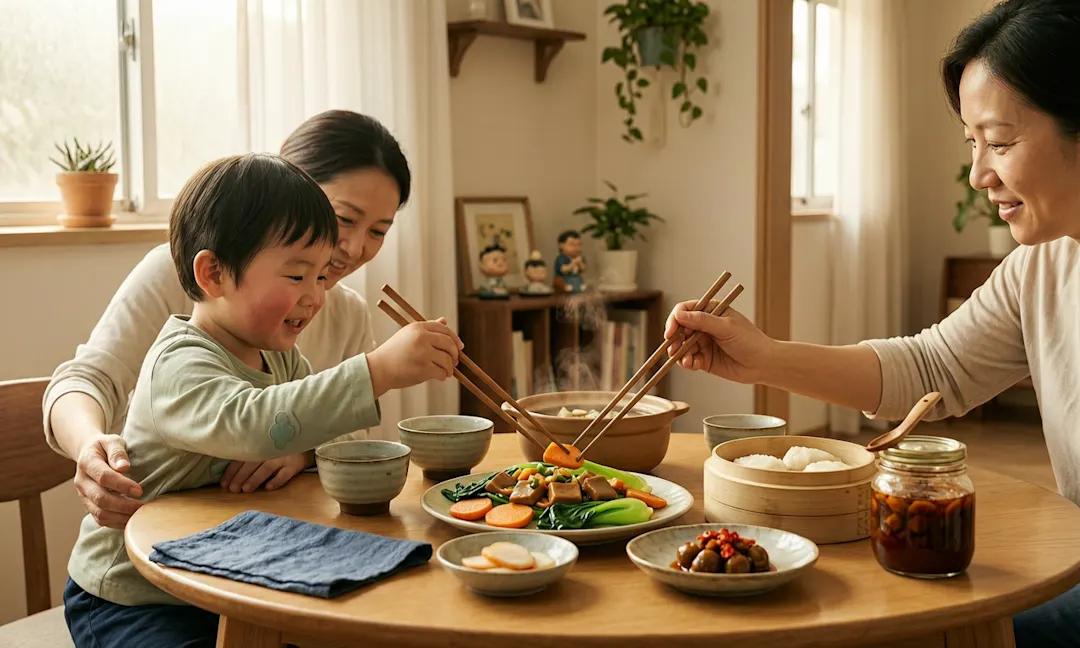
At home: a way to welcome guests without making a big speech.
At meals: tea rounds out food, resets your palate, slows the pace.
In respectful moments: offering tea can signal gratitude, apology, or care (especially between generations).
In social learning: kids pick up manners because there’s a script they can follow.
The “why” behind small actions
A few examples that make the logic click:
Pouring for someone else first = “I see you.”
Keeping the mood calm = tea is a pause button, not a performance.
Paying attention to smell and taste = you’re practicing noticing, not just consuming.
This is where tea culture becomes surprisingly kid-friendly. Kids actually like rules when the rules are simple and make them feel capable.
Beginner misunderstandings
“All tea is the same, it’s just different flavors.”
Not quite. The processing changes the tea in real ways (oxidation, aging, roasting), and that’s why the categories exist.
“Gongfu tea is fancy and expensive.”
You can make it fancy. You don’t have to. We’ll do a minimal version.
Tea culture and the six main Chinese tea types
One of the easiest anchors for tea culture is knowing the six categories. UNESCO’s description explicitly mentions six categories of tea developed across regions and customs: green, yellow, dark, white, oolong, and black.
Here’s a parent-friendly cheat sheet you can screenshot mentally:
Tea type | Processing vibe | What it tends to taste like | Good “starter” for kids? |
Green (绿茶 lǜ chá) | Not oxidized; fresh | grassy, nutty, clean | sometimes (milder ones) |
White (白茶 bái chá) | Minimal processing | light, sweet, soft | yes, often |
Yellow (黄茶 huáng chá) | Like green + gentle mellowing | smooth, less sharp | yes (if you find it) |
Oolong (乌龙 wū lóng) | Partially oxidized; wide range | floral → roasted | yes (choose floral) |
Black/“Red” (红茶 hóng chá) | Fully oxidized | malty, warm | yes (often easiest) |
Dark/Hei (黑茶 hēi chá) | Post-fermented/aged | earthy, deep | depends (older kids) |
Tea culture and gongfu cha: a skill, not a performance
If there’s one practice that people associate with Chinese tea culture, it’s gongfu cha—often explained as “making tea with skill.”
The minimal gongfu setup (what you need vs what’s optional)
Need (minimum):
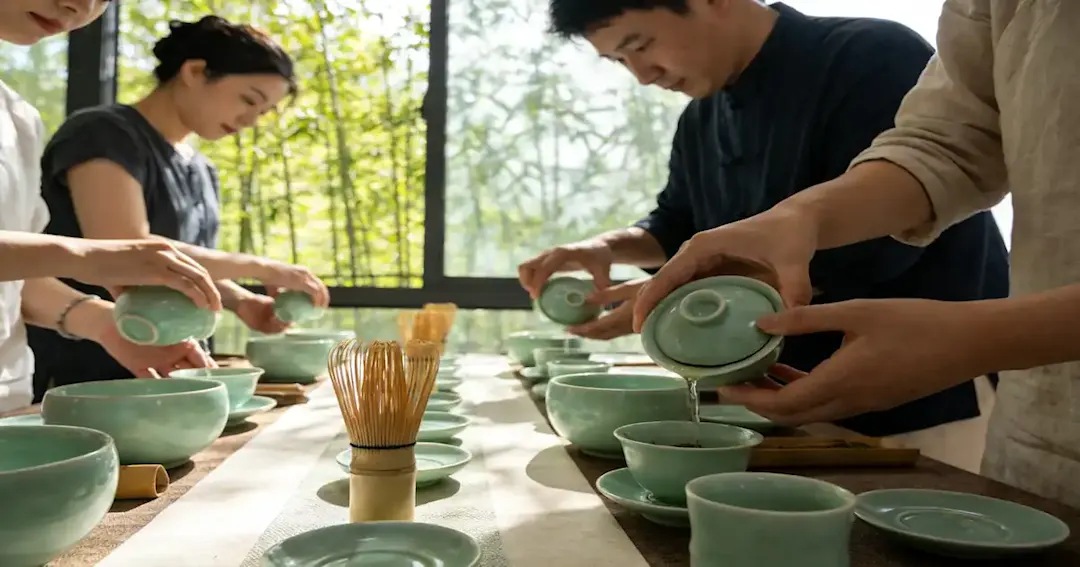
A small teapot or gaiwan (盖碗 gài wǎn) _or_ a small heat-safe teapot you already own
Loose leaf tea
A kettle or pot to heat water
Two small cups (any small cups)
Nice-to-have:
A fairness pitcher (公道杯 gōng dào bēi)
A tea tray that catches spills
A simple strainer
You can absolutely start without the “gear wall.” If your child spills, it’s fine. Tea culture survives.
A simple gongfu flow you can do in 10 minutes
Warm the pot/cups with hot water (pour it out).
Add tea leaves (more than Western brewing, but don’t overthink it).
Rinse quickly (optional; many people do a very fast first pour).
Steep short, pour, sip.
Repeat with slightly longer steeps and notice changes.
If your child is curious about the words that come with tea—food, family traditions, polite phrases—you can turn that curiosity into language confidence. One simple next step is to book a LingoAce trial class and let a trained teacher build a short “culture vocabulary” routine your child can actually use at home.

Tea culture etiquette that prevents awkward moments
Let’s make this practical. The best etiquette tips in tea culture are the ones that stop you from feeling unsure.
At a Chinese restaurant
Let the host or elder lead if you’re with extended family. If not, you can lead—just be calm about it.
Pour for others first (especially elders), then yourself.
Keep cups modestly filled. It signals “I’ll come back and take care of you,” not “I’m done.”
Hosting at home (a simple host script)
If you’re hosting friends and want to bring in tea culture without being weird about it:
“I’ll make a small pot of tea—want to try something floral or something warm and malty?”
“We’ll do a few short steeps; the flavor changes.”
“If you like it, we’ll keep going. If not, no stress.”
That’s it. You’ve just hosted in a culturally grounded way without turning into a tour guide.
The kid angle: “easy manners” kids can own
Kids don’t need 25 etiquette rules. They need two:
Offer tea to someone else first.
Say a simple “please” (in English or Chinese).
If you’re thinking, “My child won’t do that without complaining,” try making it a _role_, not a correction. Roles feel empowering.

Tea culture for kids: teaching it without making it a lecture
Parents often want culture, but they don’t want a nightly seminar. Same.
Here are three ways to teach tea culture that fit real schedules.
1) The 3-minute “smell-first” game
Put the dry leaves in a cup.
Ask: “What does it smell like?”
Then brew and ask again: “Did it change?”
Kids start building descriptive language—sweet, roasted, grassy, floral—without realizing they’re practicing vocabulary.
2) The “one sentence” family ritual
At the first sip, everyone says one sentence:
“Today the tea tastes ____.”
“Today the tea reminds me of ____.”
It sounds cheesy, but it works. It slows everyone down. And slowing down is, honestly, a hidden core of tea culture.
3) The “culture bridge” moment (grandparents, relatives, identity)
If your child has Chinese-speaking relatives, tea is a gentle bridge topic:
It’s safe.
It’s polite.
It has built-in phrases.
FAQ
1) What is tea culture in China for beginners?
Tea culture in China is the everyday practice of making, serving, and sharing tea—with social meaning behind small actions (like pouring for others first). It’s often casual, not a strict ceremony.
2) What’s the difference between tea culture and a tea ceremony?
Tea culture is broader: daily habits, etiquette, and social use. A tea ceremony is more structured and ritualized. Gongfu brewing can be ritual-like, but many families keep it simple.
3) What is gongfu cha in tea culture?
Gongfu cha is a brewing style focused on “making tea with skill,” using short steeps and repeated infusions to taste how tea changes. It’s part of Chinese tea culture, but it doesn’t have to be expensive or formal.
4) What are the six types of Chinese tea?
The six traditional categories commonly referenced in Chinese tea culture are green, white, yellow, oolong, black, and dark tea—largely defined by processing methods.
5) How can I start a tea culture routine with kids?
Pick one tea, keep the ritual short (3–10 minutes), and give your child a role (tea helper). Use one repeated question like “What does it smell like today?” Consistency matters more than “perfect technique.”
6) What’s one tea culture etiquette rule that always works?
In most settings, pouring for others first (especially elders or guests) is a safe, respectful default within tea culture.
Conclusion
If you remember nothing else about tea culture, remember this: it’s not about being “right.” It’s about being thoughtful—serving others, slowing down, noticing, and sharing a small moment.
Start with one tea your family actually enjoys. Try the 10-minute gongfu flow once (no fancy tools needed). Give your child one job—tea helper—and let that become a quiet confidence builder.
If you want your child to build real Mandarin confidence alongside culture—so they can talk about family traditions, food, and tea culture without hesitation—book a LingoAce trial class and ask for a short “culture vocabulary” plan tailored to your child’s age. It’s a simple next step, and it saves parents from reinventing everything week to week.