The Cold Food Festival is one of those cultural topics people stumble into for all kinds of reasons. Sometimes it starts with a calendar question (“Is this the same as Qingming?”). Sometimes it starts with a story (a loyal figure, a tragic fire, a taboo against cooking). And sometimes it starts with food—because “cold food” sounds like it should be a modern health trend, when it’s actually something much older.
This 2026 Cold Food Festival guide is designed to be practical, not mystical. You’ll get a quick definition you can repeat in one breath, the origin story most commonly associated with the festival (and how to think about it without turning legend into fact), the classic taboo around fire, and the foods people connect with this season today. We’ll also clear up the most common confusion: how the Cold Food Festival (often called the Hanshi Festival) relates to Qingming (Tomb Sweeping Day), and why many modern explanations talk about them together.
If you’re exploring Chinese festivals more broadly, we’ve also put together a collection of related blog posts covering the basics of the major holidays, how to look up festival dates and key traditions, and how cultural customs connect to everyday language. After you finish this Cold Food Festival guide, browsing a few companion posts can make the bigger picture much easier to connect.
Cold Food Festival in 60 seconds
If you only remember one paragraph, make it this one.
The Cold Food Festival (often referred to as the Hanshi Festival) is a traditional observance historically associated with eating cold foods and avoiding the use of fire for cooking—at least in its classic description. It’s commonly linked to an origin story about loyalty and remembrance, and it appears in the same seasonal window as Qingming, which is why people often discuss the two together.
Cold Food Festival: the simplest definition
What it is: A traditional observance associated with “cold food” and (historically) a no-fire taboo.
When it is: In the Qingming season (early spring), often described as falling shortly before Qingming.
Why it matters: It’s an example of how Chinese seasonal customs blend story, ethics (loyalty/remembering), and everyday practice (food and taboos).
When is Cold Food Festival in 2026?
Most English explanations describe the Cold Food Festival as occurring in early April, close to Qingming. Different sources phrase timing differently—some describe it as a certain number of days after the winter solstice, while others simply place it immediately before Qingming. For everyday use in 2026, what you typically need is the season and relationship: Cold Food Festival sits in the Qingming window and is often discussed right alongside Qingming.
Fast facts you can use
Chinese name commonly seen: 寒食节 (Hanshi Festival / Cold Food Festival)
Key concept: no fire (historically) → cold foods
Common modern association: seasonal spring foods, often mentioned together with Qingming traditions
Cold Food Festival origin story (Jie Zitui): what to know and what’s legend
Most modern explainers anchor the Cold Food Festival in a story: Jie Zitui (介子推), remembered for loyalty. The narrative typically goes like this: Jie Zitui remained loyal during political upheaval, later refused reward or recognition, and was involved in a tragic outcome connected to fire. In many retellings, the “no fire” practice emerges as remembrance—an ethical lesson expressed through daily ritual.
Here’s the practical way to hold this story in your head without getting stuck:
Treat the origin story as the cultural explanation people repeat, not as a courtroom transcript.
Focus on the values the story conveys—loyalty, integrity, remembrance—because that’s what gives the festival its meaning in everyday conversation.
Notice what the story does culturally: it turns an abstract value (“loyalty”) into something you can practice (a taboo, a meal, a day of remembrance).
If you’ve ever wondered why the Cold Food Festival still gets mentioned even when it isn’t widely “celebrated” in a big modern way, this is part of the answer. Stories persist because they give people a shared reference point. Even a small tradition can carry a big idea.
Cold Food Festival customs and taboos (the “no fire” rule explained)
The headline concept of the Cold Food Festival is right there in the name: cold food. But the taboo that makes it memorable is the idea of avoiding fire.
What the no-fire taboo meant historically
In classic descriptions, “no fire” means no cooking. That’s a dramatic constraint if you imagine daily life without modern appliances, refrigeration, or easy ready-to-eat foods. Historically, the taboo gives the day its seriousness: you’re not just “eating something cold.” You’re participating in a restraint that signals remembrance.
That restraint also does something psychologically familiar: it makes meaning tangible. People don’t only remember with words—they remember with action, discomfort, and pattern.
What people did instead
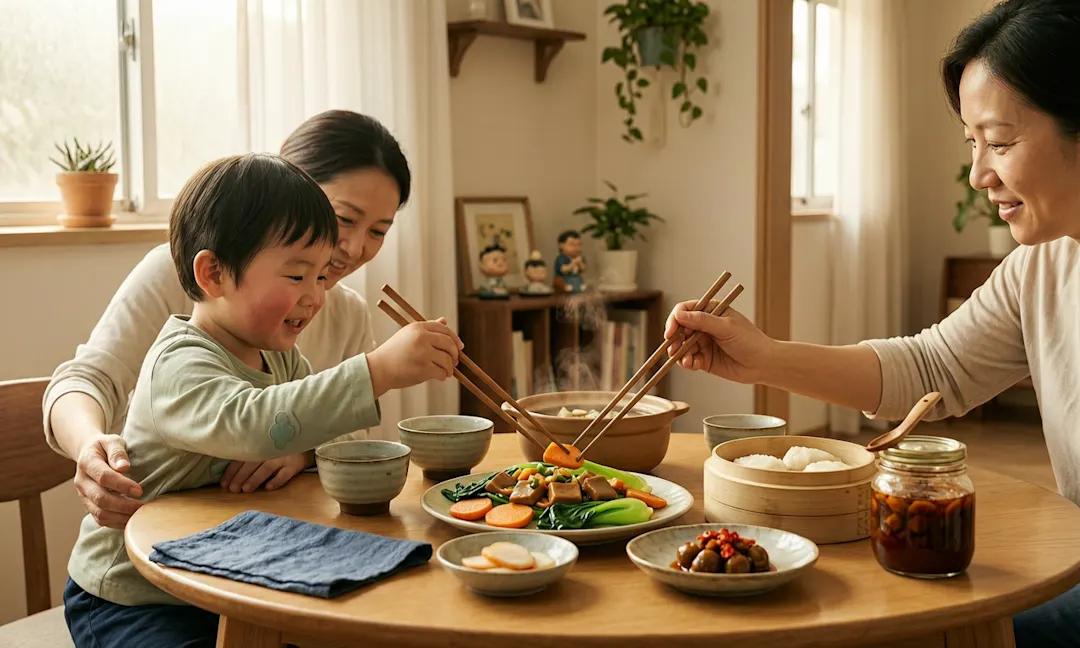
If you can’t cook, you prepare in advance, rely on preserved foods, or eat foods meant to be eaten without reheating. This is where the Cold Food Festival becomes very concrete: it’s as much about logistics as it is about symbolism.
In modern retellings, “cold food” can also be interpreted more loosely—foods traditionally associated with the season, foods eaten during Qingming outings, or symbolic seasonal snacks.
What’s still practiced in 2026 vs. what’s symbolic
In 2026, many people who reference the Cold Food Festival are doing one (or more) of these things:
Naming the festival as part of the Qingming season (especially in cultural explanations).
Referring to it when discussing Qingming-related customs and spring remembrance.
Using it as a cultural reference point for the idea of cold foods / no fire, even if they’re not literally avoiding cooking.
For North America readers, this is the key translation: the Cold Food Festival often shows up today more as a concept and a story, and less as a standalone, universally practiced “day off” with fixed modern behaviors.
Cold Food Festival foods (what people eat and why these foods show up)
If the taboo is the headline, the foods are what make the Cold Food Festival feel real—because food is how culture sticks.
Qingtuan (青团): why it’s linked to this season
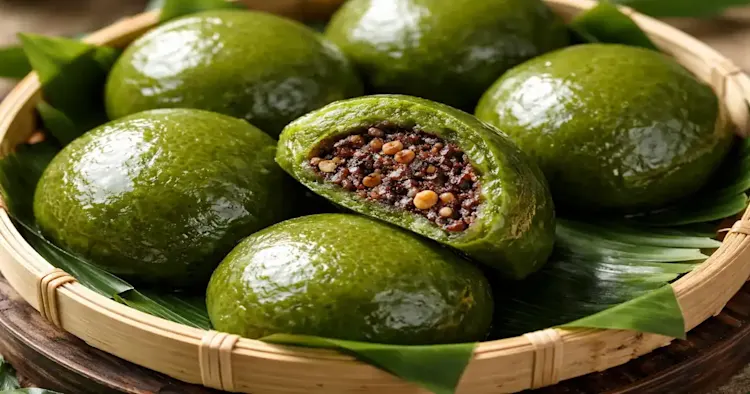
Qingtuan—soft green rice balls often filled with sweet bean paste or other fillings—are commonly associated with the Qingming season, and they frequently appear in discussions that mention the Cold Food Festival alongside Qingming. Practically, this makes sense: seasonal foods cluster around seasons, and people learn festival culture through what’s eaten and shared.
If you’re reading about the Cold Food Festival in English, you’ll often see qingtuan used as a recognizable food anchor: “this is what you might see in early April,” even if your family or community doesn’t personally make it.
What “cold food” looks like in practice
Depending on region and household, “cold food” can mean:
Foods prepared ahead of time and eaten as-is
Simple staples that don’t need reheating
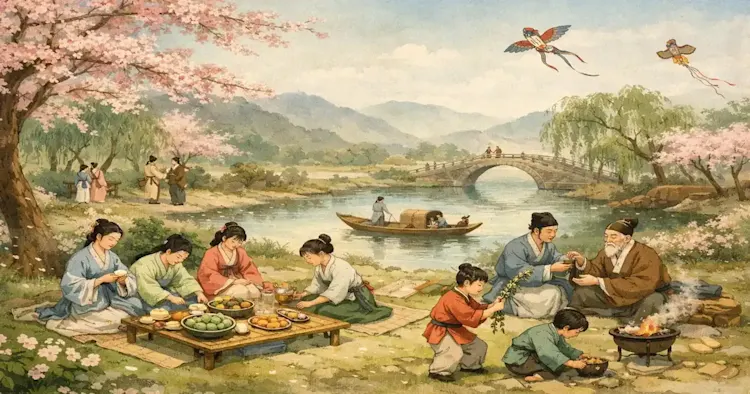
Seasonal snacks brought outdoors during spring visits or family outings
A useful way to think about it is: the Cold Food Festival is less about one mandatory dish and more about a logic—foods compatible with the no-fire idea and the spring season.
Cold Food Festival vs Qingming: the common confusion
If you’ve ever asked, “Wait, is the Cold Food Festival just Qingming?” you’re not alone. This is the most common confusion in English-language search.
Why they’re often explained together
Many explainers describe Hanshi (Cold Food Festival) as occurring shortly before Qingming and influencing the seasonal customs that later became closely associated with Qingming observance. Over time, people’s actual practices and the way they explain them can blend—especially when both are tied to spring remembrance and seasonal routines.
So you’ll often see:
Hanshi discussed as a cultural/historical predecessor or companion
Qingming discussed as the more widely recognized modern observance (especially outside China)
What people typically mean by Qingming in everyday conversation
In many modern contexts, Qingming refers to remembrance traditions—often summarized as visiting and caring for ancestors’ graves, offering respects, and spending time outdoors in early spring.
This matters because it explains why English searches for Cold Food Festival often lead you straight into Qingming content. People are really trying to understand the whole seasonal cluster.
A simple timeline that helps
Think of it like a season, not a single day with hard borders:
Hanshi / Cold Food Festival (concept + earlier tradition) → Qingming season (broader remembrance customs + modern visibility)
Once you hold it this way, the confusion becomes less frustrating. The question stops being “Which one is correct?” and becomes “What does each term highlight?”
Cold Food Festival highlights taboo + story + older framing.
Qingming highlights broader seasonal remembrance customs in modern usage.
Cold Food Festival today: what changed, and why it still gets mentioned
In 2026, many people will recognize “Qingming” faster than “Cold Food Festival,” especially outside China. That doesn’t mean the Cold Food Festival is irrelevant—it means its visibility has shifted.
Why it may feel “less prominent” now
A few common reasons cultural observances become less standalone in modern life:
People compress multiple traditions into one seasonal period.
Work/school schedules shape what is practically observed.
Cultural references survive through stories, foods, and language, even when the strict taboo isn’t practiced literally.
So the Cold Food Festival often remains as a cultural reference point—especially in explanations, literature references, and “why this season matters” discussions.
Related observances outside China
You may also see the Hanshi concept mentioned in cross-cultural context (for example, related observances in Korea and Vietnam). If you’re writing for North America readers, this can be a helpful “zoom out” moment: seasonal remembrance themes recur across cultures, and names/traditions travel and transform.
The key is tone: mention it as a respectful comparison, not as “one festival copied another.” Cultures develop in conversation with each other, and festivals often share themes because humans share needs: memory, gratitude, renewal.
Cold Food Festival vocabulary mini-lesson (terms and phrases you can actually use)
If your interest in the Cold Food Festival is cultural (not just calendar-based), learning a handful of words makes the topic more vivid. You’ll notice these terms in articles, videos, and family conversations.
Key words
Cold Food Festival / Hanshi Festival: 寒食节 (Hánshí Jié)
Qingming Festival: 清明节 (Qīngmíng Jié)
Ancestor / ancestors: 祖先 (zǔxiān)
To honor/remember ancestors: 祭祖 (jìzǔ)
Tomb-sweeping: 扫墓 (sǎomù)
Qingtuan: 青团 (qīngtuán)
Cold food: 冷食 (lěngshí)
5 easy sentences (pinyin + meaning)
今天是寒食节。 (Jīntiān shì Hánshí Jié.) — Today is the Cold Food Festival.
寒食节和清明节常常一起被提到。 (Hánshí Jié hé Qīngmíng Jié chángcháng yìqǐ bèi tí dào.) — Cold Food Festival and Qingming are often mentioned together.
寒食节的传统和“冷食”有关。 (Hánshí Jié de chuántǒng hé “lěngshí” yǒuguān.) — The tradition is connected to “cold food.”
清明节很多人会祭祖。 (Qīngmíng Jié hěnduō rén huì jìzǔ.) — On Qingming, many people honor ancestors.
这个季节常见的食物有青团。 (Zhège jìjié chángjiàn de shíwù yǒu qīngtuán.) — A common seasonal food is qingtuan.
Here’s a small motivation nudge that tends to be true in real life: cultural vocabulary is easier to remember when it’s tied to a season and something sensory (like food). The Cold Food Festival gives you both.
If festival culture is already coming up in your life—maybe your partner’s family talks about Qingming season traditions, maybe you’re curious about the Chinese terms behind what you’re reading, or you’d simply like your child to grow up able to follow everyday cultural conversations—then using topics like the Cold Food Festival as a Mandarin entry point can be surprisingly practical.
A LingoAce trial class is one low-pressure way to build that bridge: live speaking practice, a teacher who can explain the “why” behind the words, and lessons that connect language with real cultural touchpoints (festivals, foods, greetings) so it doesn’t feel abstract. It works whether you’re learning for yourself, learning alongside your child, or supporting a more natural cultural connection at home.

Cold Food Festival at home: simple, respectful ways to talk about it
Even if you don’t “celebrate” the Cold Food Festival, you may still want to talk about it in a way that’s accurate and not overblown—especially in North America where people often encounter it through school, friends, or online content.
Three adult-friendly ways to explain it (without getting mystical)
The “seasonal cluster” explanation: “It’s a traditional observance linked to the Qingming season—often explained alongside Qingming because the customs and timing overlap.”
The “story + practice” explanation: “It’s tied to a loyalty story, and historically it included a no-fire taboo—so people ate cold food as a form of remembrance.”
The “modern lens” explanation: “Today it’s often referenced more in explanations and cultural learning, while Qingming is the name people recognize most.”
A light family angle (optional, not the whole point)
If it comes up at home, keep it small and concrete:
One question that works: “What makes a tradition feel meaningful—story, food, or the people you share it with?” That question keeps the Cold Food Festival from becoming a trivia contest and turns it into a values conversation.
What to avoid saying
Avoid treating it as a rigid rule that everyone follows the same way in 2026.
Avoid presenting the origin story as a proven historical record if you can’t verify details.
Avoid turning “cold food” into a moral purity thing. The taboo is cultural, not a diet plan.
That last point sounds obvious, but it’s exactly how cultural topics get distorted online.
FAQ
What is the Cold Food Festival (Hanshi Festival)? The Cold Food Festival (Hanshi) is traditionally associated with eating cold foods and, in classic descriptions, avoiding fire for cooking. It’s commonly linked to an origin story about loyalty and remembrance and is often discussed alongside Qingming.
When is the Cold Food Festival in 2026? It falls in early spring in the Qingming season and is often described as occurring shortly before Qingming. Many everyday explanations focus on its seasonal placement rather than treating it as a widely observed standalone holiday in 2026.
Why did people avoid fire during the Cold Food Festival? In common retellings, the no-fire taboo is connected to remembrance and the festival’s origin story. Practically, it created a day defined by restraint and preparation.
What foods are associated with the Cold Food Festival? “Cold food” is the defining idea, and modern explanations often mention seasonal foods connected to the Qingming window, including qingtuan (青团). Specific foods vary by region and family practice.
Is the Cold Food Festival the same as Qingming? Not exactly. The Cold Food Festival (Hanshi) is often described as an earlier or companion observance in the same seasonal period, while Qingming is the more widely recognized modern festival name associated with spring remembrance customs.
Is the Cold Food Festival still celebrated today? In 2026, it’s often referenced in cultural explanations and seasonal discussions, and sometimes observed in smaller or symbolic ways. Modern public observance is commonly associated more strongly with Qingming.
Conclusion
The Cold Food Festival is easy to misunderstand because it lives at the intersection of story, taboo, and season. In classic descriptions, it’s tied to a no-fire tradition and cold foods; in modern discussion, it often appears as part of the broader Qingming season and as a cultural reference point for remembrance and spring customs.
If you’re in North America, the most useful way to hold the Cold Food Festival in 2026 is not as a rigid “everyone does this” holiday, but as a meaningful thread: a name you’ll see in explanations, a story that carries values like loyalty and integrity, and a set of food-and-season cues that help you understand why Qingming season traditions look the way they do.
And if your curiosity is language-shaped—because you want to recognize terms like 寒食节, 清明节, or 青团, and use them naturally—this is one of those topics where culture makes vocabulary easier to remember.
If festival culture is your entry point into learning Mandarin—and you want a path that builds real speaking confidence while also supporting your family’s cultural connection—consider trying a LingoAce trial class to see if the teaching style and lesson format fit your goals.