In the weeks leading up to the new moon in January or February, a common question arises in workplaces, schools, and communities worldwide: Is there a difference between "Lunar New Year" and "Chinese New Year," or are they just two names for the same holiday?
While these terms are frequently used interchangeably in English, they are not synonymous. Using them correctly is not just a matter of semantics; it is a matter of cultural accuracy and respect.
It’s not just about semantics; it’s about respect. For anyone trying to raise culturally aware kids, knowing when to say which greeting is a small but powerful way to show inclusivity. We’re going to look at the history, the different traditions, and—most importantly—the social etiquette to keep you from making a faux pas.
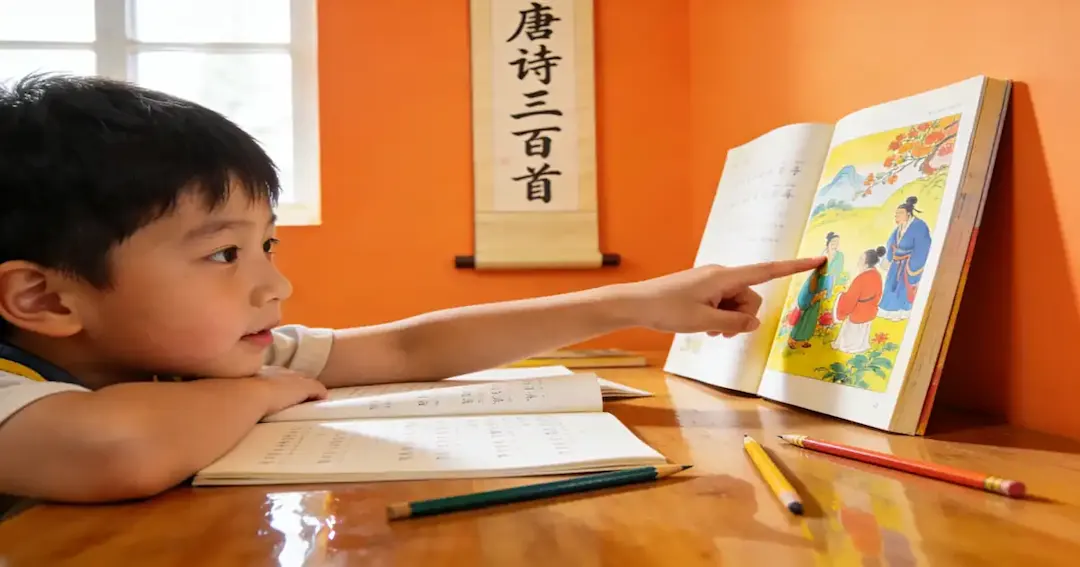
Ultimately, definitions can only explain what happens; language explains why. To grasp the full feeling behind these traditions, engagement with the original language is key.Platforms like LingoAce offering immersive experiences that help children navigate these nuances not just with facts, but with genuine cultural confidence.
The Core Distinction: Event vs. Tradition
To keep them straight, you have to distinguish between the calendar and the culture.
Lunar New Year describes the when. It refers to the turning of the lunisolar calendar, an astronomical event observed by many different cultures in Asia.
Chinese New Year describes the how. It refers to the specific way Chinese culture celebrates that event—with its own unique myths, foods, and customs.
In simple terms: All Chinese New Year celebrations happen during the Lunar New Year, but the term "Lunar New Year" is bigger—it includes Korean, Vietnamese, and other traditions that look very different from the Chinese one.

Deep Dive: Chinese New Year (Spring Festival)
In China, if you say "Lunar New Year," it might sound a bit formal or foreign. Locals call it Chunjie (Spring Festival). It is the heartbeat of the calendar, marking the shift from winter to spring farming.
The Vibe: Scaring Away the Monster Everything about this holiday—the aggressive use of red, the deafening firecrackers, the drums—traces back to the Legend of Nian. The story goes that a beast named Nian feared loud noises and the color red. So, the traditions aren't just for decoration; historically, they were "survival tactics" turned into celebration.
What Makes It "Chinese"?
The Aesthetic: It is strictly Red. You won't see white or black (traditionally associated with funerals).
The Food of Puns: Dishes are chosen because they sound like lucky words. We eat fish (Yu) because it sounds like "surplus," and dumplings (Jiaozi) because they look like silver ingots.
Deep Dive: The "Lunar New Year" Umbrella
While the calendar is shared, the party looks very different depending on where you land. "Lunar New Year" is the correct term when acknowledging the distinct, independent traditions of China's neighbors.
South Korea: Seollal In Korea, the holiday is called Seollal, and the vibe is completely different from China.
The Look: Instead of China's lucky red, Korean families wear the Hanbok in vibrant, diverse colors—pinks, greens, blues, and whites.
The Taste: There are no dumplings here. The main event is Tteokguk (sliced rice cake soup). A charming tradition says you don't technically turn a year older until you've finished your bowl.
The Ritual: It’s quieter and spiritual, focusing heavily on Charye (ancestor memorial services).
Vietnam: Tết In Vietnam, it is Tết. While it shares roots with China, the flavor is uniquely Vietnamese.
The Zodiac Twist: This is a fun fact for kids: Vietnam replaces the Rabbit with the Cat, and the Ox with the Water Buffalo.
The Flowers: While China uses red lanterns, Southern Vietnam decorates with bright yellow apricot blossoms (Ochna integerrima).
The Icon: The essential food is Bánh Chưng, a square sticky rice cake wrapped in banana leaves, symbolizing the gratitude for the earth.
Comparative Analysis: Lunar New Year vs. Chinese New Year
Although these festivals are anchored to the same lunar calendar, regarding them as identical is a mistake. They share deep historical roots, yes, but centuries of regional evolution have created distinct cultural identities. For global professionals, the ability to distinguish between them is a mark of sophistication—a move from simple vocabulary to actual cultural precision.
Below is a comparative analysis of the three fundamental differences that define the boundary between the general 'Lunar New Year' and the specific 'Chinese New Year.'
1. Scope and Nomenclature: Specificity vs. Inclusivity
The primary distinction lies in the intended scope of the terminology.
Chinese New Year (Chunjie): This term refers specifically to the traditions, myths, and customs associated with Han Chinese culture. It is a national and ethnic identifier. Using this term implies a connection to Chinese history (such as the Legend of Nian) and specific practices (like the Lion Dance).
Lunar New Year: In the context of the January/February holiday, this is the broader, inclusive term regarding the East Asian Lunisolar New Year. It acknowledges that distinct cultures—including Korean (Seollal) and Vietnamese (Tết)—observe the same astronomical date but possess independent cultural identities.
Professional Application: In a homogenous setting (e.g., a localized event in Beijing), "Chinese New Year" is accurate. However, in diverse settings—such as multinational corporations or international schools—'Lunar New Year' is the professional gold standard. It serves as an inclusive umbrella that welcomes all observing cultures without erasing their individual identities.ng cultures without subsuming them under a single national label.
2. The Semiotics of Color: Red vs. White Envelopes
Perhaps the most critical visual difference—and the most common source of cross-cultural etiquette errors—is the symbolism of color regarding monetary gifts.
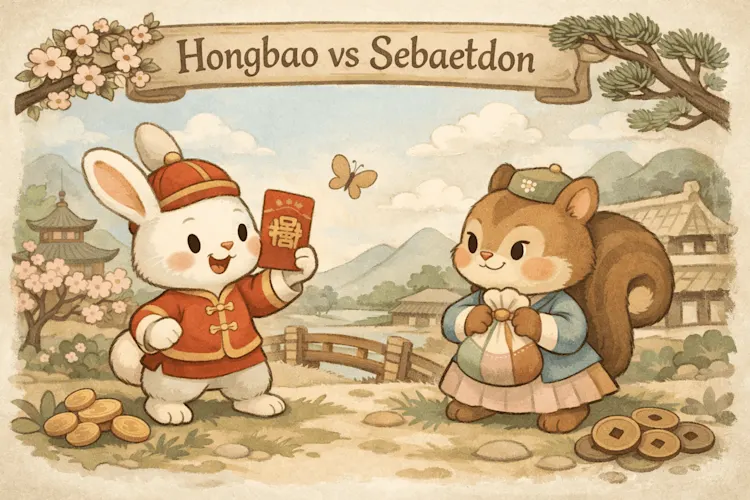
In Chinese Tradition (Hongbao): The color red is non-negotiable. It symbolizes vitality, combustion, and the warding off of evil spirits. The envelope itself is the primary carrier of luck. Critical Note: In Chinese symbolism, white is strictly associated with funerals and mourning. Presenting a white envelope during the festival is a severe cultural taboo.
In Korean Tradition (Sebaetdon): The aesthetic values differ markedly. It is customary for elders to present money to children in white or subtly patterned envelopes. In this cultural context, white symbolizes purity and new beginnings, devoid of the negative associations found in Chinese culture.
3. Culinary Symbolism: Wealth vs. Longevity vs. Earth
While feasting is a universal component of the celebration, the symbolic intent behind the menu varies by region.
China (Focus on Prosperity via Homophones): The Chinese menu is often linguistically driven. Dishes are selected because their names sound like auspicious words.
Example: Fish (Yu) is essential because its pronunciation is identical to the word for "surplus" or "abundance."
Example: Dumplings (Jiaozi) are consumed because their shape mimics ancient gold and silver ingots, representing the influx of wealth.
Korea (Focus on the Passage of Time): The culinary focus is on longevity and the official marking of age.
Example: Rice Cake Soup (Tteokguk) features long, cylindrical rice cakes symbolizing a long life. Culturally, the act of consuming this soup is synonymous with turning one year older.
Vietnam (Focus on Agrarian Gratitude): The symbolism is deeply rooted in the land and harvest.
Example: Square Sticky Rice Cake (Bánh Chưng) is the holiday staple. Wrapped in banana leaves and filled with mung bean and pork, its square shape represents the Earth, emphasizing gratitude for nature and ancestors.
Professional Etiquette: When to Use Which Term?
This is a common dilemma for parents writing to teachers or professionals sending corporate communications.
Scenario | Recommended Term | Why? |
Sending an email to a diverse team | "Happy Lunar New Year" | Inclusive of Korean, Vietnamese, and Chinese colleagues. |
Attending a "Spring Festival" Gala | "Happy Chinese New Year" | The event is specifically framing the Chinese tradition. |
Visiting a Korean friend's home | "Happy New Year" or "Happy Seollal" | Using "Chinese New Year" here would be culturally inaccurate. |
School Classroom Setting | "Lunar New Year" | Unless the lesson is specifically about China, using the broader term teaches students inclusivity. |
The Role of Language in Cultural Understanding
The debate of Lunar New Year vs. Chinese New Year ultimately stems from the complexity of translation. In the original languages, there is rarely confusion.
Chinese speakers say Chunjie or Xinnian.
Korean speakers say Seollal.
Vietnamese speakers say Tết.
The confusion only exists in English when we try to group distinct cultures under one label.
For parents who want their children to navigate these nuances with sophistication, learning the language is the most effective tool. Understanding that Chunjie literally means "Spring Festival" helps a child understand why the holiday focuses on farming and nature.
This is where LingoAce serves as a vital partner. By providing professional, immersive Chinese language instruction, LingoAce helps students go beyond surface-level definitions. Students learn the historical context, the specific greetings, and the cultural reasoning behind the traditions, turning them from passive observers into culturally intelligent global citizens.
Conclusion
In summary, while Chinese New Year and Lunar New Year often fall on the same dates, they are not interchangeable terms.
Chinese New Year is a specific cultural celebration originating from China.
Lunar New Year is the astronomical event celebrated distinctively across Asia.
Acknowledging these differences is not about being "politically correct"; it is about being precise and respectful of the rich diversity within Asian cultures. Whether you are enjoying Jiaozi, Tteokguk, or Bánh Chưng, the spirit of the holiday remains the same: honoring ancestors, gathering with family, and welcoming the future with hope.
By teaching children these distinctions, we equip them with the empathy and knowledge to thrive in a connected world. To support their journey in mastering these cultural and linguistic nuances, explore LingoAce’s curriculum and open the door to a deeper understanding of the world.