If you’ve ever typed good in chinese and hoped for one perfect answer… welcome. The tricky part isn’t that Chinese is “hard.” It’s that English good is a lazy Swiss-army word. We use it for praise, agreement, food, skills, “fine whatever,” and even “I’m trying to end this conversation politely.”
This list fixes that. Fast. Copy-paste friendly, kid-friendly, and (most importantly) it helps you stop guessing.
what “good in chinese” do you mean right now?
Here’s the “don’t overthink it” rule I use with kids:
You’re agreeing / saying OK → 好的 / 可以 / 行 / 没问题
You’re praising someone → 真棒 / 做得好 / 很厉害 / 进步很大
You’re judging quality (food, product, idea) → 不错 / 挺好 / 很棒 / 太赞了
You mean “good at” → 擅长 / 很会 / 特别会
You mean “fine…” (reluctant OK) → 好吧 / 还行吧 / 行吧
If your child only learns 好 = good, they’ll still sound “stuck.” Not wrong, just… stuck. And then they avoid speaking. That’s the real cost.
“OK / Sure” replies
This is the daily life version of good in chinese: replying to a teacher, a parent, a friend, a text.
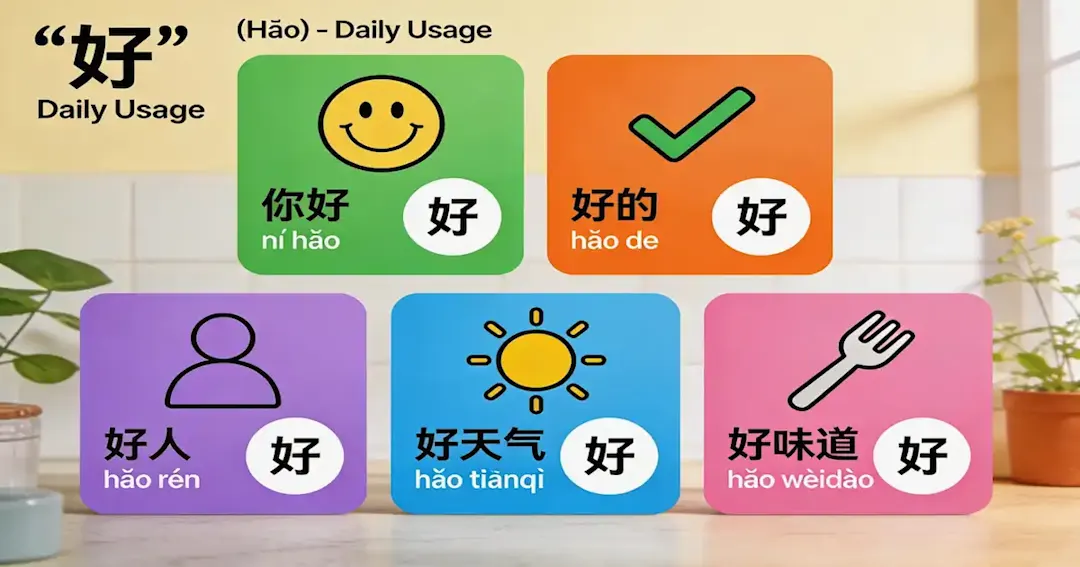
好的 (hǎo de) — polite, safe; “Okay.”
好呀 (hǎo ya) — friendly; sounds warm
好啊 (hǎo a) — upbeat agreement
可以 (kě yǐ) — “Sure / that works”
行 (xíng) — casual “fine / works”
没问题 (méi wèn tí) — no problem
当然 (dāng rán) — of course
行吧 (xíng ba) — “fine then” (a bit reluctant)
好吧 (hǎo ba) — “okay…” (often reluctant)
Praise that’s better than 很好
Parents search good in chinese and then they end up needing praise lines. Because homework. Because piano. Because you’re trying to build confidence without a lecture.
Try these instead of repeating 很好 30 times a week:
真棒 (zhēn bàng) — awesome
你太厉害了 (nǐ tài lì hai le) — you’re amazing
做得好 (zuò de hǎo) — good job
你进步很大 (nǐ jìn bù hěn dà) — you improved a lot
很用心 (hěn yòng xīn) — you put in real effort
我看见你在努力 (wǒ kàn jiàn nǐ zài nǔ lì) — I see you trying
继续加油 (jì xù jiā yóu) — keep going
If you’re thinking, “I can copy these, but I’m not confident correcting tones,” you’re not alone. A short LingoAce trial class can be a nice reset—especially for kids who understand more than they speak. LingoAce-style 1:1 feedback (tone, rhythm, usable phrases) is usually what unlocks the “oh, I can say it” moment.

Food / looks / “good to…” phrases
This is where English “good” splits into patterns, and it’s one of the easiest wins for good in chinese.
好吃 (hǎo chī) — good to eat / tasty
好喝 (hǎo hē) — good to drink
好看 (hǎo kàn) — looks good
好听 (hǎo tīng) — sounds good
好玩 (hǎo wán) — fun
好用 (hǎo yòng) — useful / works well
好学 (hǎo xué) — easy to learn (also “nice to study”)
A quick realism check: kids love saying 太好吃了 for everything. It’s cute… and also a bit much sometimes. “不错” is your calmer middle ground.
“Good at / good idea / good person” (different Chinese, different meaning)
This is the sneaky part of good in chinese. Same English word, different Chinese choices:
Good at…
擅长 (shàn cháng) — be good at (more formal)
很会 (hěn huì) — really good at (natural in speech)
特别会 (tè bié huì) — especially good at
Good idea…
好主意 (hǎo zhǔ yì) — good idea
这个想法不错 (zhè gè xiǎng fǎ bú cuò) — that idea is pretty good
靠谱 (kào pǔ) — reliable / solid (very modern spoken vibe)
Good person / good personality…
人很好 (rén hěn hǎo) — they’re a good person
性格很好 (xìng gé hěn hǎo) — nice personality
人挺好的 (rén tǐng hǎo de) — they’re pretty nice (casual)
60 “good in chinese” lines by meaning
Use this as your home base. I kept the English short on purpose—you’ll scan faster.
Meaning of “Good” | Chinese | Pinyin | When to use |
Basic “good/OK” | 好 | hǎo | quick agreement |
Polite OK | 好的 | hǎo de | safe reply |
Friendly OK | 好呀 | hǎo ya | warm, casual |
Upbeat OK | 好啊 | hǎo a | happy agreement |
Reluctant OK | 好吧 | hǎo ba | “okay…” |
“Works” | 可以 | kě yǐ | acceptable/OK |
“Fine” | 行 | xíng | casual OK |
“No problem” | 没问题 | méi wèn tí | confident yes |
“Of course” | 当然 | dāng rán | strong yes |
“Sure thing” | 当然可以 | dāng rán kě yǐ | polite yes |
“Great!” | 太好了 | tài hǎo le | happy news |
“That’s great” | 真好 | zhēn hǎo | warm approval |
“Pretty good” | 挺好 | tǐng hǎo | casual approval |
“Not bad” | 不错 | bú cuò | quality/praise |
“Really good” | 很棒 | hěn bàng | praise |
“Awesome” | 真棒 | zhēn bàng | praise (kids) |
“So awesome” | 太棒了 | tài bàng le | bigger praise |
“You did well” | 你做得很好 | nǐ zuò de hěn hǎo | performance |
“Good job” | 做得好 | zuò de hǎo | quick praise |
“Nice work” | 干得漂亮 | gàn de piào liang | praise effort |
“Well done” | 做得不错 | zuò de bú cuò | praise |
“You’re amazing” | 你太厉害了 | nǐ tài lì hai le | big praise |
“So capable” | 你真厉害 | nǐ zhēn lì hai | praise |
“Big progress” | 你进步很大 | nǐ jìn bù hěn dà | praise growth |
“You worked hard” | 你很努力 | nǐ hěn nǔ lì | effort praise |
“So thoughtful” | 很用心 | hěn yòng xīn | effort/attitude |
“Keep going” | 继续加油 | jì xù jiā yóu | encouragement |
“Keep it up” | 继续保持 | jì xù bǎo chí | steady effort |
“Good to eat” | 好吃 | hǎo chī | food |
“Really tasty” | 很好吃 | hěn hǎo chī | food praise |
“Smells good” | 好香 | hǎo xiāng | food/scent |
“Good to drink” | 好喝 | hǎo hē | drinks |
“Looks good” | 好看 | hǎo kàn | looks/design |
“Sounds good” | 好听 | hǎo tīng | music/voice |
“Fun” | 好玩 | hǎo wán | activities |
“Useful” | 好用 | hǎo yòng | tools/products |
“Easy to learn” | 好学 | hǎo xué | school/skills |
“Great quality” | 质量很好 | zhì liàng hěn hǎo | product review |
“Worth it” | 值得 | zhí de | purchases/choices |
“Good idea” | 好主意 | hǎo zhǔ yì | planning |
“That idea’s solid” | 这个想法不错 | zhè gè xiǎng fǎ bú cuò | planning |
“Reliable” | 靠谱 | kào pǔ | people/plan |
“Makes sense” | 有道理 | yǒu dào lǐ | agreement |
“Good at” | 擅长 | shàn cháng | skills (formal) |
“Really good at” | 很擅长 | hěn shàn cháng | skills |
“Good at (spoken)” | 很会 | hěn huì | natural speech |
“Especially good at” | 特别会 | tè bié huì | strong skill |
“Good person” | 人很好 | rén hěn hǎo | describing someone |
“Pretty nice” | 人挺好的 | rén tǐng hǎo de | casual |
“Nice personality” | 性格很好 | xìng gé hěn hǎo | personality |
“Everything’s good” | 都挺好 | dōu tǐng hǎo | general status |
“All good” | 没事 | méi shì | reassure |
“It’s fine” | 还好 | hái hǎo | mild OK |
“It’s okay” | 还可以 | hái kě yǐ | acceptable |
“So-so” | 一般 | yì bān | neutral meh |
“Fine, I guess” | 还行吧 | hái xíng ba | meh |
“That’s enough” | 差不多 | chà bù duō | “close enough” |
“Good enough” | 够好了 | gòu hǎo le | stop overdoing |
“Sounds good” | 听起来不错 | tīng qǐ lái bú cuò | agree to plan |
“That works” | 这样可以 | zhè yàng kě yǐ | agree to option |
“Perfect” | 太合适了 | tài hé shì le | best fit |
FAQ
1)What is the simplest way to say good in chinese?
The simplest is 好 (hǎo), but it’s only one slice of English “good.” If you mean “OK/sure,” 好的 / 可以 / 行 often fits better.
2)What’s the difference between 好的 vs 好啊 vs 好吧?
好的 is polite and neutral. 好啊 sounds warmer and more enthusiastic. 好吧 can sound reluctant, like “okay then…” in English.
3)How do you say “good job” (good job in Chinese) for kids?
Common options: 做得好, 你做得很好, 真棒, 你进步很大. Pick one that matches the moment (effort vs result).
4)How do you say “good at” in Chinese?
You can use 擅长 (more formal) or 很会 (very natural in speech). For kids, 很会 is often easier to start with.
5)Is 不错 really “good”?
Often yes. Literally it’s “not wrong,” but in real use it’s closer to “pretty good” or “nice.” Great for food, work, ideas—without sounding dramatic.
Conclusion
If you came here for good in chinese, the takeaway is simple: stop hunting for one magic translation. Decide what you mean—OK, praise, quality, skill, or “fine”—then pick the matching Chinese line.
If your child is learning, the fastest progress usually comes from two things: (1) a small weekly phrase set they can actually use, and (2) someone correcting tones kindly, in real sentences. If that’s what you’re missing, consider booking a trial class with LingoAce as a low-risk way to get pronunciation and speaking confidence unstuck.