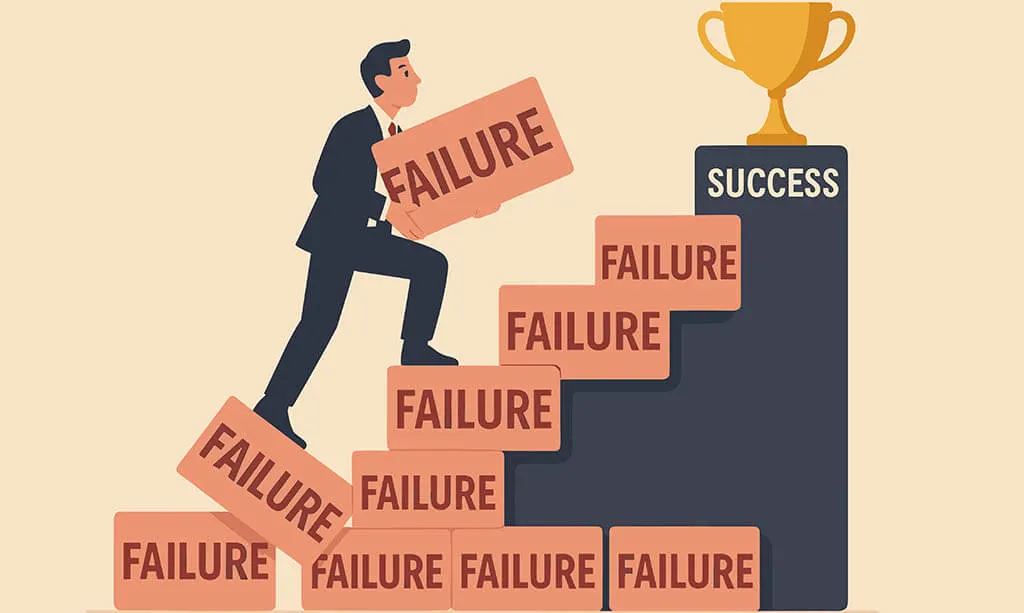
In many classrooms, mistakes are treated as something to fix as quickly as possible. A student says something incorrectly, the teacher corrects it, and the lesson moves on. This approach makes sense on the surface because accuracy and clear communication matter. Even so, when mistakes are seen only as problems, an important part of learning is often overlooked. In reality, mistakes should be viewed as an integral part of the learning process. They are a core part of how language is built. This blog explores why mistakes occur, what they reveal about learning, and how they contribute to long-term progress.
1. Mistakes Show That Learning Is Active
When students begin using new language, they may simply repeat what they have heard, but they are also actively constructing sentences by combining vocabulary, applying patterns, and testing how the language works. This process naturally produces errors. A student might say:
“She go to school yesterday.”
“I very like this.”
“He don’t can swim.”
These sentences reflect attempts to apply rules and patterns the learner has already encountered. In many cases, they show that the student is engaging with the language at a deeper level than simple repetition. From a research perspective, this aligns with the concept of interlanguage, which is a developing system that learners build as they move toward fluency.
😁 Making Mistakes Is Okay: Mistakes often signal that learning is in progress.
2. The Increase of Errors During Development
One of the most counterintuitive aspects of language learning is that students often make more mistakes as they improve. As learners move beyond memorized phrases, they begin forming their own sentences. This increases cognitive demand and introduces more opportunities for error. Instead of choosing safe, familiar language, they start to:
Combine new vocabulary with known structures
Experiment with tense and word order
Expand sentence length and complexity
This shift increases both expression and errors at the same time. From a cognitive standpoint, learners are managing more variables simultaneously. Working memory becomes more heavily involved, and accuracy may temporarily decrease as complexity increases.
❌ Errors Come First: Growth often increases errors before it improves accuracy.
3. Errors Help the Brain Refine Language
Mistakes are signs of incomplete knowledge, just as they are part of how the brain improves its understanding. When learners produce incorrect language and receive feedback (either externally or through self-correction), they adjust their internal model of how the language works. This process strengthens learning. Cognitive science refers to this as error-based learning. The brain uses mismatches between expected and actual outcomes to refine future performance. Over time, this leads to:
More accurate grammar use
Better sentence structure
Stronger pattern recognition
Without this cycle of attempt, error, and adjustment, learning remains shallow and less flexible.
🧠 Constant Learning: Errors provide information the brain uses to improve.
4. Correcting Every Mistake Won't Work
It might seem logical that correcting every mistake would lead to faster improvement. However, research suggests that too much correction can overwhelm learners and disrupt communication. A helpful way to understand this is to compare two approaches:
High Correction Focus | Balanced Learning Focus |
Frequent interruption | Maintains conversational flow |
Emphasis on accuracy | Balance between meaning and form |
Reduced student output | Encourages continued participation |
Higher cognitive pressure | Supports a manageable processing load |
When learners are constantly corrected, their attention shifts away from meaning and toward avoiding errors. This can reduce confidence and limit willingness to speak. Effective learning requires a balance of enough feedback to guide improvement and enough freedom to allow experimentation.
🗝️ Key Teaching Takeaway: Not all mistakes need immediate correction.
5. Accuracy Develops Over Time
Accuracy develops gradually as learners gain more experience using the language. Repeated exposure, practice, and feedback help students refine grammar usage, recognize correct patterns more quickly, and reduce errors naturally over time. What begins as frequent errors often becomes more stable when language is used more consistently. Most importantly, this process depends on continued participation. Students improve accuracy by using language, not by avoiding mistakes.
🎯 Accuracy In Time: Accuracy grows through use, not avoidance.
Final Thoughts
Mistakes are a sign that learning is happening. As students move beyond repetition and begin constructing their own language, errors become part of the process. Progress is built through experimentation, adjustment, and continued use. When teachers recognize the role of mistakes in learning, they can support students more effectively as they develop both fluency and accuracy.
LingoAce offers qualified teachers smooth onboarding for an online ESL job. With tools and resources tailored to TESOL/TEFL-certified teachers, you’ll have everything you need to teach English remotely to children and thrive in this exciting career!