Chinese last names embody centuries of tradition and heritage, going beyond mere identification. It is a tapestry woven with threads of history, tradition, and the collective identity of a family. The 50 most popular Chinese last names in 2025 provide a glimpse into the diverse and rich heritage of China, showcasing the profound meanings and stories behind each name. From the regal "Wang" to the symbolic "Liu," these family names encapsulate the essence of Chinese history and values.
What Chinese Names Are Made Of
Chinese names comprise a family name followed by a given name, reflecting a profound connection to lineage and heritage. Family names, or "xing" (姓)in Chinese, have a fascinating history dating back thousands of years. Originally, family names were adopted as a means of identifying clans and reinforcing social hierarchies. Over time, the number of family names grew, with many deriving from occupations, locations, or notable achievements. In 221 BCE, Emperor Qin Shi Huang standardized the use of family names, making them an integral part of Chinese identity. This historical backdrop enhances the significance of Chinese family names, making them not just labels but a testament to the rich history and cultural evolution of the Chinese people.
Chinese given names, or "ming," are carefully chosen and often carry profound meanings. They can be inspired by nature, virtues, or aspirations, adding another layer of significance to an individual's identity. Chinese boy names often feature characters associated with strength, courage, and traditionally masculine qualities, with a preference for strong and assertive sounds. In contrast, popular Chinese girl names tend to incorporate characters related to beauty, grace, and feminine virtues, often characterized by softer tones and gentler sounds
Popular Chinese Last Names and Their Meanings:
王 (Wang) - King; A reflection of regality within the family lineage.
李 (Li) - Plum; Symbolizing strength, resilience, and endurance.
张 (Zhang) - Stretch; Representing a family's expansive reach and influence.
刘 (Liu) - Derived from the ancient character for weapons such as an axe or halberd, symbolizing martial strength and valor.
陈 (Chen) - Morning; Signifying the start of a new family legacy each day.
杨 (Yang) - Willow; Embodying flexibility and adaptability in adversity.
黄 (Huang) - Yellow; Symbolizing warmth, prosperity, and the central role of the family.
赵 (Zhao) - Shine; Reflecting a family's radiance and positive influence.
周 (Zhou) - Circumference; Illustrating a well-rounded and comprehensive family identity.
吴 (Wu) - An ancient state in China (the State of Wu). The surname originated from rulers and people of this state.
徐 (Xu) - Orderly; Expressing the importance of discipline and organization within the family.
孙 (Sun) - Grandchild; Signifying the perpetual continuation of family lineage.
朱 (Zhu) - Vermilion; Embracing the vibrant and auspicious aspects of life.
马 (Ma) - Horse; Symbolizing speed, vitality, and a dynamic family spirit.
胡 (Hu) - Refers to ancient non-Han ethnic groups collectively known as “Hu.” Symbolizes diverse origins and cultural blending.
郭 (Guo) - Outer; Suggesting a family with a strong external presence and influence.
何 (He) - Originally means to carry, to bear a load. As a surname, it often traces back to place names and ancient clans.
高 (Gao) - Tall; Representing aspirations for elevated achievements and success.
林 (Lin) - Forest; Signifying a family deeply rooted with abundant growth and prosperity.
罗 (Luo) - Net; Representing a family's interconnectedness and unity.
梁 (Liang) - Bridge; Symbolizing the family's role as a bridge between generations.
程 (Cheng) - “Measure” or “rule,” originally referring to a standard or regulation.Represents discipline, order, and structured progress.
郑 (Zheng) - Correct; Embodying righteousness and moral integrity within the family.
谢 (Xie) - Thank; Encouraging gratitude and appreciation within the family.
韩 (Han) - Originates from the ancient State of Han (one of the Seven Warring States). Represents historical legacy and nobility.
唐 (Tang) - Tang Dynasty; Celebrating historical legacy and cultural heritage.
魏 (Wei) - Name of the ancient State of Wei during the Warring States period. Represents heritage and statehood.
许 (Xu) - Allow; Encouraging a family atmosphere of acceptance and generosity.
萧 (Xiao) - Refers to lush vegetation or a place name (Xiao county/region). Symbolizes growth, vitality, and natural abundance.
冯 (Feng) - Means to gallop, to ride swiftly on horseback. Associated with energy, speed, and mobility.
宋 (Song) - Name of the ancient State of Song and later the Song Dynasty. Symbolizes cultural prosperity and dynastic heritage.
邓 (Deng) - Descend; Signifying a family deeply rooted in ancestral traditions.
曹 (Cao) - Command; Carrying a historical legacy of leadership and authority.
彭 (Peng) - Rise; Symbolizing upward mobility and success within the family.
潘 (Pan) - Water; Representing adaptability, fluidity, and a harmonious family spirit.
田 (Tian) - Field; Signifying the family's connection to agriculture and land.
董 (Dong) - Means to supervise, to manage. Reflects qualities of leadership, guidance, and responsibility.
袁 (Yuan) - Original; Embodying the essence of originality and uniqueness within the family.
于 (Yu) - In; Reflecting a family deeply rooted within its cultural and social context.
余 (Yu) - Surplus; Signifying abundance, prosperity, and a surplus of positive attributes.
叶 (Ye) - Leaf; Embracing the concept of growth, renewal, and the cyclical nature of life.
蒋 (Jiang) - General; Reflecting a family's historical connection to military leadership.
杜 (Du) - Restrict; Suggesting a family with a disciplined and controlled approach.
苏 (Su) - Revive; Symbolizing resilience, recovery, and the ability to bounce back.
郝 (Hao) - Brave; Signifying courage, strength, and fearlessness within the family.
常 (Chang) - Always; Encouraging a family ethos of constancy and unwavering commitment.
龙 (Long) - Dragon; Carrying the powerful and mythical connotations of the dragon.
陆 (Lu) - Land; Representing a family deeply connected to its geographical roots.
汪 (Wang) - Vast; Signifying expansiveness, abundance, and a broad family influence.
邹 (Zou) - Ancestral Temple; Celebrating the family's connection to ancestral traditions and spiritual roots.
Exploring these 50 most popular Chinese last names is more than just learning words — it is a journey into China’s living history and cultural identity. Each surname carries stories of ancient states, family legacies, and values that have shaped Chinese society for centuries. By understanding the meanings and symbolism behind these names, learners gain a deeper appreciation of how language connects with tradition, heritage, and everyday life.
Want your child to learn Chinese? LingoAce is one of the best ways to learn Chinese for kids. Each one-on-one lesson is the product of nearly 200 hours of curriculum development, teacher training, and quality control. Our classes are tailored to meet your child’s learning needs. Experience a redefined Chinese learning experience first-hand and book a free trial class with us today.
FAQ: Chinese Last Names
1. What are the most common Chinese last names today? The four most common Chinese last names are Wang (王), Li (李), Zhang (张), and Liu (刘). Together, these account for nearly 300 million people in China.
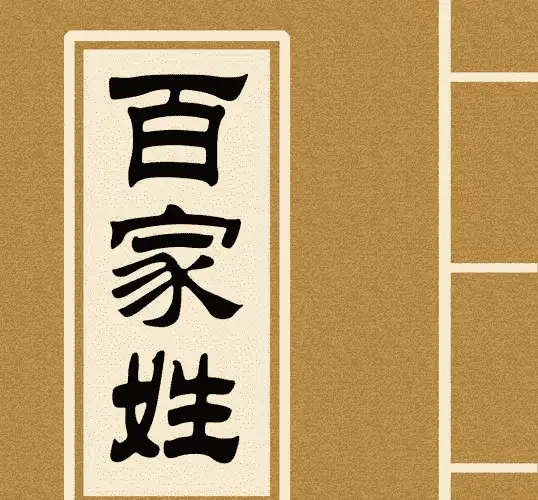
2. How many Chinese surnames exist in total? Historically, there were thousands of Chinese surnames recorded in texts like Hundred Family Surnames (百家姓). Today, about 100–200 surnames cover over 80% of the population.
3. Do Chinese last names always come first? Yes. In Chinese naming conventions, the family name (姓) comes first, followed by the given name (名). For example, “Li Wei” (李伟) has the surname Li and given name Wei.
4. Are Chinese last names passed down from the father or mother? Traditionally, Chinese last names are inherited from the father. However, in modern China, some families also combine or choose the mother’s surname.
5. What makes Chinese surnames different from Western surnames? Chinese surnames are usually single characters (one syllable), while Western surnames often contain multiple syllables. Chinese surnames also carry deeper connections to ancient states, clans, and cultural symbolism.
6. What is the rarest Chinese surname? There are many rare surnames in China, such as Nangong (南宫) or Ouyang (欧阳), which are compound surnames. These are far less common compared to single-character surnames like Li or Wang.