Some mythical creatures are famous for being loud.
They breathe fire, shake mountains, or show up in stories the way thunderstorms show up in real life—sudden, dramatic, and a little terrifying. But the Qilin (麒麟) is different. If you introduce the Qilin to a child, you’re not handing them a monster to fear. You’re giving them a symbol to understand.
In Chinese mythology, the Qilin is often described as a creature of peace, kindness, and good fortune—a rare guardian that appears when the world is about to become a better place. It doesn’t arrive to punish. It arrives to announce. And that small difference says a lot about the kind of values Chinese stories have carried for centuries: the idea that the greatest power doesn’t need to be cruel, and the most meaningful signs aren’t always the loudest ones.
So if your goal is to help kids learn more traditional culture, build cultural literacy, and grow into thoughtful readers of the world—not just memorizers of facts—the Qilin is one of the best places to start.
Why the Qilin Matters
Here’s the surprising thing about Chinese mythology: it isn’t only about fantasy. It’s also about how people should live.The Qilin is a perfect example. It’s often called the “Chinese unicorn,” but that nickname can be a little misleading. A unicorn in Western stories is usually about magic and rarity. The Qilin, on the other hand, is about character.
Chinese stories treat the Qilin like a moral signal. When it appears, it suggests that:
good leadership is possible
peace is worth protecting
kindness can be strong
harmony is not a dream—it’s a choice
That’s why the Qilin isn’t just a creature kids might find “cool.” It’s a creature that can quietly teach kids what Chinese culture has long valued: benevolence, restraint, and the idea that goodness can shape the world.

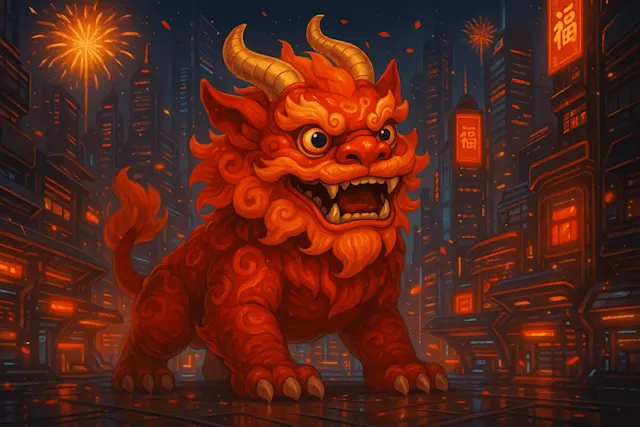
What Does a Qilin Look Like?
If your child asks, “What is it supposed to be?”, the most honest answer is: a beautiful mix.
The Qilin doesn’t have one fixed design. Different dynasties and artists imagined it differently, but it’s often described as a creature with mixed features—something like a blend of:
a deer or horse-like body
dragon-like scales
a flowing mane
hooves
and usually a horn (sometimes one, sometimes two)
Some images even show gentle flames curling along its back—not as destruction, but as a kind of sacred energy, like the creature is glowing from within rather than burning the world around it.
You can tell kids this in one simple line:
“A Qilin looks powerful, but it behaves gently.”And that’s the point.
The Qilin’s “Hidden Rule” in Chinese Mythology: It Never Appears for No Reason
Many mythical creatures appear because someone summons them, fights them, or stumbles into their territory.The Qilin has a different role.
In Chinese mythology, the Qilin is often treated as an omen—a sign that something meaningful is happening in the human world. That “something” is usually connected to morality, peace, and wise leadership.
Think of it this way:
A dragon might represent force.
A tiger might represent courage.
But the Qilin represents something quieter and more mature: a world where goodness is winning.
That’s why the Qilin is sometimes described as appearing only in times of harmony, or only when a great person is about to enter the world. In stories, the Qilin doesn’t show up because people are panicking. It shows up because the world is ready—or because it needs a reminder of what it can be.
For kids, this creates a wonderful question to talk about at the dinner table:“What kind of world would make a Qilin appear?”
The Story Families Love: The Qilin and the Birth of a Great Teacher
One of the most famous connections in traditional culture links the Qilin with Confucius, the great Chinese teacher whose ideas shaped education and moral thinking for thousands of years.
There are different versions of this legend, but the feeling is consistent: the Qilin appears as a sign that a special child is coming—someone who will become a guide for others.
If you want a kid-friendly version that feels like storytelling (not a lecture), here’s one you can read aloud:
A Kid-Friendly Qilin Story
Long ago, in a world of quiet villages and lantern-lit nights, people believed that nature could send messages.
Not with words. Not with letters. But with signs.
One night, a strange and gentle creature appeared at the edge of a town. It wasn’t hunting. It wasn’t roaring. It walked slowly, as if it didn’t want to crush even a single blade of grass.
Someone whispered, “It’s a Qilin…”
And suddenly the air felt different—like the world was holding its breath.
The elders said the Qilin didn’t come by accident. It meant a great person would be born—someone who would teach people how to live with honesty, kindness, and respect.
And later, people connected this sign to Confucius, the teacher who reminded the world that knowledge is not only about being smart. It’s also about being good.
When kids hear this story, something happens. The Qilin stops being “a random creature with a horn,” and becomes something more meaningful:a symbol of learning, character, and hope.

What the Qilin Teaches: Three Traditional Values Hidden in One Myth
This is where the Qilin becomes more than entertainment. It becomes a tool for cultural literacy.
1 Kindness Is a Form of Strength
The Qilin is powerful, but it doesn’t use power to harm. This is a very traditional Chinese idea: the highest strength is controlled strength.
Kids can understand this instantly, because they see it every day. The strongest kid in the room isn’t always the one who pushes others around. Sometimes the strongest kid is the one who stays calm.
2 Peace Is Something You Build
In Qilin stories, peace isn’t just “no fighting.” Peace is an achievement. It’s the result of people choosing fairness, discipline, and respect.
That’s why the Qilin is often associated with peaceful eras. It’s like the story is saying: when people act better, the world becomes better.
3 Goodness Changes the World, Not Just the Mood
The Qilin is a cultural reminder that morality is not only personal. It has public power.
When a society values goodness, even its myths become gentle. When a society values chaos, even its legends become frightening.
That’s a big idea—but children can feel it.
Qilin vs. Unicorn: A Helpful Comparison for Kids
Families often ask: “So is it basically a unicorn?”
It’s similar in the way a “castle” and a “palace” are similar. They might look alike from far away, but they carry different meanings when you step closer.
Here’s a simple comparison:
Feature | Qilin (麒麟) | Unicorn (Western) |
Main vibe | Gentle, wise, peaceful | Magical, mysterious |
Symbol | Good fortune + moral leadership | Purity + fantasy wonder |
Why it appears | To signal a meaningful time | Often as a rare magical creature |
Cultural “lesson” | Strength with kindness | Beauty and wonder |
So if your child calls it “the Chinese unicorn,” you can say:“That’s a good starting point. But the Qilin is more like a kindness guardian than a fantasy pet.”
Where Kids Might See Qilin Today
One reason the Qilin is such a strong cultural symbol is that it didn’t stay locked inside old books. It appears in real life, too—quietly, like an old story still walking beside the modern world.
Kids may spot Qilin-inspired imagery in:
traditional architecture and palace-style decorations
museum art and historical carvings
festival visuals that symbolize blessings
modern cartoons and fantasy designs influenced by ancient myths
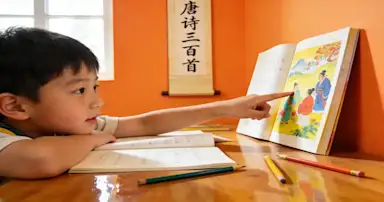
Sometimes the best cultural learning moment is not when you “teach a lesson,” but when your child points at something on a screen or in a book and says:
“Wait—what is that?”That curiosity is where cultural literacy begins.
Turning Mythology Into Real Learning (Without Making It Feel Like Homework)
Parents often want traditional culture to feel meaningful, not heavy.
Here’s a simple truth: kids don’t absorb culture through explanations alone. They absorb it through stories they care about. The Qilin works so well because it naturally opens three learning doors at once:
Story (What happens?)
Values (What does it mean?)
Language (How do we talk about it?)
And when you guide kids through that order—story first, meaning second, language third—you get learning that feels natural instead of forced.
If your child loves creatures like the Qilin, that curiosity can become real speaking confidence when it’s guided in the right way. In LingoAce classes, teachers often use stories, visuals, and conversation prompts to help kids practice Chinese in a way that feels playful but still structured—so cultural learning doesn’t stay “interesting,” it becomes something your child can actually talk about.

Kid-Friendly Chinese Words to Learn With Qilin
This part should feel easy. No pressure. Just a small win.
Simple vocabulary
麒麟 (qílín) — Qilin
神话 (shénhuà) — myth
传说 (chuánshuō) — legend
善良 (shànliáng) — kind
和平 (hépíng) — peace
好运 (hǎoyùn) — good luck
吉祥 (jíxiáng) — auspicious / lucky
Tiny sentences kids can actually use
这是麒麟。 (Zhè shì qílín.) — This is a Qilin.
它很善良。 (Tā hěn shànliáng.) — It’s kind.
它带来好运。 (Tā dàilái hǎoyùn.) — It brings good luck.
我喜欢中国神话。 (Wǒ xǐhuān Zhōngguó shénhuà.) — I like Chinese myths.
If your child is young, don’t try to teach everything. Pick one sentence and celebrate it. That’s how learning sticks.
A 10-Minute Family Activity: Story → Values → Speaking
If you want a simple structure that builds literacy (not just vocabulary), try this “three-step culture routine.”
Step 1: One story question
Ask: “Why do you think the Qilin appears when the world is peaceful?”
Let your child answer freely. There’s no wrong answer here—this is about thinking.
Step 2: One value connection
Ask: “What does kindness look like at school?” Or: “What would a peaceful leader do?”
This helps kids connect myth to real life, which is the heart of cultural literacy.
Step 3: One Chinese sentence
Pick one and repeat it together:
我想当一个善良的人。 (Wǒ xiǎng dāng yí gè shànliáng de rén.) I want to be a kind person.
That’s it. Ten minutes. No worksheets. But you’ve built story sense, moral reflection, and language confidence in one small loop.
Quick Qilin FAQ
Is the Qilin scary?
Not at all. In most stories, it’s a gentle sign of peace and goodness.
Does the Qilin always have one horn?
Not always. Some depictions show one horn, while others show two. What stays consistent is the symbolism: the Qilin represents auspicious energy and moral harmony.
Why do people connect Qilin to great leaders or sages?
Because many traditions treat the Qilin as a creature that appears only when the world is ready for wisdom—like a sign that a meaningful change is coming.
Key Takeaways
The Qilin (麒麟) is a gentle Chinese mythical creature connected to peace, kindness, and good fortune.
It’s not just a fantasy animal—it’s a cultural symbol that teaches children about moral strength and harmony.
The best way to help kids build traditional cultural literacy is to follow a simple path: story → meaning → language.
With the right guidance, a child’s curiosity about Chinese myths can grow into real confidence in Chinese speaking and cultural understanding.
Final Thought for Parents
If your child lights up when they hear stories like the Qilin, hold onto that moment. It’s more than entertainment—it’s a doorway into culture, language, and the kind of quiet confidence that doesn’t come from memorizing, but from understanding.
And if you’d like that journey to feel structured and supportive, you can always try a LingoAce lesson—so your child learns not only what the Qilin is, but how to talk about it naturally, with a real teacher guiding the way.